A variable frequency drive can turn a motor’s steady hum into a controlled response to changing demand. In a pump room, that may mean slowing a motor instead of throttling a valve. The distinction matters. The International Energy Agency’s 2011 report, Energy-Efficiency Policy Opportunities for Electric Motor-Driven Systems, estimated that these systems used about 43–46% of global electricity. That figure is widely cited, but it describes motor-driven systems—not the savings any single vfd controller can guarantee. Real results depend on the motor, load profile, installation, and commissioning.
For global buyers, selecting a VFD is also a practical exercise in matching equipment to operating conditions. A dusty workshop, a hot plant room, and a remote water station place different demands on enclosure protection, cooling, communications, and service access. IEC 61800-9-2 provides a framework for assessing drive-system energy efficiency, while regional voltage, frequency, and support requirements still need careful checking. Small details count. A readable keypad and accessible spare parts can matter as much as headline specifications.
This guide compares seven VFD controllers for buyers evaluating products in 2026. It considers application range, control functions, integration options, and manufacturer support, rather than treating one specification as a universal winner. No shortlist can replace a site assessment. And the data sheets do not tell the whole story. Published performance claims should be verified against the intended motor and duty cycle; even a sensible choice may need adjustment after commissioning.
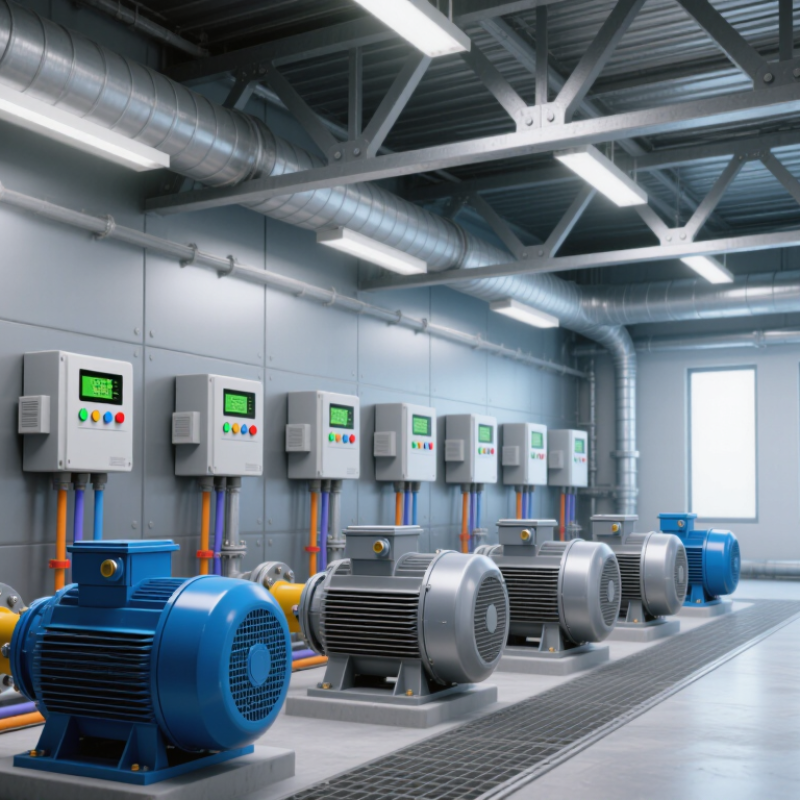
A VFD controller regulates motor speed by changing electrical frequency and voltage. It helps a motor match output with real demand. This matters because motors consume substantial power worldwide. The International Energy Agency estimates electric motor systems use about 43–46% of global electricity. In pumps, fans, and air-handling systems, slower operation can produce meaningful savings. The U.S. Department of Energy also reports that variable-speed control can reduce pumping energy when demand changes frequently.
VFD controllers suit factories, commercial buildings, water facilities, warehouses, and agricultural sites. They are useful for centrifugal pumps, ventilation fans, conveyors, and compressors. A facility with constant speed and steady load may gain little. A facility with valves constantly throttling flow may gain much more. Field assessments often reveal oversized motors running below capacity. That is wasteful, but not always. Start-up current, harmonics, heat, motor insulation, and emergency bypass design still need review. The first selection is rarely perfect.
Tips: Check the motor’s rated current, load profile, enclosure rating, and control method. Ask for measured energy data before estimating payback. The U.S. DOE recommends system-level analysis, not motor-only decisions. A qualified technician should verify grounding, cable length, ventilation, and commissioning settings. Cheap installation can become expensive downtime.
Choosing a VFD controller for international use means checking the installation, not just the catalog. Supply voltage and frequency must match the site, while enclosure ratings should suit dust, moisture, and temperature. A controller tested in a cool laboratory may need derating inside a hot, crowded cabinet. Small details matter.
Energy performance deserves careful comparison. The International Energy Agency’s 2011 report, Energy-Efficiency Policy Opportunities for Electric Motor-Driven Systems, estimated that these systems used about 45% of global electricity. That figure is a historical estimate, not a promise of savings from any single drive. Ask for efficiency data under your actual load profile, including low-speed operation and standby losses. IEC 61800-9-2 provides a framework for assessing drive-system energy efficiency.
Compatibility can decide whether commissioning takes hours or days. Check motor insulation requirements, braking needs, harmonic performance, and electromagnetic compatibility. Confirm that manuals, parameter backups, and technical support are available in the languages and time zones your team uses. Compare total installed cost, including filters, cooling, wiring, and service access. A low purchase price can hide these costs. One question is often missed: who will troubleshoot it at 2 a.m.? Regional requirements and site conditions vary, so verify each specification with a qualified engineer before purchase.
For global buyers, a useful VFD comparison starts with the motor and supply, not a feature list.
A micro-drive typically covers 0.4–2.2 kW at 200–240 V, with basic speed control. Compact general-purpose units often extend to 7.5 kW and add sensorless vector control. Mid-range drives may reach 22 kW, with programmable acceleration and braking.
Check overload capacity carefully. Ratings vary by duty cycle and ambient temperature.
Three other options suit distinct loads.
Heavy-duty controllers are designed for high starting torque and frequent load changes; compare their overload rating and cooling needs.
Pump-focused models may include sleep, restart, and pressure-control functions.
Fan-oriented drives often support variable-torque loads and energy-saving control.
Precision vector controllers can offer encoder feedback, tighter speed regulation, and communication interfaces. Not every installation needs that complexity.
Compare input phase, voltage, rated output current, enclosure rating, and control terminals across all seven types.
Current matters more than a headline kilowatt figure when motors differ. Allow for heat, altitude, and cabinet airflow; these details are easy to underestimate.
Ranges overlap, and that can make selection feel untidy. Use the motor nameplate and the manufacturer’s full technical datasheet before choosing a unit.
The best VFD controller depends on the motor, driven load, and installation region—not a ranking alone. Start with the motor nameplate: voltage, current, frequency, and insulation limits. A pump or fan often benefits from variable-speed control because flow demand changes throughout the day. A loaded conveyor needs different acceleration, torque, and braking settings. One size rarely fits all.
The International Energy Agency’s 2011 report, Energy-Efficient World, estimates that electric motor-driven systems use about 45% of global electricity. That makes correct drive selection more than a purchasing detail. For pumps and fans, compare the expected speed range and duty cycle; for crushers or hoists, check overload capacity and low-speed torque. Small detail. Big consequence. A controller that matches the motor but ignores the load can still overheat or trip.
Regional fit matters, too. Confirm local supply voltage and frequency, enclosure protection, ambient temperature, and required conformity documentation before ordering. Dusty workshops may need stronger ingress protection; hot electrical rooms may require derating or better cooling. IEC 61800-9-2 provides a framework for assessing drive-system energy efficiency, but real savings depend on the application and operating hours. Ask suppliers for sizing assumptions and commissioning support. Then verify them on site. In practice, operating data is sometimes incomplete, so leave room for adjustment rather than treating a catalogue rating as a guarantee.
| Controller Type | Best Motor Match | Typical Load and Use | Control Strengths | Regional and Electrical Fit | Key Selection Checks |
|---|---|---|---|---|---|
| General-purpose V/Hz (scalar) drive | Standard three-phase induction motors where precise low-speed torque is not essential. | Conveyors with light starting loads, mixers, machine auxiliaries, and simple constant-speed processes. | Simple setup and speed adjustment; often a practical choice for straightforward applications. | Available in supply-voltage classes used around the world. Match the drive input and motor output ratings to the local supply and motor nameplate. | Check starting torque, overload duty, minimum operating speed, cooling at low speed, and whether the motor is suitable for inverter operation. |
| Sensorless vector drive | Three-phase induction motors; some models also support permanent-magnet motors. | Conveyors, packaging machinery, compressors, and general machinery needing stronger speed control than basic V/Hz operation. | Estimates motor behavior without an encoder and can provide improved torque response at low speeds; performance depends on motor data and tuning. | Useful across industrial markets, provided the drive’s rated input voltage, phase, frequency, and available fault-current rating suit the installation. | Confirm supported motor types, low-speed torque requirements, overload rating, autotuning method, and whether a braking resistor is needed. |
| Closed-loop vector drive with encoder feedback | Induction or permanent-magnet motors with a compatible encoder or other supported feedback device. | Hoists, elevators, winders, high-inertia machinery, and processes requiring accurate low-speed operation or speed holding. | Feedback can improve speed regulation and low-speed torque control. The encoder and drive must be correctly matched and configured. | Suitable where the application justifies the added feedback hardware and commissioning. Local electrical and machine-safety requirements still apply. | Check encoder type and resolution, cable and noise immunity, braking and holding provisions, safety functions, and the required torque profile. |
| HVAC-oriented VFD | Commonly used with induction motors in fans, air-handling units, and some pump systems; verify compatibility with electronically commutated motors. | Building ventilation, cooling-tower fans, and variable-air-volume systems. | May provide HVAC-focused functions such as PID control, sleep and wake logic, building-system communications, and fan or pump protections. | Check local building codes, energy-efficiency requirements, supply voltage, EMC rules, and compatibility with the building management system. | Verify bypass requirements, fire and smoke-control strategy, motor insulation, enclosure rating, communication protocol, and harmonic-mitigation needs. |
| Pump-focused VFD | Typically a three-phase induction motor driving a centrifugal pump; some drives support additional motor types. | Water supply, irrigation, booster sets, and process-fluid circulation with changing demand. | May include pressure or flow PID control, sleep functions, dry-run detection, and multi-pump sequencing; available features vary by model. | Choose a version rated for the local supply and the site environment. Water and wastewater installations may also have specific electrical and enclosure requirements. | Check pump curve and minimum flow, sensor compatibility, cavitation risk, motor cooling, chemical or moisture exposure, and whether a bypass is required. |
| Regenerative drive system | Motors used in systems with frequent braking or overhauling loads; compatible motor and drive configuration is essential. | Elevators, centrifuges, test stands, downhill conveyors, and other applications that repeatedly return energy during deceleration. | An active front end or regenerative unit can return braking energy to the supply, rather than dissipating it only as heat in a braking resistor. | Assess grid rules and utility acceptance in the installation country. Regeneration may affect harmonics, power quality, and protection coordination. | Estimate braking energy and duty cycle; confirm supply compatibility, grid-side protection, EMC and harmonic performance, and system-level commissioning needs. |
| Medium-voltage VFD | Large medium-voltage induction or synchronous motors designed for the specified drive output and insulation system. | Large pumps, compressors, fans, mills, and other high-power industrial processes. | Designed for high-power motor control; topology, input requirements, footprint, and maintenance approach vary substantially between systems. | Voltage classes and grid standards differ by country and facility. Specify the actual site voltage, frequency, grounding arrangement, and utility interface. | Require an engineering study covering motor insulation, cable length, harmonics, protection, cooling, arc-flash risk, service support, and applicable local standards. |
Selection note: These are controller categories, not a ranking of specific products. Confirm motor nameplate data, supply voltage and frequency, load duty, ambient conditions, applicable local codes, and manufacturer documentation before purchase.
7 Best VFD Controllers for Global Buyers in 2026?
Installation, Safety, Compliance, and Long-Term Value for Global Buyers
Selecting the seven best VFD controllers requires more than comparing power ratings. Global buyers should check motor compatibility, enclosure protection, voltage range, and local service support. A controller that fits one factory may fail in another climate. Dust, humidity, and unstable power can shorten its service life.
Installation quality matters greatly. Mount the unit vertically, leaving clear space for cooling airflow. Use correctly sized cables, reliable grounding, and shielded control wiring where required. Keep power and signal cables separated. Before commissioning, confirm motor data, acceleration time, braking settings, and overload protection. A VFD is not a substitute for an independent emergency-stop circuit. That mistake remains common.
Compliance must be verified for the destination country. Review applicable electrical, EMC, machinery, and safety requirements, including relevant IEC or regional standards. Ask for complete technical files, test reports, declarations, and clear installation instructions. Do not rely only on a logo printed on the enclosure. Long-term value also depends on spare-part availability, firmware support, repair options, and technician training. Harmonic distortion and standby losses deserve attention, especially in large facilities. The cheapest controller may become expensive after one failed cooling fan or unavailable circuit board. A stronger shortlist can still miss site-specific risks. Review the actual motor, cabinet, workload, and maintenance habits before purchasing.
Installation, safety, compliance, and long-term value start with checking that a VFD matches the local electrical supply.
These are common nominal supply-system examples, not product ratings or a ranking of VFDs. Actual voltage and frequency vary by location; verify the site supply and each VFD’s input nameplate before selection.