
What Is the Best AGV Chassis from China?

Choosing the best Agv Chassis from China requires more than comparing prices or catalog photographs. The right platform must match your payload, floor conditions, navigation method, and operating schedule. A warehouse carrying 500 kilograms needs different frame strength from a hospital robot moving small trays. Wheel diameter, ground clearance, turning radius, battery space, and motor torque can change daily performance. Small details matter.

Real-world testing is essential. Ask suppliers for load-test records, wiring diagrams, dimensional drawings, and sample videos from comparable applications. Check how the chassis behaves on ramps, uneven joints, narrow aisles, and polished concrete. A reliable manufacturer should explain its gearbox, suspension, charging design, and controller compatibility clearly. It should also provide traceable quality procedures and responsive technical support. Experience often reveals what brochures hide.

There is no universal winner. A compact differential-drive chassis may suit indoor logistics, while a heavy-duty omnidirectional model can support tighter movement requirements. However, extra mobility may increase control complexity, maintenance needs, and cost. That trade-off deserves honest attention. I have seen projects focus on maximum payload and overlook cable routing or heat dissipation. The result can be frustrating.

Look beyond the lowest quotation. Compare prototype quality, customization capability, delivery consistency, spare-parts access, and after-sales communication. Confirm testing conditions before accepting performance claims. A careful evaluation, supported by measured data and pilot trials, turns a Chinese Agv Chassis into a dependable foundation rather than an expensive experiment.
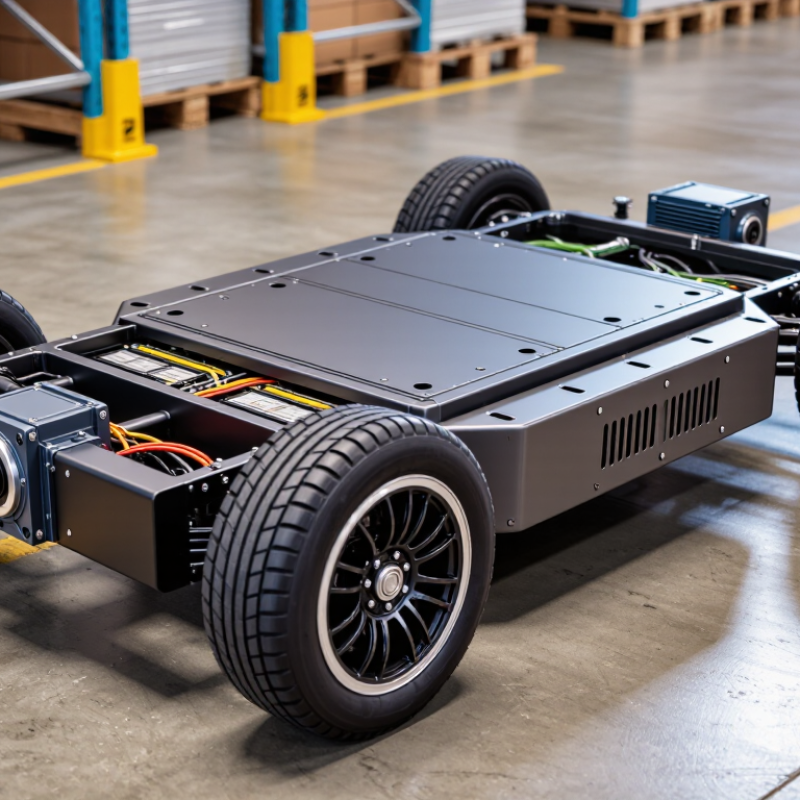
What Is the Best AGV Chassis from China?

What Is an AGV Chassis and Why Does It Matter?

What Is an AGV Chassis and Why Does It Matter?

An AGV chassis is the vehicle’s structural foundation. It supports the drive system, battery, controller, sensors, and payload. It also controls how the vehicle moves through real working spaces. A strong chassis must handle weight without excessive flexing. Its dimensions affect turning radius, aisle access, and docking accuracy. In practical testing, small height differences can change whether an AGV passes beneath a rack. That detail is easy to overlook.

The best AGV chassis from China should match the application, not simply offer the lowest price. Engineers should check frame materials, wheel layout, suspension, motor capacity, and battery access. A low center of gravity improves stability during acceleration and braking. Enclosed wiring can reduce damage from dust and repeated impacts. However, a fully sealed design may make maintenance slower. This trade-off deserves careful review. Chassis drawings, load tests, and spare-part availability also reveal supplier reliability better than sales claims.

Tips: Request a complete load diagram before ordering. Test the chassis on your actual floor surface. Check ramps, gaps, wet areas, and tight corners. Leave service space around batteries and motors. Do not ignore noise levels. A chassis that performs well in a showroom may behave differently beside shelves, workers, and uneven joints. Small defects can become expensive delays.

What Is the Best AGV Chassis from China?

An AGV chassis is the mechanical platform that supports the drive system, battery, sensors, controller, and transported load. The best chassis depends on payload, floor conditions, maneuverability, operating time, and safety requirements. The chart shows typical working payload ranges commonly specified for different AGV chassis configurations; actual capacity varies according to vehicle design and application.

Key Types of AGV Chassis Available from China

What Is the Best AGV Chassis from China?

Key Types of AGV Chassis Available from China

China offers several AGV chassis types, and the best choice depends on load, floor conditions, turning space, and navigation needs. Differential-drive chassis are common for factory transport. They use two powered wheels and support tight, controlled turns. Tugger chassis suit trains of carts and repetitive routes. Forklift chassis handle pallet movement, but they require accurate fork positioning and safe aisle clearance.

Mecanum-wheel chassis provide sideways movement in narrow workspaces. They are useful near production lines, yet uneven floors can reduce stability and increase wheel wear. Steering-drive chassis usually perform better outdoors or across longer routes. Heavy-duty chassis may use reinforced frames, larger wheels, and stronger suspension. These designs support heavier loads, but their turning radius and energy use need careful testing.

The scale of China’s manufacturing ecosystem matters. IFR’s World Robotics 2024 report recorded 276,288 industrial robot installations in China during 2023, representing 51% of global installations. This supports a broad local supply chain for motors, controllers, sensors, and steel structures. However, production scale is not proof of field reliability. A useful warning: the cheapest chassis may create expensive downtime. Buyers should test braking distance, wheel slip, battery endurance, noise, and emergency stopping under real loads. I would also request endurance data, though many suppliers provide limited evidence. That gap deserves attention.

What Is the Best AGV Chassis from China? - Key Types of AGV Chassis Available from China

The best AGV chassis depends on payload, floor conditions, navigation method, turning requirements, and the level of customization needed. The specifications below represent typical configurations available from Chinese AGV chassis manufacturers and integrators.

AGV Chassis Type Typical Payload Typical Speed Drive and Steering Common Navigation Best-Fit Applications Main Advantages and Limitations
Differential-Drive Chassis 100–1,000 kg 0.8–1.5 m/s Two independently driven wheels with one or more support casters Magnetic tape, QR code, reflector, or SLAM Material transport, bin movement, line-side delivery, and warehouse operations Cost-effective, compact, and easy to maintain. It may require more turning space than an omnidirectional chassis and performs best on relatively level floors.
Four-Wheel Steering Chassis 500–3,000 kg 0.6–1.2 m/s Steered drive wheels with mechanical or electronic steering control Laser SLAM, magnetic navigation, or natural-feature navigation Pallet transport, heavy material handling, and production logistics Provides stable movement and good load distribution. The steering system is more complex and usually requires a larger turning radius than omnidirectional designs.
Mecanum-Wheel Chassis 300–2,000 kg 0.5–1.0 m/s Four individually controlled wheels with angled rollers Laser SLAM, QR code, or reflector navigation Tight production cells, assembly areas, docking operations, and constrained indoor spaces Can move forward, sideways, diagonally, and rotate in place. It has higher wheel and control-system costs and is more sensitive to uneven floors and floor debris.
Omnidirectional Chassis 500–3,000 kg 0.5–1.2 m/s Omnidirectional drive modules with independent motion control Laser SLAM, visual navigation, or hybrid navigation Automated assembly, robot transfer, machine tending, and narrow workstations Offers precise lateral positioning and flexible docking. It generally costs more, needs advanced motion control, and requires a well-maintained floor.
Tugger AGV Chassis 1,000–10,000 kg total train load 0.5–1.0 m/s Powered towing chassis with coupling and trailer-control interface Magnetic tape, laser SLAM, or reflector navigation Milk-run logistics, kitting, line-side replenishment, and multi-stop delivery routes Efficient for moving multiple carts in one trip. It needs wider aisles, has a longer stopping distance with trailers, and is less suitable for very tight work areas.
Pallet-Handling Chassis 500–2,000 kg 0.6–1.2 m/s Drive wheels combined with lifting forks, platforms, or conveyor decks Laser SLAM, QR code, reflector, or magnetic navigation Pallet storage, warehouse transfer, staging, and loading-area operations Supports automated pickup and drop-off of standard loads. Pallet dimensions, fork clearance, floor flatness, and accurate docking must be verified before selection.
Heavy-Duty Platform Chassis 2,000–20,000 kg or more 0.2–0.8 m/s Multiple drive modules, load-sharing suspension, and reinforced platform frame Laser SLAM, magnetic navigation, or predefined industrial routes Steel coils, molds, dies, machinery, batteries, and large industrial components Designed for high load capacity and controlled movement. It requires stronger floors, larger safety zones, longer braking distances, and more detailed site engineering.
Low-Profile Under-Ride Chassis 300–1,500 kg 0.5–1.0 m/s Compact drive module designed to travel beneath carts or mobile racks QR code, laser SLAM, magnetic tape, or visual navigation Cart transport, rack movement, order picking, and flexible warehouse layouts Uses existing carts and saves floor space. Cart geometry, underside clearance, docking accuracy, and load stability must be carefully matched.

Selection Guide

Best for general indoor transport Differential-drive chassis
Best for narrow spaces and side movement Mecanum-wheel or omnidirectional chassis
Best for repeated multi-stop delivery Tugger AGV chassis
Best for palletized materials Pallet-handling chassis
Best for very heavy loads Heavy-duty platform chassis
Best for existing carts or mobile racks Low-profile under-ride chassis

Note: Payload, speed, dimensions, battery capacity, navigation performance, and safety functions vary by configuration. Final selection should be validated through load tests, floor-condition checks, traffic analysis, docking trials, and compliance assessment for the target facility.

Essential Specifications for Evaluating an AGV Chassis

What Is the Best AGV Chassis from China?

The best AGV chassis is not the cheapest one. It must match payload, floor conditions, duty cycle, and navigation method. The IFR World Robotics 2024 report identified transportation and logistics as the largest professional service robot application, with more than 100,000 units sold in 2023. That scale raises expectations for reliable chassis engineering.

Check rated payload first, then verify the safety margin under acceleration and uneven loading. A chassis rated for 500 kilograms may perform poorly near its limit. Measure wheel load, ground clearance, turning radius, and maximum slope.

Battery capacity should support the real shift, not only laboratory results. Ask for cycle-test records, charging data, motor temperature readings, and noise levels. ISO 3691-4 compliance evidence is also important for industrial mobile robots. IP protection matters where dust, water, or cleaning chemicals are present. These details are easy to overlook.

Tips: Request a complete specification sheet and a sample test. Inspect welds, cable routing, wheel wear, and emergency-stop response. Confirm localization accuracy beside metal racks. China-based suppliers can offer strong customization, but documentation quality varies. Require traceable components, spare-part timelines, software interface details, and factory acceptance testing. Interact Analysis has repeatedly linked warehouse mobile-robot growth with pressure for higher uptime and faster deployment. Yet, uptime claims need context. Ask how they calculated them. One imperfect assumption can distort the whole comparison.

How to Compare Chinese AGV Chassis Manufacturers

What Is the Best AGV Chassis from China?

How to Compare Chinese AGV Chassis Manufacturers

The best AGV chassis depends on your load, route, floor, and working hours. A suitable chassis should move steadily under real factory conditions. Compare manufacturers by payload testing, drive accuracy, battery performance, and service response. Ask for test records, not only product brochures. Check whether the chassis handles ramps, narrow aisles, dust, and uneven joints. These details often expose weak engineering.

Visit the production site when possible. Review welding quality, wiring protection, motor access, and inspection procedures. Request samples of key components and clear maintenance instructions. Experienced manufacturers should explain turning radius, braking distance, charging limits, and software communication. They should also provide reliable drawings and honest delivery schedules. A low quotation may look attractive, but it can hide poor sensors or limited after-sales support. I once underestimated floor conditions. That mistake changed the chassis specification.

Tips: Compare at least three manufacturers using the same requirements. Send a practical test plan with load weight, speed, runtime, and floor details. Ask for a pilot unit before placing a large order. Check response time during technical discussions. Slow answers may become slower after payment. No comparison is perfect. Leave room for unexpected repairs and future upgrades.

Steps to Select the Best AGV Chassis for Your Application

What Is the Best AGV Chassis from China?

Steps to Select the Best AGV Chassis for Your Application

The best AGV chassis from China is not always the cheapest or most powerful model. Begin with your application. Measure payload, vehicle size, turning radius, floor condition, travel speed, and daily operating hours. A chassis for smooth factory flooring may fail on ramps, metal joints, or dusty warehouse lanes. Check the battery space carefully. It should support your required shift length without making the vehicle unstable.

Review the drive system, wheel material, suspension, braking method, and controller compatibility. Differential drive suits tight indoor routes, while other layouts may perform better on long, open paths. Ask for load curves, noise data, thermal test results, and protection ratings. Do not rely on attractive catalog figures. Real performance changes with floor friction and uneven loads. Small details matter.

Supplier evaluation needs equal attention. Request dimensional drawings, wiring diagrams, inspection records, and traceable component information. Confirm whether sample testing is available before volume purchasing. Test the chassis with your actual payload, route, obstacles, and charging routine. Watch for wheel slip, motor heat, frame vibration, and emergency-stop response. A spreadsheet helps, but it cannot replace floor testing. My own selection process would leave extra time for integration; early assumptions are often wrong. Ask how technical support handles failures, software changes, spare parts, and documented safety requirements in your operating region.

Select Electrical Logo
Since 1988

Select Electrical Ltd. © Copyright 1988-2025