7 Best Rechargeable Headlamps for Global Buyers
A dependable headlamp can make a dark trail, roadside repair, or campsite task feel more manageable. Yet the brightest model is not automatically the best choice. Battery life, beam shape, comfort, and charging options all affect everyday use. Small details count.
This guide to the 7 Best Rechargeable Headlamps for Global Buyers considers practical features rather than headline specifications alone. A Headlamp Rechargeable model should offer clear runtime information, simple controls, and a secure fit, while its stated water-resistance rating should match the conditions you expect. Check whether the battery is built in or replaceable, and whether a charging cable is included. Those details can matter when supplies are limited or travel plans change.
Global buyers also face differences in product availability, warranty coverage, and access to replacement parts. A familiar USB connection may be convenient, but charging speed and cable compatibility still deserve a quick check. No single lamp suits every person. A lightweight light may work well for evening walks, while longer outdoor tasks may call for a larger battery and a broader beam. Not always. Published brightness figures can be useful, but they do not explain comfort or beam quality on their own. Compare specifications with your intended use, and verify key details with the manufacturer or seller before purchasing. That extra check may feel tedious. It can prevent a disappointing fit, an unsuitable runtime, or avoidable trouble on the first night out.
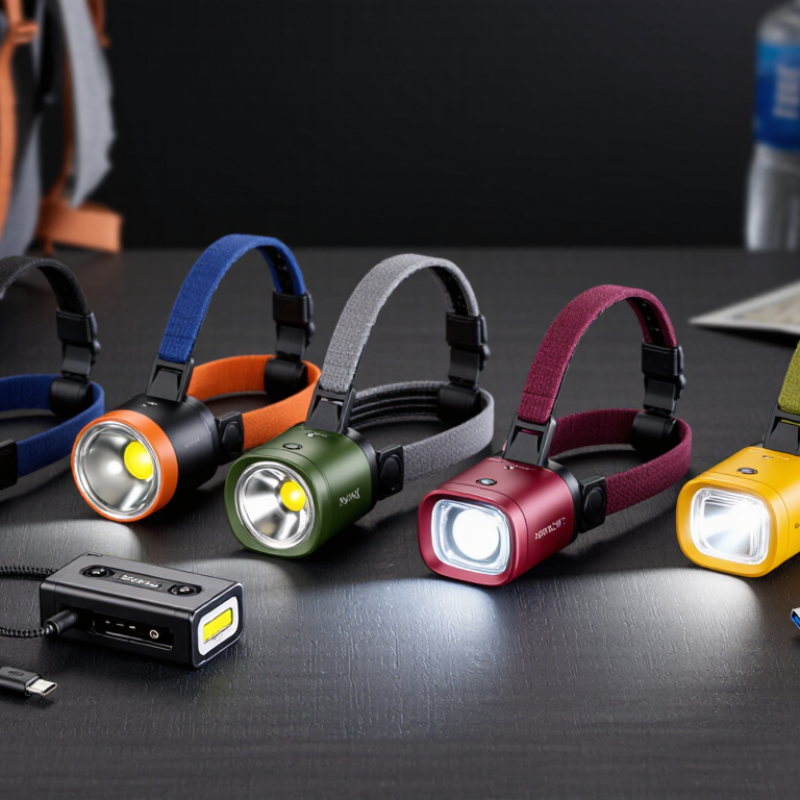
How to Compare Seven Rechargeable Headlamps by Output, Runtime, Weight, and Charging
Compare the seven rechargeable headlamps on equal settings, not just their brightest advertised mode. Peak lumens show a brief burst; sustained output tells you what remains on a dark trail. Numbers need context. ANSI/PLATO FL 1-2019 defines runtime as the time until light output falls to 10% of its initial level. Use that benchmark when comparing published runtime figures, and check whether tests used the same mode and conditions.
Weight matters after an hour, especially when the battery sits at the back of the strap. Compare complete, ready-to-wear weight, including the battery and headband. A difference of 30 grams can feel noticeable during a long walk. For charging, record connector type, stated charging time, and whether the lamp can operate while plugged in. A common USB port may be convenient, but it does not guarantee fast charging. Check the manual’s input rating.
Build a simple comparison table with output, runtime, total weight, charging details, and test conditions. For example, a lamp rated at 400 lumens for four hours is not necessarily brighter for longer than one rated at 300 lumens for six. The output curve matters. Ask whether figures come from an independent test or a manufacturer’s test; methods can differ. Cold weather can also reduce usable battery time, so treat indoor runtime figures cautiously. That caveat is easy to miss.
ANSI/PLATO FL 1 Runtime Testing Ends at 10% of Initial Light Output
When comparing rechargeable headlamps, runtime is more than a promise of hours. Under the ANSI/PLATO FL 1 method, testing ends when measured light output falls to 10% of its initial level. A lamp listed at eight hours may therefore continue shining after that point, but at a much lower output. That distinction matters on a dark trail or while checking equipment outdoors.
Look for runtime figures tied to a named brightness mode, not just a maximum number on a product page. High mode can drain a battery quickly, while a lower setting may provide a longer test result. Compare headlamps using the same test standard and mode where possible. Battery age, cold weather, and charging habits can also affect real use. Small details matter.
The 10% cutoff gives buyers a consistent comparison point, but it does not tell the whole story. It is not a promise of comfortable visibility for the full stated runtime. A light that dims early may feel disappointing, even if its test figure looks strong. Check whether the maker also reports beam pattern, battery capacity, or output steps. I would not choose by runtime alone. That number is useful, but a little imperfect as a guide to what you will actually see.
Beam Distance Ratings Use a 0.25-Lux Threshold Under ANSI/PLATO FL 1
A beam-distance figure is not the distance at which a headlamp becomes completely dark. Under ANSI/PLATO FL 1-2019, the rating marks the point where illuminance falls to 0.25 lux. The CIE International Lighting Vocabulary, S 017:2020, defines illuminance as light falling on a surface, measured in lux. That distinction matters on a trail: a rock may remain visible at the rated limit, but small details can disappear. Not a promise of clear vision.
For global buyers, compare beam distance alongside runtime and brightness settings. A long-range rating may describe peak output, not steady performance after hours of use. Battery charge, temperature, and beam shape can affect what reaches the ground. In a simplified point-source model, doubling distance reduces illuminance to one-quarter; real headlamp beams are less tidy. The number can still mislead. Check whether the maker reports distance at full charge and whether the beam has a focused hotspot or a broad flood. A 0.25-lux figure helps standardize comparison, but it cannot tell you how comfortable the beam feels while walking. A little uncertainty remains.
Beam distance is calculated as √(peak beam intensity ÷ 0.25 lux), following the ANSI/PLATO FL 1 threshold. These seven reference values are mathematical examples, not measurements or ratings for specific headlamps.
Water-Resistance Ratings: IPX7 Tests Immersion at 1 Meter for 30 Minutes
IPX7 is a defined immersion rating, not a promise that a headlamp is waterproof in every situation. The test places the device in water up to 1 meter deep for 30 minutes under controlled conditions. That sounds reassuring. For a buyer, it is useful evidence, but only within those limits. It does not tell you how the lamp handles forceful water jets, salt spray, or years of wear.
Check the charging cover and battery compartment before taking an IPX7 headlamp into heavy rain or near water. A tiny gap in a seal can matter. Close every cap fully, and inspect rubber gaskets for dirt, cracks, or flattening. After exposure, dry the lamp before charging it; water trapped around a port can still cause trouble. Read the maker’s care instructions, too. I would not treat the rating as a reason to skip basic checks, especially on an older lamp. Ratings are helpful, but real seals age.
7 Best Rechargeable Headlamps for Global Buyers - Water-Resistance Ratings: IPX7 Tests Immersion at 1 Meter for 30 Minutes
| Water-resistance rating | Standardized exposure in brief | What the rating indicates | Headlamp buyer note |
| IPX0 | No water-protection rating. | No protection against water ingress is specified by the rating. | Not a suitable choice when exposure to rain or splashes is expected. |
| IPX3 | Water sprayed at angles up to 60° from vertical. | Protection against water spray under the specified test conditions. | Check the product instructions for the intended direction and duration of exposure. |
| IPX4 | Water splashed from any direction. | Protection against splashing water under the specified test conditions. | A useful rating to compare for general wet-weather use; it does not indicate immersion protection. |
| IPX5 | Water projected in jets from a nozzle. | Protection against water jets under the specified test conditions. | A jet rating is not the same as a submersion rating. |
| IPX6 | Powerful water jets under the specified test conditions. | A higher water-jet test level than IPX5; it does not by itself establish immersion protection. | Look for a separate immersion rating if accidental submersion is a concern. |
| IPX7 | Temporary immersion in water at a depth of 1 meter for 30 minutes. | Protection against the effects of temporary immersion under the specified test conditions. | This rating does not automatically establish resistance to water jets; check for a separate or dual rating. |
| IPX8 | Continuous immersion under conditions agreed for the product and stated by its manufacturer. | Protection for immersion conditions more severe than those specified for IPX7; exact conditions are not universal. | Check the stated depth and duration rather than assuming every IPX8 product has the same test limits. |
Note: IPX ratings describe water-protection tests; the “X” means no dust-protection rating is stated in this code. Test ratings do not guarantee performance after damage, wear, or improper maintenance. Follow the headlamp’s instructions, especially for charging: dry the unit and its charging port before connecting power.
Match Headlamp Features to Work, Outdoor, and Emergency Use Cases
For workshop tasks, choose a rechargeable headlamp with a stable, adjustable beam and a comfortable strap. A broad flood beam helps when sorting small parts on a bench, while a focused beam can reveal details in a ceiling cavity. Low and medium settings often provide enough light without glare or frequent charging. Check whether the lamp can be tilted without slipping. That small detail matters.
Outdoor use calls for a different balance. A runner may value a secure fit and a beam that lights the path without bouncing; a camper may prefer softer illumination for cooking or reading. Look for a clear runtime rating at more than one brightness level, not just the maximum output. Water resistance can help in rain, but ratings vary, so check the stated protection rather than assuming every model is suitable for storms. I would not treat maximum lumens as the whole answer. It is an easy number to overvalue.
For emergency kits, simple charging and a battery-status indicator can reduce guesswork during a power outage. USB charging is convenient for many travelers, but check cable compatibility and whether the light can operate while charging. Keep a charged power bank nearby. Also consider spare charging access across the places you travel; a rechargeable lamp is less useful when its battery is empty. No headlamp fits every situation. Choose for the task you actually expect, then test its controls before you need it.