10 Best RFID Tool Tracking Systems for Businesses?
A missing drill can delay a crew, interrupt a repair, and trigger an expensive replacement. Rfid Tool Tracking systems help businesses locate equipment, record checkouts, and review movement across workshops, vehicles, and job sites. They use RFID tags and readers to capture data, but performance depends on thoughtful setup. Metal surfaces, tag placement, reader range, and busy work areas can all affect accuracy.
RFID Journal founder Mark Roberti has emphasized a practical principle: RFID should solve a clearly defined business problem, not be adopted for novelty. That idea matters when comparing the 10 best RFID tool tracking systems for businesses. The right choice depends on the tools being tracked, the size of the operation, existing software, and how workers actually handle equipment. A system that looks impressive in a demonstration may struggle in a crowded service van.
Details matter. This guide compares capabilities such as real-time visibility, automated check-in and checkout, reporting, integration, scalability, and support. It also considers deployment effort and total cost, because tags and readers are only part of the investment. No system is perfect. Some workflows may still need human checks, especially when tools move between sites or readers miss a scan. A careful pilot can expose those gaps before a full rollout. The goal is not simply to tag every wrench; it is to make useful equipment easier to find and manage.
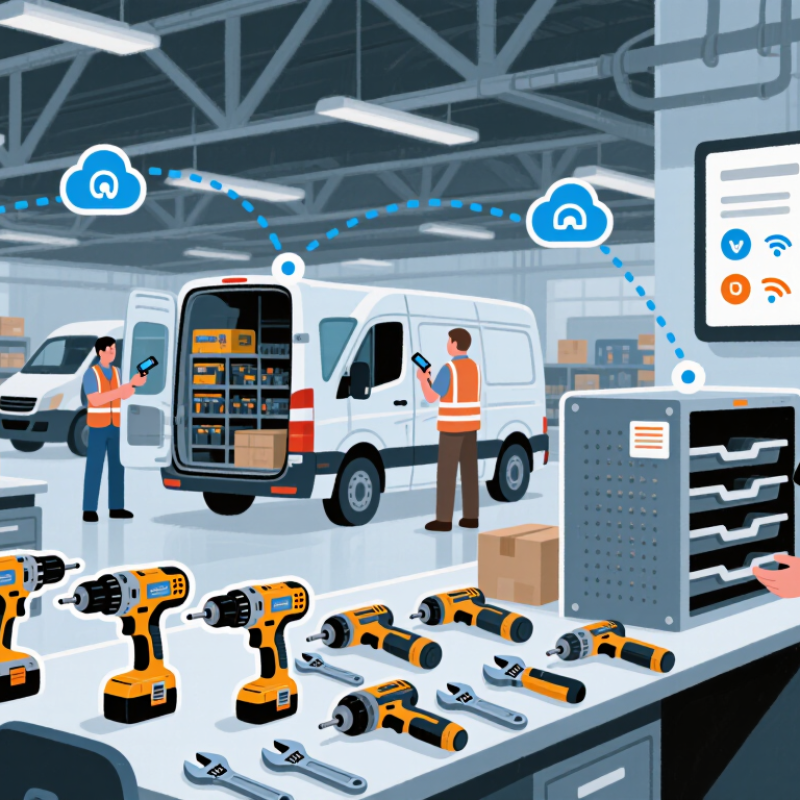
RFID Tool Tracking Systems: Tags, Readers, and Asset Records Explained
An RFID tool-tracking system connects three practical pieces: tags, readers, and asset records. A tag attached to a drill or torque wrench carries a unique identifier. Fixed readers can log tools moving through a storeroom doorway, while handheld readers help locate items on a crowded shelf. The asset record links each identifier to details such as tool type, condition, assigned team, and last-seen location.
Keep the workflow simple. A record that no one updates soon becomes unreliable.
63% → 95%
inventory accuracy
Auburn University’s RFID Lab has cited inventory research showing accuracy improving from about 63% with traditional counting to roughly 95% with RFID. That result comes from retail inventory work, not a guarantee for every tool crib. Metal surfaces, tight storage, and poorly placed readers can affect reads.
Test tags on actual tools before rollout. A wrench beside a steel cabinet may behave differently from one on a workbench. Small gaps matter.
Tips: Use tags designed for metal tools, and record tag-to-tool assignments during setup. Walk the reader route with a sample kit. Check missed reads and duplicate records. Some manual checks will still be needed; that is worth planning for.
How UHF RFID Works Under the GS1 EPC Gen2 Standard
GS1 EPC Gen2 defines how UHF RFID readers and tags exchange data, not how a company manages its tool records. A reader sends radio energy; passive tags reflect a coded response. The standard operates across region-dependent UHF bands, commonly within 860–960 MHz, and uses anti-collision procedures to identify multiple tags. Each tag can carry an EPC identifier linked to a tool record in business software. No battery is needed in a passive tag. Metal toolboxes and tightly packed tools can still weaken reads, so test tags in their actual working locations.
Auburn University’s RFID Lab has reported retail inventory accuracy improving from about 63% to 95% in RFID deployments. That result is useful context, not a guaranteed outcome for tool rooms: tag placement, reader setup, and staff routines all matter. GS1’s EPC Gen2 standard provides a common air interface, helping compatible equipment communicate, but it does not ensure perfect identification or prevent duplicate records. Small pilot first. Compare scan results with a physical tool count before expanding.
Tips: Put tags on clean, flat surfaces, away from metal where possible. Test a closed toolbox, not only a loose tag on a desk. Record missed reads and adjust antenna position; real rooms are messy.
Ten Leading RFID Tool Tracking Platforms Compared by Core Capabilities
A useful comparison of ten leading RFID tool-tracking platforms starts with the work they must handle. Some systems focus on quick check-in and check-out, while others add location history, maintenance records, and automated alerts. A tag scan at a busy workshop door is only useful if staff can identify the right tool and act on the result. Small details matter.
Compare read performance, too. A handheld reader may suit scattered jobsites, while fixed portal readers can record tools moving through a store-room entrance. Metal surfaces and tightly packed equipment can interfere with reads, so test tags on actual tools before choosing a system. A polished demonstration may not reveal missed scans. Not always.
The strongest platforms connect RFID records with inventory, work orders, and user permissions without making daily tasks cumbersome. Check whether the system supports offline scanning, clear exception reports, and exports your team can use. Also compare setup effort, tag replacement, reader coverage, and ongoing support—not just the initial price. A dashboard can look excellent and still leave supervisors chasing unexplained discrepancies. No platform removes every manual check; good processes still matter. The right fit depends on tool value, movement patterns, and how quickly staff need reliable answers.
Grand View Research Valued the Global RFID Market at $14.5B in 2023
10 Best RFID Tool Tracking Systems for Businesses?
Grand View Research valued the global RFID market at $14.5 billion in 2023, forecasting 11.9% annual growth through 2030. MarketsandMarkets estimated the market at $12.1 billion in 2022 and projected $15.8 billion by 2027. These reports use different scopes and periods, so their figures are not directly comparable. Still, they point to sustained investment in RFID technology. That matters to businesses weighing tool tracking against manual checkouts and barcode scans.
In a tool room, RFID can record a drill leaving a cabinet, flag an overdue return, and show which crew last checked it out. Readers at a doorway may capture several tagged items at once, reducing routine scanning. But metal shelving and tool cases can interfere with radio signals; tag choice and reader placement need real-site testing. A dashboard can look precise while records remain messy. Missed reads, shared tools, and skipped returns still require clear procedures and staff attention. The market’s growth signals expanding interest, not guaranteed savings for every operation. A small pilot can reveal whether fewer lost tools and faster inventory checks justify the setup and ongoing maintenance.
How to Choose a System by Read Range, Integration, Security, and Total Cost
Choosing an RFID tool-tracking system starts with the worksite, not a catalogue. A tag that reads reliably on a plastic case may struggle against a steel toolbox or in a crowded storeroom. Test representative tools at actual doorways, shelves, and handoff points. Measure missed reads and stray reads, not just maximum read range. Small tests matter.
Integration and security deserve equal attention. Check whether the system can exchange asset records with your inventory or maintenance software, and who can change permissions. NIST’s SP 800-98 guidance describes RFID risks such as unauthorized reading and tag cloning; ask how the vendor limits access and records activity. The 2024 MHI Annual Industry Report found that 55% of surveyed supply-chain leaders planned to increase technology investment. That signals interest, not guaranteed savings. Compare total cost over several years, including tags, readers, installation, software, training, and replacements. The awkward bit: labor savings are easy to overestimate. Track time spent locating tools before and after a pilot, then review the numbers with the people who use the system.
Choosing an RFID Tool Tracking System: Typical Read Ranges
Approximate operating ranges by RFID technology. Actual performance varies with tag design, reader power, antenna placement, materials, and the surrounding environment.
How to use this: Treat read range as an initial filter, then test tags on the actual tools and storage surfaces. Compare integration options with your inventory or maintenance software, verify security controls such as user permissions and audit logs, and calculate total cost across readers, tags, software, installation, and ongoing support.