
What Are the Best Wrist Watch Types in 2026?

Choosing a Wrist Watch in 2026 is less about finding one universal winner and more about matching a watch to your daily routines. A slim dress watch may slide neatly beneath a shirt cuff, while a rugged field watch can feel more at home outdoors. Smartwatches add notifications and health features, but they also need regular charging. Each type solves a different problem.

The categories can overlap. A solar-powered watch describes its movement, while “diver” usually refers to a design and its intended water resistance. That distinction matters when comparing specifications. Check the stated water rating, case size, strap comfort, battery or charging needs, and service options—not just the product photos. A watch that looks balanced online may feel bulky on a smaller wrist. Try it on if possible.

Small details count.

This guide compares popular wrist watch types by function, upkeep, comfort, and value, with practical trade-offs rather than a single blanket ranking. It will also explain where claims need context: water resistance can change with age and use, and smartwatch features vary by model and phone compatibility. Some advice is imperfect, because preferences are personal and hands-on fit is hard to judge from a page. Still, a clear comparison can help you narrow the choices and pick a watch you will actually wear.
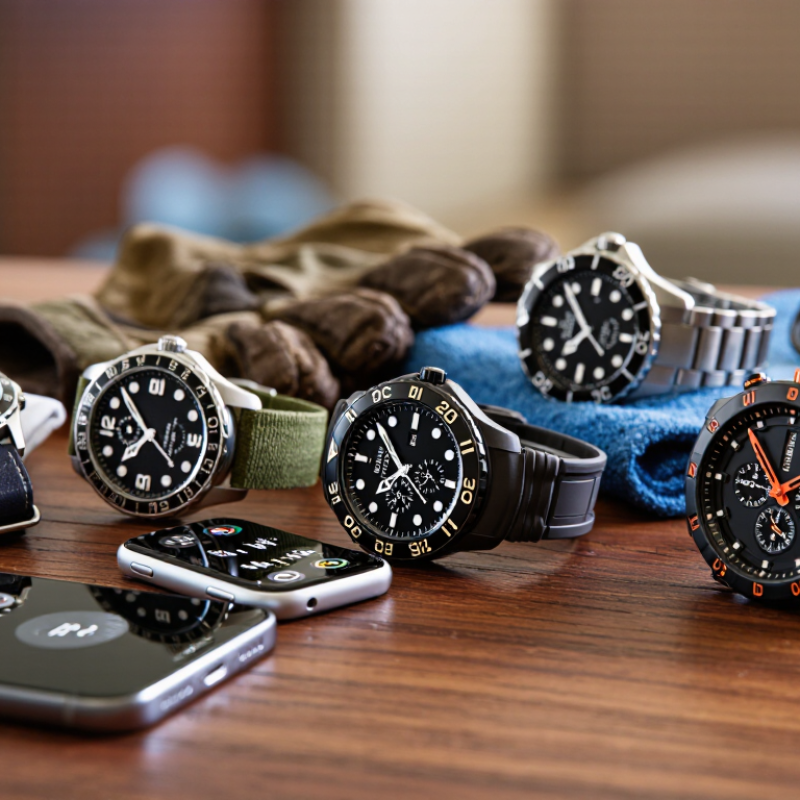
What Are the Best Wrist Watch Types in 2026?

Classify 2026 Wristwatches by Movement, Function, and Wear Context

In 2026, wristwatches are easiest to compare by movement, function, and the situations they serve. Quartz watches use a battery and are generally low-maintenance, while mechanical watches rely on wound springs and reward regular care. Automatic models wind through wrist motion, though long periods off the wrist may stop them. Solar watches draw power from light, but still need sensible storage. Small details matter.

Function narrows the choice. A simple three-hand display suits everyday timekeeping; a chronograph adds a stopwatch, while a field-style layout often favors clear numerals and quick reading. Dive-oriented watches typically emphasize legibility and water resistance, but the rating should be checked against the intended activity. Smartwatches add notifications and health tracking, yet their charging routines can feel like another daily task. Not always convenient.

Wear context changes what “best” means. A slim, light watch may sit comfortably beneath a shirt cuff, while a rugged case can feel bulky at a desk. For travel, a second time-zone display can be useful; for exercise, secure fit and easy-to-read controls matter more than decorative features. Try the watch on if possible, and check the strap, weight, and case diameter. Specifications help, but comfort is personal—and it is easy to overestimate how often you will use extra functions.

Mechanical and Automatic Watches: COSC Chronometers Allow −4 to +6 Seconds per Day

In 2026, mechanical and automatic watches remain appealing because their timekeeping comes from springs, gears, and careful adjustment. An automatic movement winds as your wrist moves, while a hand-wound watch needs regular winding. Both can be certified as chronometers, but the label has a specific meaning.

COSC chronometer testing accepts a movement with a mean daily rate from −4 to +6 seconds per day. The movement is tested over 15 days in several positions and temperatures, under controlled conditions. That matters. The figure describes test results, not a promise that the finished watch will gain or lose exactly that amount on your wrist. Daily performance can shift with wearing habits, temperature, and how fully the mainspring is wound.

Real life varies. If you wear a watch through a long workday, then leave it dial-up overnight, its rate may differ from the laboratory result. A small deviation is not automatically a fault; check the watch over several days before judging it. Certification offers a useful benchmark for comparing precision, though it does not measure comfort, service needs, or whether the watch suits your routine. One detail is easy to overlook: mechanical watches need periodic care, and accuracy can change as lubricants age.

Quartz Watches: The Industry-Standard 32,768-Hz Timekeeping Oscillator

A quartz watch keeps time by driving a tiny quartz crystal at 32,768 vibrations per second. That frequency is useful because a circuit can divide it by two fifteen times, producing one pulse per second. The pulse moves the hands or updates a digital display. The number sounds unusually precise, but it describes the oscillator’s frequency, not guaranteed real-world accuracy. Temperature, aging, and the movement’s electronics can still affect timekeeping.

Quartz remains a practical choice for everyday wear: it usually needs less adjustment than a mechanical watch and often costs less to maintain. The Federation of the Swiss Watch Industry reported 15.3 million exported watches in 2024, down 9.3% from the previous year. That figure shows export volume, not how many were quartz or how accurate each watch was. It is useful context, but not proof of quartz dominance. A small caveat matters.

Tips: Check the stated monthly accuracy and battery life before buying. If a watch gains or loses noticeably, compare it against a reliable time reference for several days. A fresh battery may help, but it will not fix every fault.

What Are the Best Wrist Watch Types in 2026? - Quartz Watches: The Industry-Standard 32,768-Hz Timekeeping Oscillator

Quartz Watch Type Timekeeping Oscillator Typical Accuracy or Synchronization Power Source Main Advantage Best Suited For
Standard analog quartz Typically a 32,768-Hz quartz crystal, electronically divided to produce one-second timing pulses. Many everyday models are specified around ±15 seconds per month; actual performance varies by movement and conditions. Replaceable battery. Simple, dependable timekeeping with little routine adjustment. Everyday wear and buyers seeking a straightforward, low-maintenance watch.
High-accuracy quartz Quartz oscillator; some movements use temperature compensation or other calibration methods. Specifications are model-dependent and can be substantially tighter than standard quartz; check the stated annual or monthly tolerance. Usually a battery; some designs use rechargeable power. Greater timekeeping precision without requiring satellite or radio reception. Wearers who prioritize precision and want a conventional wristwatch.
Solar quartz Quartz oscillator, commonly operating at 32,768 Hz; light is converted into electrical energy. Accuracy depends on the movement; solar charging does not itself make the oscillator more accurate. Light-powered rechargeable cell or storage element. Can reduce the need for routine battery replacement when kept sufficiently charged. Regular wearers who want quartz convenience with less battery servicing.
Automatic-generating quartz A quartz oscillator regulates the time; wrist movement drives a generator that produces electricity. Movement-specific quartz accuracy; generation method does not determine the accuracy rating. Rechargeable storage element charged by a moving rotor and generator. Combines quartz timekeeping with motion-based energy generation. Wearers who prefer a self-generating system and use the watch regularly.
Radio-controlled quartz Quartz oscillator, commonly 32,768 Hz, with a receiver that can correct the displayed time using radio time signals. Can align with the received reference signal; reception depends on signal coverage, location, and conditions. Battery or rechargeable cell, depending on the model. Automatic time correction where a compatible signal is available. People who travel or live within reliable coverage of supported time-signal transmitters.
GPS-synchronized quartz Quartz timekeeping with a receiver that can use satellite signals to update time; the quartz oscillator keeps time between updates. Can correct time from received satellite data; successful updates require suitable reception and may use additional power. Battery or rechargeable cell, depending on the model. Time updates can be available across many regions without relying on a nearby terrestrial time-signal transmitter. Frequent travelers and users who want satellite-based time correction.

Note: 32,768 Hz is a common quartz-watch oscillator frequency because it can be divided by 215 to produce a one-second signal. It is a widely used standard, not a frequency used by every quartz movement. Accuracy figures are specifications that vary by model and operating conditions.

Dive Watches: ISO 6425 Requires a Minimum 100-Meter Water-Resistance Rating

A dive watch is more than a watch with a bold bezel and a deep-water rating. ISO 6425 sets a minimum water-resistance rating of 100 meters for watches described as diver’s watches. The standard also addresses practical demands such as readability underwater, resistance to salt water, and secure attachment. Details matter. A clear dial should remain legible in dim water, while a rotating timing bezel helps track a planned dive interval. These features support use; they do not replace training or dive equipment.

The 100-meter figure can be misunderstood. It comes from controlled testing, not a promise that every watch is suitable for every dive or condition. Gaskets can age, crowns may be left unscrewed, and impacts can compromise seals. A watch that passed a test years ago may need inspection before swimming or diving. Check the manufacturer’s instructions and have seals assessed after service or damage. This is less exciting than comparing bezel colors, but probably more useful. Even routine rinsing after saltwater exposure helps reduce residue around the case and bracelet. A rating tells you something important, not everything.

Smart and Hybrid Watches: Compare Health Sensors, Connectivity, and Battery Life

In 2026, choosing between a smartwatch and a hybrid means weighing detailed health tracking against charging time. IDC’s Worldwide Quarterly Wearable Device Tracker recorded 534.6 million wearable-device shipments in 2024, up 6.1% year over year. The American College of Sports Medicine’s 2024 fitness-trends survey ranked wearable technology first. That signals interest, not proven accuracy.

A smartwatch can combine optical heart-rate tracking, sleep estimates, blood-oxygen readings, and, on some models, an electrocardiogram. GPS and phone notifications add useful context during a run or commute, but frequent measurements and cellular connections can drain the battery. Treat readings as trends, not diagnoses. A loose strap or cold skin can also affect sensor performance.

Hybrid watches usually show fewer live metrics, often relying on a smaller sensor set and a connected phone. Their simpler displays and lighter connectivity can stretch battery life from days toward weeks, depending on settings and use. A small trade-off: fewer charging interruptions may mean fewer detailed records. Check whether health readings sync reliably, and test the fit during ordinary daily movement before trusting long-term trends.

Select Electrical Logo
Since 1988

Select Electrical Ltd. © Copyright 1988-2025