
China Top 10 Automated Injection Molding Manufacturers

China’s injection molding industry is moving toward faster, smarter, and more connected production. PlasticsEurope’s Plastics—The Fast Facts 2024 reported global plastics production of approximately 414 million tonnes in 2023. China remains a major manufacturing center, supported by strong supply chains, engineering talent, and extensive export capacity. These conditions make Automated Injection Molding increasingly important for producing medical components, automotive parts, packaging, and consumer electronics.

The companies featured in this guide are evaluated through practical manufacturing indicators. These include machine capability, robotic integration, mold engineering, process repeatability, quality systems, energy management, and after-sales support. Grand View Research identifies packaging, transportation, and electronics as important application areas for injection molding. In these sectors, a stable cycle matters. A robotic arm removing a warm part every few seconds can reduce handling errors and improve workplace consistency.

Certification claims still require careful checking. ISO 9001 registration can support quality confidence, but it does not prove every production line performs equally well. A modern factory may show clean floors, digital dashboards, and automated conveyors. Yet its real strength appears in traceability records, sample approvals, maintenance discipline, and customer feedback. This guide therefore treats public information as evidence, not absolute proof. Some supplier data may be incomplete or promotional. That limitation deserves attention.

The following selection introduces ten Chinese manufacturers associated with Automated Injection Molding. It is designed to help buyers compare capabilities, not simply admire impressive equipment. Readers should confirm current certifications, machine specifications, export experience, and compliance requirements before making a purchasing decision. No ranking is permanent. Manufacturing performance changes with investment, leadership, and customer demands.
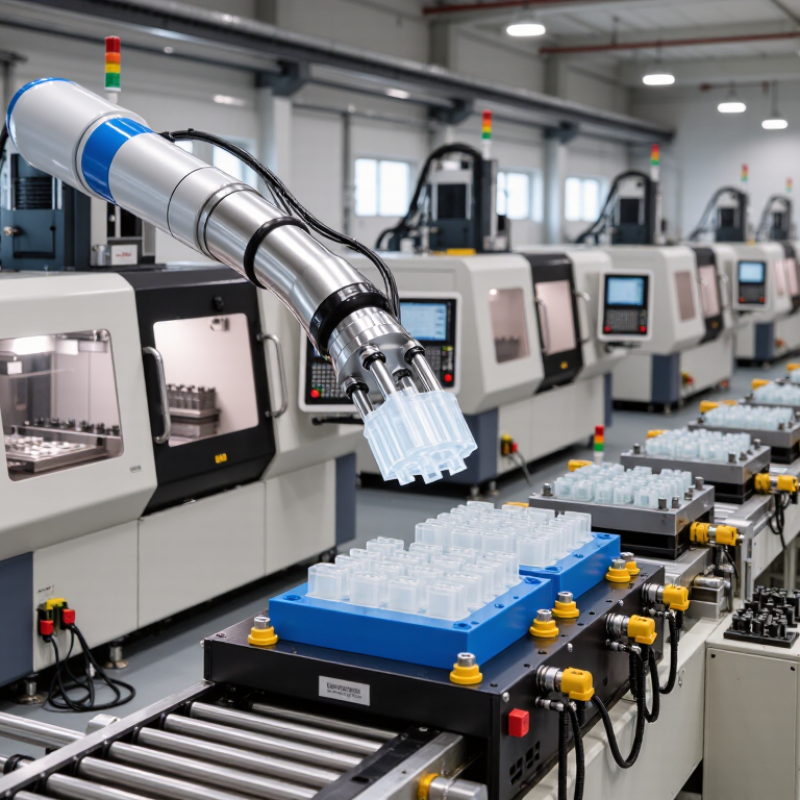
China Top 10 Automated Injection Molding Manufacturers

Definition and Role of Automated Injection Molding Manufacturers in China

Automated injection molding manufacturers in China design and integrate machines that convert heated polymer pellets into repeatable parts. Their work covers servo-hydraulic presses, electric drives, robotic removal, mold-temperature control, vision inspection, and production software. They are not merely equipment sellers. They build a connected process around the mold.

Their role is increasingly measurable. The International Federation of Robotics reported 276,288 industrial robots installed in China during 2023, representing more than half of global installations. This supports wider use of robots beside injection machines, especially for trimming, packing, and quality checks. Market research reports also forecast steady growth in the global injection molding machine market through 2030. However, estimates differ because researchers define “automated” differently. That weakness deserves attention.

A capable Chinese manufacturer should provide documented cycle-time tests, energy data, mold compatibility records, and operator training. ISO 9001-based quality systems can improve traceability, but certification alone proves little. A factory floor tells more: consistent part weight, stable cavity filling, clean cable routing, and alarms that operators understand. Practical experience matters.

Not every automated line is genuinely efficient. A robot may reduce labor yet increase maintenance delays. Poorly tuned temperature control can waste resin and create rejected parts. Buyers should compare total cost, uptime, spare-part access, and after-sales response. The strongest manufacturers combine engineering discipline with honest limits. Mistakes still happen. Reliable suppliers measure them, disclose them, and correct the process.

Core Technologies Used in Automated Injection Molding Production

Automated injection molding combines precise machinery, real-time data, and disciplined process control.

The core system begins with servo-driven injection units that regulate screw speed, pressure, and position. These controls reduce material waste and improve shot-to-shot consistency. However, stable results still depend on correct mold design and verified process settings.

Robotic arms remove molded parts and place them on conveyors or inspection stations. Vision systems check surface defects, missing features, and incorrect assembly.

Sensors monitor cavity pressure, melt temperature, cooling time, and mold alignment. A closed-loop controller can adjust production parameters when readings move beyond defined limits. Small changes matter.

Data systems connect machines, operators, and quality records. Production software tracks cycle time, material batches, alarms, and maintenance events.

Predictive maintenance uses vibration, temperature, and motor-current data to identify early equipment problems. Safety interlocks also stop motion when guards open or abnormal conditions appear. They are essential.

Automation is not flawless.

A poorly positioned sensor can create misleading data. An overly aggressive software setting may increase speed but reduce part quality.

Experienced technicians still inspect samples, compare measurements, and question unusual trends. In many factories, the strongest results come from combining automatic control with human review.

Clean material handling, stable cooling water, and regular calibration remain practical foundations for reliable automated injection molding production.

Key Criteria for Evaluating China’s Leading Manufacturers

Evaluating China’s leading automated injection molding manufacturers requires more than comparing machine prices. Start with proven experience in similar materials, part sizes, and cycle times. Ask for documented case evidence, process data, and factory photographs. A reliable supplier should explain clamp force, injection control, robot integration, and mold protection clearly. Request sample parts using your resin and tool. Inspect flash, sink marks, warpage, and weight variation.

Engineering depth appears in validation work. Check whether the team records mold trials, capability studies, alarm histories, and maintenance intervals. Data should remain traceable from material lot to finished part. Quality systems matter, but certificates alone prove little. Review inspection plans, calibration records, change control, and corrective-action reports. Ask who owns the PLC program and how backups are protected. Small details often decide uptime.

Automation should fit the real factory, not a showroom. Measure loading space, line speed, power needs, safety guarding, and operator access. Confirm acceptance tests before shipment, including cycle time, reject rate, noise, and emergency stops. Evaluate training, spare-parts availability, remote support, and response times over several years. Compare total cost, not only the quotation. No scorecard is perfect. Optimistic trial results may fail during shift changes, material variation, or operator turnover. Require a longer production run before approving the final purchase.

China’s Top 10 Automated Injection Molding Manufacturers

China’s Top 10 Automated Injection Molding Manufacturers

China’s top 10 automated injection molding manufacturers are usually judged by more than machine count. Reliable suppliers combine robotic part removal, precise mold control, stable production software, and experienced engineering teams. In practical factory visits, I would inspect cycle records, rejected parts, maintenance logs, and operator training. A clean showroom means little if the production floor lacks discipline.

These manufacturers often support automotive, medical, electronics, packaging, and household applications. Their strengths may include high-speed molding, in-mold labeling, vision inspection, and automatic material handling. However, no ranking is perfect. A supplier with advanced equipment may still struggle with communication, spare-part delivery, or customized tooling. Buyers should verify actual production samples, not only technical brochures.

Tips: Request a complete factory audit before signing a contract. Check repeatability across several production runs. Ask for mold-life data, energy consumption figures, and documented quality procedures. Confirm who will provide installation and training. Also review response times for service support. Small details matter. A strong manufacturer should explain limitations honestly, although many evaluations still overlook this point.

Industry Applications, Advantages, and Future Development Trends

China Top 10 Automated Injection Molding Manufacturers: Industry Applications, Advantages, and Future Development Trends

Automated injection molding supports automotive, medical devices, consumer electronics, and packaging production. Robotic part removal reduces handling errors and keeps cycle times stable. The International Federation of Robotics reported 541,302 industrial robots were installed worldwide in 2023. This figure shows stronger demand for connected manufacturing cells. In practical plants, sensors monitor mold temperature, pressure, and cooling time. However, automation is not automatically efficient. Poor material drying or weak process data can still create costly defects.

Tips: Check cycle-time data before buying equipment. Test the full cell, not only the molding machine. Train operators for alarms, maintenance, and quality checks.

Future systems will combine machine vision, predictive maintenance, and energy monitoring. The International Energy Agency notes that industrial motor systems consume significant electricity globally, making efficient drives increasingly important. Servo systems and optimized cooling can reduce waste, but savings depend on correct settings. Digital records also improve traceability for medical and food-contact components. The challenge is data quality. Many factories collect thousands of signals but use very few of them. Smaller manufacturers may need phased upgrades rather than a complete replacement. China’s manufacturing base offers strong engineering capacity, yet supplier evaluation should include service response, spare-parts availability, cybersecurity, and validation experience. Future competitiveness will depend less on automation alone and more on reliable integration.

China Top 10 Automated Injection Molding Manufacturers - Industry Applications, Advantages, and Future Development Trends

Rank Manufacturer Profile Core Automation Focus Typical Clamping-Force Range Main Industry Applications Key Advantages Future Development Trends
1 Manufacturer Profile 01 Large two-platen and servo-hydraulic systems with integrated robotic take-out 500–6,000 metric tons Automotive parts, appliance housings, logistics containers, industrial components High structural rigidity, large mold capacity, lower floor-space requirements than conventional large machines Energy monitoring, predictive maintenance, low-emission hydraulic systems, and centralized production control
2 Manufacturer Profile 02 All-electric injection molding with high-speed linear and six-axis robots 30–2,000 metric tons Medical devices, electronics, precision packaging, consumer products Repeatable motion control, clean operation, low energy consumption, and reduced hydraulic maintenance Closed-loop quality control, AI-assisted process optimization, and connected machine-to-cloud platforms
3 Manufacturer Profile 03 Hybrid servo systems combining electric metering with hydraulic injection and mold movement 100–4,000 metric tons Automotive interiors, technical parts, household appliances, industrial packaging Balanced investment cost, strong injection performance, improved energy efficiency, and broad material compatibility Hybrid architectures, remote diagnostics, digital twins, and automatic recipe management
4 Manufacturer Profile 04 High-speed thin-wall packaging systems with integrated in-mold handling 100–500 metric tons Food containers, beverage caps, disposable packaging, personal-care packaging Short cycle times, high repeatability, lightweight product capability, and automated part counting Recycled-content processing, lightweighting, faster servo drives, and automated visual inspection
5 Manufacturer Profile 05 PET preform and beverage-packaging automation with high-speed take-out units 150–1,000 metric tons Bottles, preforms, closures, water and beverage packaging Stable cycle control, high output, precise preform weight, and compatibility with automated downstream systems Lower-energy heating, recycled PET processing, smart mold monitoring, and digital production traceability
6 Manufacturer Profile 06 Liquid silicone rubber systems with automated dosing, mixing, and demolding 50–500 metric tons Medical seals, electrical connectors, infant-care products, automotive sealing components Accurate material metering, clean processing, low flash, and reliable automated demolding More cavity automation, digital material tracking, vision-based flash detection, and medical-grade traceability
7 Manufacturer Profile 07 Micro-injection and precision molding with integrated dimensional inspection 5–100 metric tons Microfluidics, optical components, miniature gears, laboratory consumables Low shot volume, precise repeatability, reduced material waste, and high-resolution process monitoring Inline metrology, microcellular materials, advanced mold-temperature control, and automated defect classification
8 Manufacturer Profile 08 Vertical injection systems for insert molding and automated assembly 30–500 metric tons Electrical connectors, cable assemblies, automotive switches, metal-plastic components Efficient insert placement, ergonomic mold access, reduced secondary operations, and flexible production layouts Robotic insert feeding, automated electrical testing, modular tooling, and flexible small-batch manufacturing
9 Manufacturer Profile 09 Multi-material, two-color, and overmolding systems with synchronized robots 180–1,600 metric tons Automotive trim, soft-touch consumer goods, medical handles, multi-component closures Fewer assembly steps, improved product integration, enhanced appearance, and reduced labor requirements More material combinations, automatic mold-change systems, recyclable multi-material designs, and robot-assisted quality control
10 Manufacturer Profile 10 Standard servo-hydraulic systems for general-purpose automated production 60–1,500 metric tons Household goods, consumer electronics, packaging, construction fittings, general industrial parts Broad application range, competitive operating cost, straightforward maintenance, and compatibility with auxiliary equipment Smart factory integration, energy-saving servo pumps, remote service platforms, and increased use of recycled polymers

Note: The profiles are anonymized technology categories. Clamping-force figures represent common commercial machine ranges and may vary by configuration, mold design, material, and application.

Select Electrical Logo
Since 1988

Select Electrical Ltd. © Copyright 1988-2025