How to Choose an Agricultural Forklift in 2026?

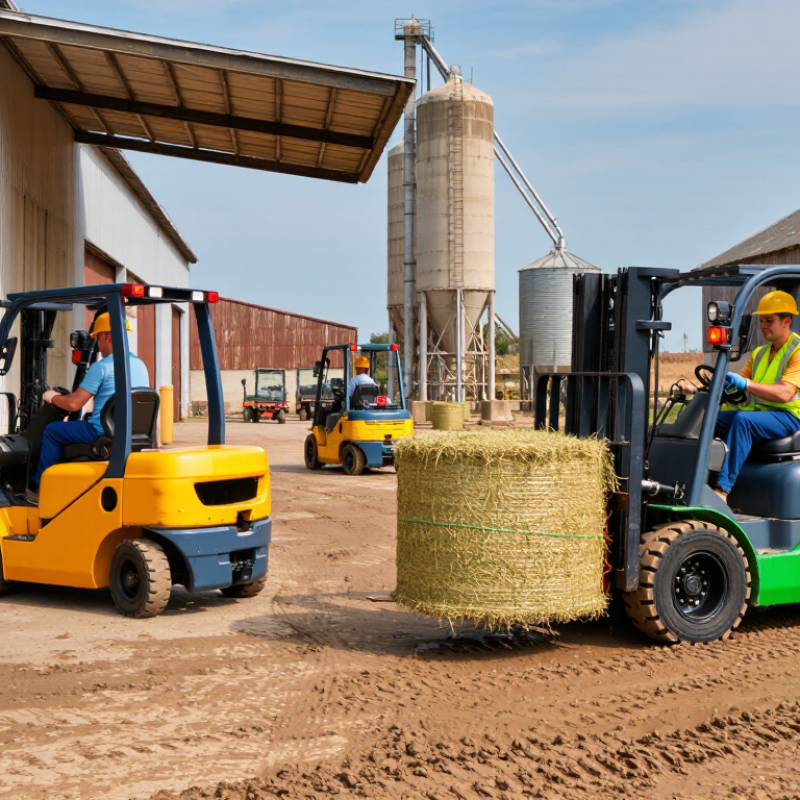
Choosing an Agricultural Forklift in 2026 requires more than comparing lifting capacity or purchase prices. Farms present changing conditions. One morning may involve stacked fertilizer bags. By afternoon, the same machine may move wet hay across uneven ground. Soil, slope, tire choice, mast height, fuel type, and operator visibility can change productivity quickly.

Dr. Scott Shearer, a respected agricultural machinery specialist at The Ohio State University, offers a useful principle: “A machine is productive only when it fits the job, the operator, and the conditions.” That idea should guide every Agricultural Forklift decision. A 2.5-ton model may look suitable on paper. However, its performance could suffer on soft soil, narrow lanes, or steep ramps. A compact electric forklift may work well inside a clean packing shed. It may struggle during long outdoor shifts without charging support.

Look closely at real farm routines. Measure doorway heights. Check the turning radius beside feed storage. Note how often loads are lifted above eye level. Ask operators where visibility disappears. Small details matter.

Safety features deserve practical attention. Consider load charts, stability systems, braking performance, lighting, and access to maintenance points. Confirm that operators receive proper training for the selected machine. Local conditions may expose weaknesses that a showroom test hides.

No checklist is perfect. That matters. A careful buyer should record seasonal changes, fuel costs, repair delays, and operator feedback after purchase. The best Agricultural Forklift is not always the strongest or newest model. It is the one that performs reliably, safely, and efficiently throughout the farm’s actual working year.

How to Choose an Agricultural Forklift in 2026?

Agricultural Forklift Basics: Types, Uses, and Key Features

How to Choose an Agricultural Forklift in 2026?

Agricultural forklift basics start with the working surface. Rough-terrain forklifts suit muddy yards, gravel lanes, and uneven fields. Counterbalance forklifts work better inside barns and packing areas. Telehandlers add reach for stacked bales, feed bags, and elevated loads. They are not identical machines. Their stability limits differ.

Check rated capacity at the actual lift height. A 2,500-kilogram rating may fall sharply with a long attachment. Measure aisle width, doorway height, load dimensions, and ground clearance. Pneumatic tires handle broken ground better. Cushion tires turn tightly on smooth concrete. Electric models reduce indoor exhaust and noise, while combustion models often support longer outdoor shifts. Battery charging space still matters.

Safety should guide the purchase, not appear as an afterthought. OSHA reports about 85 annual forklift deaths and 34,900 serious injuries in the United States. Visibility, a rated seat belt, load backrest, warning lights, and operator training deserve close inspection. FAO’s The State of Food and Agriculture 2022 links mechanization with higher productivity, but notes gaps in skills and access. That warning applies here. A sophisticated forklift cannot correct poor route planning. A clean specification sheet can still mislead. Test the machine with real pallets, wet ground, and the attachments used daily. Small practical failures often reveal the expensive ones.

Assessing Farm Worksites, Loads, Terrain, and Operating Conditions

How to Choose an Agricultural Forklift in 2026?

A farm forklift must match the worksite, not just the advertised lifting capacity. The USDA’s 2022 Census of Agriculture recorded about 1.9 million farms across 880 million acres in the United States. Conditions vary sharply. A compact yard may need tight turning, while a grain facility may demand high lift and long operating hours.

Walk the route before choosing equipment. Measure doorway height, aisle width, loading-dock edges, and storage-rack clearance. Check whether the surface is concrete, gravel, wet soil, or uneven pasture. Tires, ground clearance, and stability matter more on sloped ground. OSHA’s powered industrial truck guidance cites about 85 forklift fatalities and 34,900 serious injuries annually in the United States. Uneven terrain deserves careful speed control and trained operators.

Record the heaviest pallet, its dimensions, and the load center. Fertilizer bags, feed totes, and wrapped hay can shift unexpectedly. A forklift rated for three tonnes may lift less at extended reach or with an attachment. Review the capacity plate every time an attachment changes. Consider engine emissions, ventilation, battery charging, dust, cold starts, and daily operating hours. A clean specification sheet can still mislead. I would require a supervised field test, because mud often exposes assumptions that paperwork hides. The International Organization for Standardization’s ISO 3691-1 safety framework also reinforces controlled operation, visibility, braking, and stability checks.

Comparing Fuel Systems, Power Options, and Environmental Performance

How to Choose an Agricultural Forklift in 2026?

Fuel choice should match daily workload, ventilation, and travel distance. Electric forklifts suit enclosed storage areas because they produce no tailpipe emissions. They also operate quietly near livestock. However, battery charging can interrupt harvest schedules. Plan charging space, spare batteries, and safe electrical capacity before purchasing. Internal-combustion models offer fast refueling and strong performance outdoors. Diesel can handle long shifts, but exhaust, noise, and maintenance deserve careful attention. LPG provides cleaner indoor operation than diesel, although fuel storage still requires disciplined handling.

Power options must reflect the surface, load, and attachment. A compact electric machine may handle smooth concrete well, yet struggle on wet gravel with a full pallet. Check rated capacity at the actual lift height, not only the headline number. Four-wheel traction, high ground clearance, and sealed components help on muddy farm lanes. Test steering around tight barn corners. Small details matter.

Environmental performance involves more than emissions. Compare energy use per operating hour, hydraulic efficiency, battery lifespan, tire wear, and service intervals. Regenerative braking can reduce energy loss during repeated loading cycles. A modern engine may still waste fuel if operators idle between tasks. Training changes results. Quiet machines can also improve communication around workers and animals. Noise matters. The best choice is rarely perfect. A forklift with lower emissions may create more downtime if charging infrastructure is weak. Review one full week of real tasks, including cold mornings, uneven ground, and peak harvest pressure, before committing.

Selecting Capacity, Attachments, Safety Systems, and Operator Comfort

Choosing an agricultural forklift in 2026 starts with real load measurements, not brochure promises. Record pallet weight, load center, ground slope, and daily travel distance. A 2,500-kilogram rating may fall sharply when the load sits farther forward. Check the capacity plate at the intended lift height. Leave a practical reserve, especially on uneven soil.

Attachments should match repeated tasks. Side-shift carriages help align pallets beside storage bays. Fork extensions suit long loads, but they can reduce stability. Bale clamps, rotating forks, or buckets need manufacturer-approved capacity calculations. I would not treat one attachment as universal. That shortcut often creates poor visibility and awkward steering. Tire selection matters too. Pneumatic tires handle ruts better, while solid tires usually resist punctures.

Safety systems deserve equal attention. OSHA reports about 85 annual forklift fatalities and 34,900 serious injuries in the United States. Its powered industrial truck standard requires operator training and periodic evaluation. BLS fatal-injury data also shows transportation and material-moving work remains high-risk. Choose visible seat-belt interlocks, bright work lights, reverse alarms, stability controls, and a clear overhead guard. Test them in dusty and low-light conditions. Comfort is not decoration. An adjustable seat, low vibration, reachable controls, and reduced noise can limit fatigue during long shifts. ISO 2631 guidance links whole-body vibration exposure with health concerns, yet farm routes are rarely smooth. Measure the actual seat vibration if possible. A perfect specification is unlikely. Document compromises before purchase.

How to Choose an Agricultural Forklift in 2026? — Selecting Capacity, Attachments, Safety Systems, and Operator Comfort
Selection Dimension Practical Benchmark or Data Range Best Fit for Agricultural Work What to Check Before Purchase
Rated Load Capacity 1,500–2,500 kg for general farm, warehouse, and pallet handling; 3,000–5,000 kg for bulk bags, large bins, and heavy attachments. Choose the lowest capacity that safely handles the heaviest routine load, rather than sizing only for average pallets. Confirm the capacity at the actual load center and lift height. Do not use the maximum nominal capacity if the attachment or load moves the center of gravity forward.
Load Center Many industrial ratings use a 500 mm load center; agricultural loads may extend to 600 mm or more. Important for long crates, wrapped bales, bins, and uneven loads that project beyond the forks. Use the manufacturer’s capacity chart for the real load center. A longer load center normally reduces allowable lifting capacity and stability.
Lift Height and Mast 3–4 m suits loading vehicles and low storage; 4.5–6 m suits high-bay agricultural stores and pallet racks. A two-stage mast is suitable for common yard work; a three-stage mast helps when storage height is limited by building clearance. Measure doorway height, roof clearance, rack beam height, and the mast’s lowered and extended dimensions. Check residual capacity at the required lift height.
Ground Clearance and Tires 180–250 mm of ground clearance is useful for uneven yards. Pneumatic tires are common for outdoor surfaces; solid or cushion tires suit smoother indoor floors. Pneumatic tires provide better performance on gravel, compacted soil, and farm lanes. Solid tires reduce puncture risk in areas with nails, stalks, or scrap material. Match tire type and tread to soil, mud, slopes, and indoor flooring. Check turning space and tire load ratings, not just tire diameter.
Powertrain and Operating Environment Internal-combustion units are generally suited to outdoor ventilation; electric units are preferred for enclosed areas and low-emission requirements. Select electric power for produce rooms, food-handling areas, and quieter indoor work. Select an outdoor-capable powertrain for long shifts on rough or wet surfaces. Review duty cycle, charging or refueling access, dust and moisture exposure, ambient temperature, and ventilation. Battery capacity should cover the planned shift with reserve.
Fork Length and Fork Positioning Common fork lengths are approximately 1,000–1,800 mm; adjustable fork positioning helps handle different pallet widths. Shorter forks improve maneuverability in trailers and narrow aisles; longer forks can support wide bins and long agricultural loads. Forks should support the load sufficiently without excessive overhang. Check fork thickness, locking pins, heel wear, and visibility around the load.
Recommended Attachments Common options include fork positioners, side-shift, bale clamps, carton clamps, rotating attachments, drum handlers, and specialized bin clamps. Use bale clamps for wrapped bales, bin clamps for produce containers, and side-shift or fork positioners for frequent alignment changes. The attachment must have a rated capacity, approved mounting interface, and documented effect on residual forklift capacity. Never clamp loads that the attachment is not designed to hold.
Hydraulic Performance Prioritize smooth, controllable hydraulic movement and sufficient auxiliary hydraulic flow for the selected attachment; exact flow requirements vary by attachment. Higher hydraulic capability is useful for powered clamps, rotating devices, and frequent multi-function handling. Compare required attachment flow and pressure with the forklift’s specifications. Check hose routing, coupler protection, leak prevention, and control ergonomics.
Stability and Rated Capacity Plate Safe operation depends on the combined effect of load weight, load center, lift height, mast tilt, attachment weight, and surface conditions. Especially important when handling tall bins, suspended loads, bales, or loads on slopes and uneven ground. A clearly readable capacity plate and attachment-specific rating are essential. Keep loads low while traveling, avoid abrupt turns, and never exceed the lowest applicable rating.
Operator Protection Systems Look for a certified overhead guard, load backrest, seat belt or restraint system, parking brake, horn, and controlled access to the operator position. These systems help reduce injury risk from falling loads, unintended movement, and operator ejection during sudden stops or tip-over events. Inspect the guard, restraint, interlocks, brakes, warning devices, and service records. Safety equipment should not be removed, bypassed, or modified without approval.
Visibility and Warning Systems Useful features include a clear sightline, mirrors, LED work lights, reversing alarm, blue or red warning light, camera, and optional proximity detection. Recommended for mixed traffic around barns, packing areas, loading docks, pedestrians, and low-light work zones. Select warning systems according to site traffic and noise conditions. Cameras assist visibility but do not replace direct observation, mirrors, or a spotter where required.
Operator Comfort and Controls Prioritize an adjustable suspension seat, adjustable steering column, low-effort controls, low vibration, adequate legroom, and easy entry and exit. Important for long harvest shifts, repeated reversing, and operations requiring frequent mast or attachment adjustments. Allow operators to test the seat, pedals, steering, mast controls, restraint, visibility, and vibration on the actual work surface before purchase.
Turning Radius and Aisle Width Compact models generally improve maneuverability, but the required aisle depends on truck dimensions, load size, rack layout, and turning method. A compact forklift suits tight packing rooms and narrow storage aisles; a larger chassis may be safer and more stable outdoors. Measure the narrowest aisle, doorway, loading bay, and turning area with the largest expected load. Include attachment overhang in the calculation.
Slope and Surface Capability Use only the slope limits specified for the exact truck and load. A firm, level surface provides substantially better stability than loose soil, mud, or wet grass. For ramps and farm lanes, choose suitable traction, braking, ground clearance, and stability rather than relying only on engine power. Assess gradients, cross-slopes, drainage, potholes, and surface strength. Travel with the load upgrade on slopes when required by the operating instructions.
Maintenance and Availability Plan daily pre-use inspections and scheduled service for brakes, steering, tires, forks, chains, hydraulics, restraint systems, and warning devices. A simple service layout and accessible inspection points reduce downtime during seasonal peaks. Confirm technician support, spare-parts availability, diagnostic access, service intervals, battery or fuel maintenance, and operator training requirements.
Selection Rule: Choose the forklift and attachment combination using the lowest rated capacity shown for the actual load center, lift height, attachment, and operating conditions. Always follow the applicable local regulations, manufacturer instructions, and site-specific risk assessment.

Evaluating Costs, Maintenance Needs, Durability, and Dealer Support

How to Choose an Agricultural Forklift in 2026?

Purchase price is only the opening line in a forklift’s cost. Build a three-year ownership sheet covering energy, tires, batteries, filters, labor, insurance, and downtime. OSHA estimates that powered industrial trucks cause about 85 deaths, 34,900 serious injuries, and 61,800 non-serious injuries annually in the United States. That makes visibility, braking, stability, and operator training financial issues too. A cheaper machine can become expensive after one avoidable incident.

Maintenance needs change sharply on farms. Mud enters wheel hubs, dust reaches air filters, and manure accelerates corrosion. Request service intervals, inspection records, and realistic parts prices. Check whether technicians can reach your site quickly during harvest. A useful dealer should provide response times, loaner arrangements, mobile repairs, and training records. Promises are not support.

Durability should match the ground, not the brochure. Inspect mast welds, undercarriage protection, tire condition, hydraulic leaks, and ground clearance. Ask for verified operating hours and load-test results. The U.S. National Safety Council’s Injury Facts 2024 reported $167 billion in workplace injury costs for 2022, including medical expenses and lost productivity. Delayed repairs can quietly consume margins. I would still leave room for doubt: projected savings often ignore seasonal idle periods and battery replacement. Visit a working farm, test the forklift cold, and record every defect before signing.

Select Electrical Logo
Since 1988

Select Electrical Ltd. © Copyright 1988-2025