How to Choose an ANSI Rated Three Phase Oil Transformer?
Choosing the right ANSI Rated Three Phase Oil Transformer For Utility Use requires more than comparing purchase prices. The transformer must match the utility’s voltage system, load profile, fault conditions, and installation environment. A practical evaluation begins with the nameplate, including primary voltage, secondary voltage, frequency, kVA rating, impedance, and temperature-rise limits. Small details matter.
Field experience shows that seasonal loading can change transformer performance significantly. A unit serving irrigation pumps may face sharp summer peaks, while a suburban feeder may carry steady evening demand. Engineers should review expected growth, motor starting currents, harmonics, and future interconnection plans. The selected transformer should also provide suitable insulation coordination and withstand anticipated short-circuit stress.
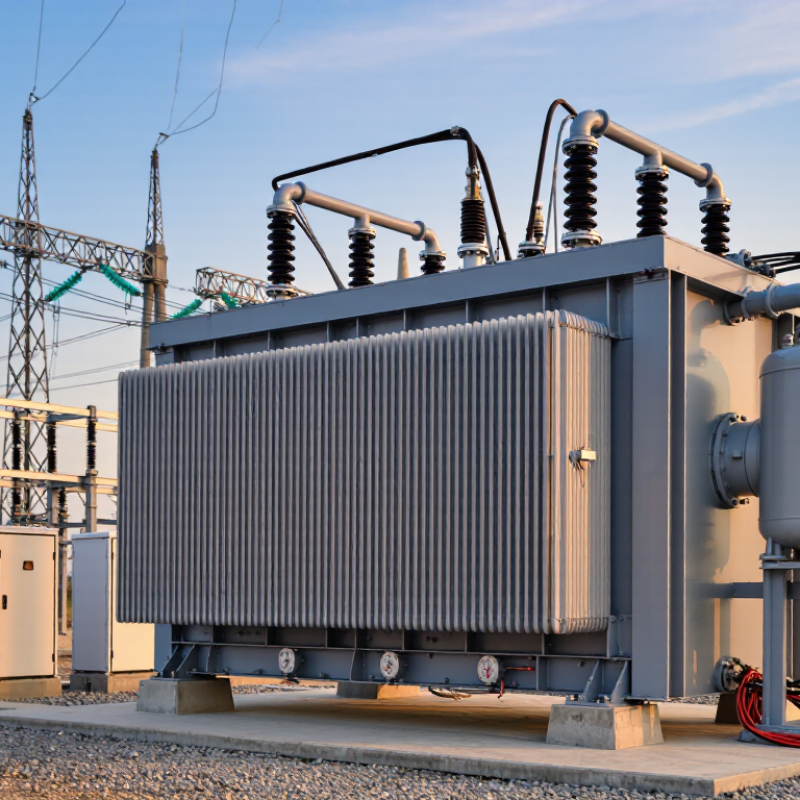
Oil preservation deserves close attention. Conservator tanks, sealed designs, pressure-relief devices, and liquid-level indicators affect inspection routines and long-term reliability. Look for documented factory testing, traceable materials, certified efficiency data, and compliance with applicable ANSI, IEEE, and local utility requirements. Ask how the manufacturer verifies winding resistance, ratio accuracy, dielectric strength, and leakage performance.
Performance matters most.
A strong selection process also considers transport weight, pad dimensions, noise limits, grounding, bushing access, and available maintenance skills. These practical constraints are easy to overlook during design review. No checklist is flawless. Site conditions may differ from the original assumptions, and a seemingly efficient transformer may not suit an overloaded feeder. Careful consultation with qualified engineers, utility operators, and the manufacturer helps connect technical data with actual service demands. The best choice is not simply the largest or cheapest unit. It is the transformer that delivers dependable capacity, safe operation, manageable maintenance, and credible lifecycle value.
Define ANSI/IEEE C57.12.00 Standards for Three-Phase Oil Transformers
How to Choose an ANSI Rated Three Phase Oil Transformer?
ANSI/IEEE C57.12.00-2021 defines general requirements for liquid-immersed distribution, power, and regulating transformers. It addresses insulation levels, temperature rise, dielectric performance, terminal markings, and construction details. For a three-phase oil transformer, confirm the rated voltage, kVA capacity, frequency, and basic impulse insulation level. These values must match the system, not only the nameplate preference. IEEE C57.12.90 provides related testing methods, including winding resistance, ratio, polarity, and applied-voltage tests. ANSI compliance is not a complete purchasing specification. That distinction matters.
The U.S. Department of Energy has estimated that distribution transformers consume roughly 2–3% of national electricity use. Small efficiency improvements can therefore reduce long-term operating losses. Review no-load and load-loss data at the actual operating point. Check oil preservation, temperature indicators, pressure relief, grounding, and short-circuit withstand capability. Field inspections often find overlooked details, such as insufficient clearance around bushings. A neat checklist can still miss installation conditions.
Tips: Request the exact C57.12.00 edition used for design. Compare tested losses, not marketing averages. Ask for routine and design test records. Verify ambient temperature and altitude assumptions. If future loading is uncertain, avoid selecting capacity by guesswork. A larger transformer may lower loading losses, but it can increase purchase cost and no-load losses. That trade-off deserves a second review.
How to Choose an ANSI Rated Three-Phase Oil Transformer?
ANSI/IEEE C57.12.00 Preferred Three-Phase Transformer kVA Ratings
ANSI/IEEE C57.12.00 defines general requirements for liquid-immersed transformers, including rated capacity, insulation coordination, temperature-rise requirements, and nameplate information. The chart shows commonly used preferred three-phase transformer ratings in kVA. When selecting a unit, confirm the system voltage, frequency, impedance, cooling method, insulation level, tap range, and applicable temperature-rise requirements in addition to the kVA rating.
Match Primary Voltage, Secondary Voltage, and 60 Hz System Frequency
Choosing an ANSI rated three phase oil transformer starts with matching the primary voltage to the utility supply. Check the measured line-to-line voltage, not only the nominal value on a drawing. A small mismatch can increase losses, heating, and insulation stress. Field conditions often differ from old specifications.
The secondary voltage must suit the equipment connected downstream. Motors, panels, and control systems may require different voltage levels. Confirm the required line-to-line and line-to-neutral values. Also verify the transformer’s connection, phase sequence, and neutral arrangement. A 480-volt secondary will not safely replace a 208Y/120-volt system without proper system changes. That detail is easy to miss.
Frequency matters too. A 60 Hz transformer should operate on a stable 60 Hz system. Frequency changes can affect core flux, temperature, and audible noise. Review the nameplate, utility data, and site measurements together. I have seen projects rely on outdated schedules, then discover unexpected voltage variation during commissioning. That is not a minor paperwork issue. Ask for certified test data, impedance values, temperature-rise ratings, and ANSI compliance documentation. Allow practical space for oil containment, ventilation, cable bending, and inspection access. The specification may look complete, yet one missing operating detail can weaken the whole selection.
Select kVA Capacity Using Load Demand and 25% Future Expansion
When choosing an ANSI-rated three-phase oil transformer, begin with measured load demand. Collect feeder readings during normal operation, peak production, and motor starting. Do not rely only on connected load. A panel showing 600 kVA of connected equipment may draw far less after diversity is applied.
Calculate the present diversified peak, then multiply it by 1.25 for planned expansion. For example, a measured 400 kVA peak becomes 500 kVA. Select the next available standard rating above that result, while checking the utility’s preferred sizes. Leave room for reality. A future chiller, production line, or electric vehicle charger can consume the allowance quickly. IEEE Std C57.91 also requires engineers to consider temperature, loading duration, and insulation aging when evaluating transformer loading. A neat spreadsheet can still be wrong.
Review more than kVA. Check primary voltage, secondary voltage, impedance, frequency, altitude, ambient temperature, and available fault current. Motor starting may require temporary overload capability, while harmonic-producing drives can increase heating. The U.S. Department of Energy’s 2024 transformer supply-chain review reported distribution-transformer lead times reaching one to two years in some cases. Correct sizing therefore protects both operation and procurement schedules. ANSI/IEEE C57.12.00 defines general transformer requirements, but it does not replace a site-specific load study. Measure twice. Reconsider optimistic growth estimates.
Verify 65°C Temperature Rise, Insulation Class, and Cooling Method
How to Choose an ANSI Rated Three Phase Oil Transformer?
A 65°C temperature rise is not the winding temperature. It is the measured rise above ambient at rated load. ANSI/IEEE C57.12.00 commonly uses a 30°C average ambient and a 40°C maximum ambient reference. Therefore, a 65°C-rise transformer may operate near 95°C average winding temperature under typical conditions. The IEEE C57.91 loading guide also warns that hot-spot temperature controls insulation aging. Small installation errors can reduce expected life.
Check the insulation system, not only the nameplate. Many oil-filled transformers use a 220°C thermal-class insulation system, but the actual design still depends on paper condition, oil quality, moisture, and hot-spot limits. Confirm basic impulse insulation level, dielectric test results, and temperature-rise test records. The U.S. Department of Energy’s Distribution Transformer Technical Support Document evaluates efficiency using measured losses at no-load and load conditions. This matters because cooling equipment can add auxiliary power and maintenance needs.
Tips: Match the cooling code to the duty cycle. ONAN cooling uses natural oil and air movement, while ONAF adds fans for higher capacity. Ask whether the rated kVA applies to ONAN or ONAF operation. Inspect fan controls, alarms, and radiator airflow. A practical field review should compare the specified load profile with real measurements. Assuming “more cooling is always safer” is an easy mistake.
Compare Efficiency, Impedance, BIL, and ANSI-Compliant Safety Features
How to Choose an ANSI Rated Three Phase Oil Transformer?
Efficiency should be judged across the expected load profile, not only at full load. The U.S. Department of Energy’s transformer analysis identifies no-load and load losses as major lifetime cost drivers. A lightly loaded transformer still consumes energy continuously. Ask for tested loss values, temperature-rise data, and the applicable efficiency standard. Field conditions matter. A perfect laboratory result may disappoint in a dusty, hot enclosure.
Impedance controls voltage regulation and available fault current. Higher impedance can reduce fault current, but it may increase voltage drop during motor starting. BIL, or Basic Impulse Insulation Level, shows how insulation withstands lightning and switching impulses. It is not a complete surge-protection system. IEEE C57.12.00 and IEEE C57.12.90 define important design and test practices for liquid-immersed transformers. Confirm dielectric, induced-voltage, and temperature-rise test records before purchase. Do not accept a generic datasheet. ANSI-compliant safety features should include a pressure-relief device, liquid-level indication, grounding provisions, sealed tank construction, and clear warning labels.
Tips: Match impedance with the protection study. Check BIL against system voltage and exposure. Review DOE loss assumptions. Also inspect maintenance access. Engineers sometimes overlook it. That mistake becomes expensive. Compare total ownership cost, including oil testing, losses, cooling, and replacement risk. My practical concern is simple: specifications can look complete while missing site altitude, ambient temperature, or harmonic loading. Request written confirmation for each condition.