
How to Choose Hot Dip Galvanized Steel Coil Suppliers?

Choosing reliable Hot Dip Galvanized Steel Coil Suppliers requires more than comparing prices on a quotation sheet. The right supplier should understand your application, forming process, climate, and delivery schedule. A coil used for roofing may need different coating performance from one used for automotive parts. Product details matter.

Experienced buyers usually verify the steel grade, zinc coating mass, coil width, thickness tolerance, surface finish, and edge condition. Ask for recent mill test certificates and inspection records. Confirm whether testing follows recognized standards, such as ASTM A653 or EN 10346, when appropriate for your market. A dependable supplier should explain these documents clearly, not hide behind technical language.

Traceability is equally important. Each coil should have identifiable batch information, production records, and sensible packaging for ocean or inland transport. Check how the supplier protects exposed edges, controls moisture, and handles complaints. Photographs can help, but physical samples and independent inspections often reveal more. Ask for customer references in industries similar to yours.

Price still matters. It is not everything.

A low offer may exclude testing, packaging, or realistic delivery costs. On the other hand, a famous supplier is not automatically the best fit. Capacity, communication speed, technical support, and honest problem reporting deserve careful attention. Some suppliers provide excellent material but weak follow-up. That can create delays when specifications change.

This guide examines practical questions, supplier credentials, quality controls, and warning signs. It also recognizes an uncomfortable truth: no evaluation method is perfect. Careful comparison reduces risk, but thoughtful buyers continue reviewing performance after the first shipment.
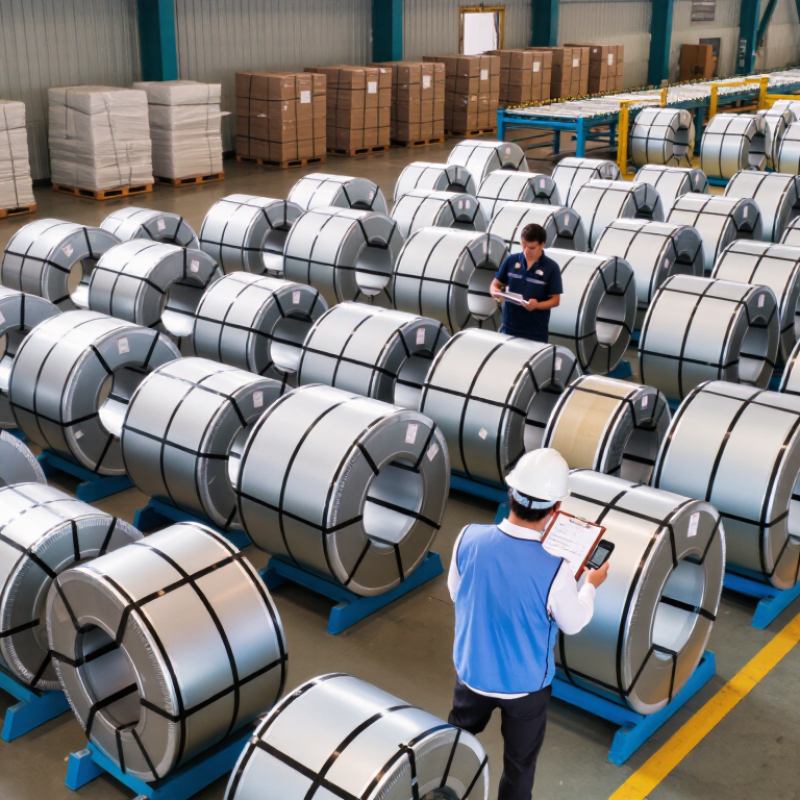
How to Choose Hot Dip Galvanized Steel Coil Suppliers?

Understanding Hot Dip Galvanized Steel Coil Specifications

How to Choose Hot Dip Galvanized Steel Coil Suppliers?

Understanding specifications is more important than comparing prices. Hot dip galvanized coil normally includes a steel grade, thickness, width, zinc coating mass, surface finish, and mechanical properties. ASTM A653/A653M uses designations such as G60 and G90. G90 represents about 275 g/m² of zinc on both surfaces. EN 10346 commonly uses Z100, Z275, and higher coating classes. These figures are not interchangeable without checking the standard. The World Steel Association reported 1.888 billion tonnes of crude steel production in 2023. Such scale makes specification control essential, not optional.

A reliable supplier should provide a material test certificate, coating test results, dimensional tolerances, and a clear production standard. Check whether the coil is passivated, oiled, or untreated. Confirm the required coil inner diameter and maximum outer diameter before loading. In my purchasing experience, a low-priced coil can create higher costs when stamping cracks appear. I have also seen buyers request a thick zinc layer but forget forming performance. That is an avoidable mistake. Surface quality matters too, especially for exposed panels and painted components.

Tips: Compare coating mass, not only zinc thickness. Ask for samples from the coil edges and center. Verify tensile strength, yield strength, elongation, and bend performance against the final application. Request recent inspection records, but do not treat paperwork as proof alone. Independent testing is wiser for large orders. A supplier’s answer should be specific, measurable, and slightly boring. That is usually a good sign.

Assessing Supplier Quality and Production Capabilities

Choosing a hot dip galvanized steel coil supplier requires more than comparing prices. Quality begins with traceable steel chemistry, stable coating control, and documented inspection. The World Steel Association reported 1.892 billion tonnes of crude steel production in 2023, showing the market’s enormous scale. However, high output does not automatically mean reliable galvanized coil quality.

Ask for recent mill test certificates, coating-mass results, tensile data, and dimensional records. Check whether testing follows EN 10346 or ASTM A653, depending on the application. Inspectors should compare stated zinc coating with independent laboratory results. Surface details matter: uneven spangle, edge cracks, bare patches, or oil marks can create problems during forming and painting. A certificate alone is not enough.

Production capability also needs evidence. Review the supplier’s annealing furnace, zinc bath controls, skin-pass mill, tension leveler, slitting equipment, and packaging methods. Request batch traceability from steelmaking through shipment. The OECD Steel Outlook 2023 identifies persistent global steel overcapacity, so impressive annual capacity figures deserve careful verification. Ask for utilization rates, lead-time records, maintenance logs, and sample production data. A large line may still deliver inconsistent coating thickness. That is an uncomfortable possibility. Supplier audits should include rejected coils, not only successful samples, because failure records often reveal the real process discipline.

Verifying Galvanizing Standards, Certifications, and Testing

When choosing hot dip galvanized steel coil suppliers, verify standards before comparing prices. For continuous galvanized sheet, request the exact grade and coating designation under ASTM A653/A653M or EN 10346. The certificate should state yield strength, tensile strength, elongation, coating mass, and coil number. Do not accept “galvanized” as a complete specification.

Testing must be traceable. Ask for heat analysis, coating-mass results, bend tests, and surface inspection records. ASTM A90/A90M measures coating mass by stripping zinc and weighing the difference. ISO 1460 uses a similar gravimetric principle. A typical G90 coating under ASTM A653 represents about 90 oz/ft² total coating mass, or approximately 275 g/m². Check whether the quoted value is triple-spot or single-spot. Confusing these results causes avoidable disputes.

Independent evidence matters. The International Zinc Association reports that galvanizing remains the dominant use of zinc globally, reflecting its established corrosion-control role. However, a certificate alone is not proof of consistent production. Compare test dates, laboratory accreditation, sampling frequency, and coil identification. Inspect the edge, spangle, scratches, and roll marks under bright light. Small surface defects may become obvious after forming. A clean document can still hide weak process control. I would also request one retained sample, although many buyers overlook this practical step. Supplier claims need testing, not trust.

Comparing Pricing, Delivery Terms, and Supply Reliability

How to Choose Hot Dip Galvanized Steel Coil Suppliers?

Price matters, but the lowest quotation can hide important costs. Compare the galvanized coating, steel grade, coil weight, packaging, and inspection charges. A serious supplier should provide a clear quotation with no vague extras. Ask whether the price includes export packing and port delivery. In my experience, a slightly higher price often reflects better surface control and fewer rejected coils. Still, I have seen expensive offers with weak documentation. Check carefully.

Delivery terms can affect production more than expected. Confirm the lead time from order approval, not from the first inquiry. Ask about monthly capacity, loading dates, shipping routes, and delay procedures. A reliable supplier should share realistic schedules and explain what happens when vessels are postponed. Request sample packing photos and recent shipment records. Delivery promises sound good. Written details matter.

Tips: Compare at least three detailed quotations. Check mill test certificates, coating thickness reports, and independent inspection options. Confirm coil dimensions, inner diameter, maximum lifting weight, and moisture protection. Clarify payment milestones and the process for handling rust, dents, or incorrect quantities. Keep communication records. One overlooked tolerance can create costly rework. Avoid choosing based on price alone; supplier reliability becomes visible when problems appear.

Selecting the Supplier for Long-Term Cooperation

Choosing a hot dip galvanized steel coil supplier is not only about today’s price. Long-term cooperation depends on stable quality, honest communication, and practical support. Experienced buyers should examine coating thickness, steel grade, width tolerance, coil weight, and surface condition. Ask for recent mill certificates and inspection records. A reliable supplier should explain testing methods clearly, not hide behind general claims.

I once saw a low-priced coil create extra work because its coating varied across the strip. The delivery arrived on time, but several coils needed additional inspection. That experience changed my supplier evaluation. I now check production capacity, packing details, export experience, and claim procedures before signing an agreement. No supplier performs perfectly. However, a professional supplier responds quickly, accepts reasonable questions, and improves after a mistake.

Tips: Request sample documents before ordering. Compare actual coating data with contract requirements. Discuss lead times during busy seasons. Confirm how coils are protected from moisture during transport. Keep communication records, especially for specifications and delivery changes. A factory visit can reveal storage conditions, labeling practices, and equipment maintenance. Video verification also helps when travel is difficult. Price still matters, but unstable quality can cost more through rework, delays, and customer complaints. Long-term partners should offer consistent service, not occasional discounts.

How to Choose Hot Dip Galvanized Steel Coil Suppliers?

Selecting the Supplier for Long-Term Cooperation

This reference scorecard gives the greatest weight to quality compliance, coating consistency, and delivery reliability. Buyers should verify applicable standards such as ASTM A653 or EN 10346, request batch-level inspection documents, review thickness and zinc-coating consistency, and assess the supplier’s ability to provide stable delivery over time.

Select Electrical Logo
Since 1988

Select Electrical Ltd. © Copyright 1988-2025