How to Choose the Best Motor Starter for Your Needs?

Choosing the right motor starter for your application is crucial. According to John Smith, an expert in industrial automation, “Selecting the best motor starter can enhance the efficiency of your operations.” His insights reflect the significant role a motor starter plays in controlling electric motors.

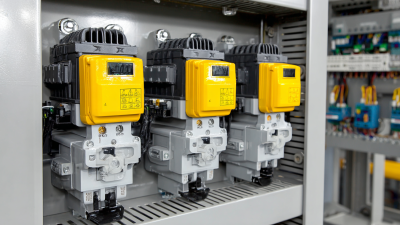
Motor starters can vary widely in type and function. For instance, direct-on-line starters are simple and effective, whereas soft starters offer smoother motor acceleration. Understanding your specific needs is essential to making an informed decision. Each type serves different applications, ranging from small machines to large industrial equipment.

It’s important to conduct thorough research. Consider factors like motor size, load conditions, and control requirements. Mistakes in selection can lead to inefficiency and increased costs. Not every motor starter will suit your needs perfectly. Each choice has its pros and cons, and understanding them is key. Don't overlook the importance of reliability and durability in your final selection.
How to Choose the Best Motor Starter for Your Needs?

Understanding the Different Types of Motor Starters Available

When selecting a motor starter, understanding the various types available is crucial. Motor starters primarily include direct-on-line (DOL) starters, star-delta starters, and soft starters. DOL starters are simple and cost-effective; however, they can cause high inrush current, stressing the motor and power supply. Reports estimate that up to 30% of industrial motor failures arise from issues related to high starting currents.

Star-delta starters help mitigate these problems by reducing the starting current and torque. This option is ideal for larger motors, especially those over 7.5 kW. It provides a softer start, which can decrease wear and tear on the motor. However, this type requires more space and additional control equipment, which adds to cost and complexity.

Soft starters are another alternative, offering smooth acceleration and deceleration. They help in various applications where control over the starting current is necessary. Interestingly, studies show that using soft starters can improve overall energy efficiency by 15-30%. Despite their advantages, they may not suit every application and can lead to overheating without proper temperature management. Understanding these differences is vital for making informed decisions.
Comparative Analysis of Different Types of Motor Starters

This chart illustrates the efficiency and cost-effectiveness of various types of motor starters commonly used in industrial applications. The data represents the average efficiency percentages and costs associated with Direct-On-Line (DOL), Star-Delta (SD), and Soft Starters (SS).

Evaluating the Power Requirements for Your Motor System

When selecting the right motor starter, understanding the power requirements of your motor system is crucial. Begin by calculating the motor's voltage and current ratings. These figures help determine the starter's specifications. Do not overlook the full load current, as using a starter designed for lesser currents can lead to overheating.

Next, consider the motor's starting type. Different motors require varying levels of starting torque. Not all starters provide the same benefits. For example, some may be ideal for high-torque applications, while others aim for cost efficiency. A mismatch can cause performance issues, reducing your operational reliability.

Evaluate the environment where the motor will operate. Factors such as temperature and humidity can affect the performance of the starter. A starter may operate beautifully in one setting but fail miserably in another. Adjustments might be necessary based on specific conditions. The details are important, and even experienced technicians can miss them. Keeping these considerations in mind will lead to a more tailored solution for your motor system.

Assessing Operating Environment Factors for Motor Starters

Choosing the right motor starter involves various factors, especially related to the operating environment. Environment can significantly affect performance and reliability. For example, moisture, dust, or extreme temperatures can impact motor starters. Understanding these aspects helps ensure system longevity.

Tips: Always assess the humidity level in your environment. High humidity can lead to corrosion. Ensure your motor starter has appropriate protection to handle moisture.

Consider the installation location. If it’s exposed to dust or debris, opt for starters with enhanced enclosures. Dust can clog components, leading to inefficiencies. Regular maintenance checks are essential to prevent failures. They can help you spot issues before they escalate.

Weather conditions also play a critical role. If operating outdoors, choose weather-resistant starters. Cold temperatures can affect operations. Make sure to select starters rated for lower temperatures. Not all products will perform well in cold conditions. Each environment presents unique challenges, and reflection on these factors can guide you to the right decision.

How to Choose the Best Motor Starter for Your Needs? - Assessing Operating Environment Factors for Motor Starters

Operating Environment Factor Consideration Recommended Motor Starter Type Typical Applications
Temperature Range High and low-temperature tolerance Thermal Overload Starter HVAC systems, refrigeration
Humidity Levels Resistance to moisture Enclosed Magnetic Starter Water treatment facilities
Presence of Dust or Particles Dust resistance Dust-Proof Starter Manufacturing plants
Vibration Levels Durability under vibrations Vibration-Resistant Starter Mining equipment
Altitude Performance at high altitudes Special High-Altitude Starter Highland operations

Comparing Manual vs. Automatic Motor Starters for Efficiency

How to Choose the Best Motor Starter for Your Needs?

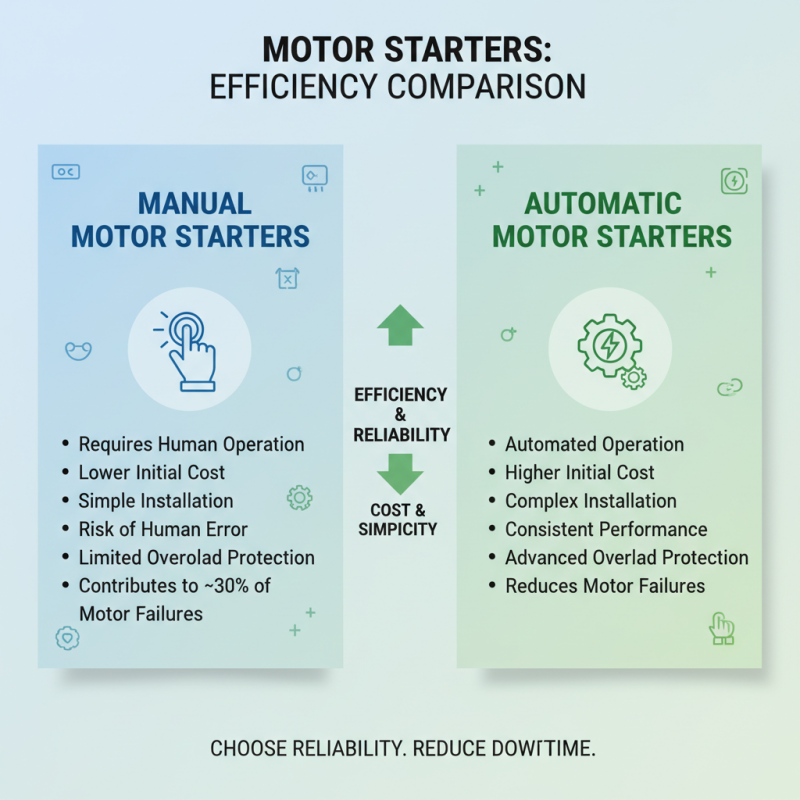
When it comes to motor starters, understanding the differences between manual and automatic options is crucial. Manual motor starters require human intervention to operate. They are often less expensive and simpler to install. However, they come with some drawbacks. Human error can lead to inconsistent performance. Additionally, manual starters do not protect the motor efficiently against overloads, which can cause damage over time. According to industry data, nearly 30% of motor failures are attributed to overload conditions that could be prevented with better starter technologies.

On the other hand, automatic motor starters provide a more reliable solution. These starters are designed to detect motor conditions and react accordingly. They can automatically shut down in case of an overload, potentially saving significant repair costs. Reports indicate that automatic starters can enhance operational efficiency by up to 25%. They also promote energy savings by adjusting motor performance based on actual workload. However, they come at a higher initial cost and may require more complex wiring and installation.

Both types have their merits and demerits. The choice largely depends on your specific needs. Analyzing your operational demands is vital. Are you willing to invest in a more sophisticated system? Or is a manual solution sufficient for your application? The right decision will impact not just effectiveness, but also long-term costs. It’s important to weigh these considerations carefully.

Identifying Key Features to Look for in Motor Starters

When selecting a motor starter, certain features become critical. One key element is the overload protection. This protects the motor from overheating. It ensures longevity and reduces maintenance costs. Different motors have varying amp requirements. A starter suitable for one may not work for another. It's essential to check the specifications.

Another important feature is the compatibility with control voltage. Different applications often use different voltages. Confirming compatibility can prevent operational issues. Additionally, consider the type of motor. Whether it’s AC or DC impacts the starter’s functionality. Using the wrong type can lead to inefficient performance.

Lastly, don’t overlook the aspect of user interface. A straightforward control panel makes operation easier. A complex starter may lead to user errors. Training staff to use complicated systems can be time-consuming. Reflect on the operational environment. Dusty or humid conditions may require a more robust starter with better sealing.

Select Electrical Logo
Since 1988

Select Electrical Ltd. © Copyright 1988-2025