
Choosing the right Regulated Power Supply (RPS) is crucial for many applications. The global market for RPS is projected to grow significantly. According to a recent industry report, the market is expected to reach over $22 billion by 2027. This growth reflects the increasing demand for reliable power solutions across various sectors. Industries ranging from telecommunications to manufacturing depend heavily on regulated power supplies.
Selecting an appropriate RPS involves understanding your specific needs. Factors like output voltage, current, and stability are essential. For instance, a device needing a stable 5V power source won’t function properly with an unregulated supply. Unregulated supplies can lead to fluctuations that may damage sensitive electronics. User feedback often highlights the frustration of choosing subpar options, leading to performance issues.
Take time to evaluate your requirements. Many users find themselves overwhelmed by the technical jargon. It’s easy to make mistakes when choices seem similar. Thorough research and understanding are essential. Investing in the right Regulated Power Supply can minimize risks. Balancing quality with cost remains a challenge for many. This decision greatly impacts device reliability and longevity.
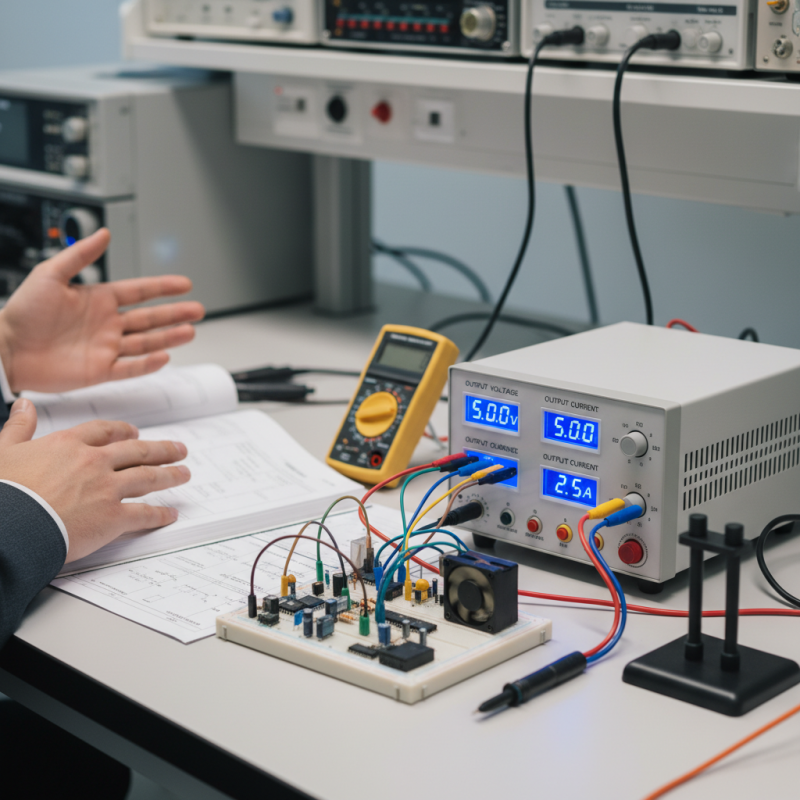
When selecting a regulated power supply, understanding its types is crucial. Regulated power supplies ensure stable voltage output. This is essential for sensitive devices. There are two main categories: linear and switching.
Linear power supplies provide steady output but can be bulky. They produce less noise, making them suitable for audio applications. Switching power supplies are compact and efficient. However, they can create electrical noise, which may interfere with delicate equipment.
**Tip:** Consider your application. If noise is a concern, lean towards linear. For projects needing efficiency, a switching supply may fit better.
You should also evaluate the voltage and current requirements. Mismatched specifications can lead to equipment failure. Additionally, factors like size and cooling methods play a role. Ensure the chosen supply has adequate heat dissipation features.
**Tip:** Measure your actual load. Sometimes, power needs can be lower than expected, leading to over-specification. Reflecting on your requirements can save energy and costs over time.
When selecting a regulated power supply, understanding your power requirements is crucial. Voltage, current, and load are the primary factors to consider. Voltage dictates how effectively the device operates. If the voltage is too high or too low, equipment can malfunction. For instance, a report from the International Electrotechnical Commission reveals that 70% of electrical failures stem from incorrect voltage levels.
Current is equally important. It measures how much electricity flows within the system. Insufficient current can lead to poor performance or device shutdowns. According to industry studies, devices often require a current rating of at least 20% higher than their operational needs. This safety margin ensures stability, especially under varying loads.
Load refers to the actual power demand from your devices. It’s vital to match your power supply to this demand. Overloading can cause overheating, reducing the lifespan of your equipment. In fact, a report by the Institute of Electrical and Electronics Engineers states that proper load management can extend device durability by up to 40%. Choosing the right power supply involves some trial and error. Testing various options can lead to unforeseen challenges, reminding users to reevaluate their choices frequently.
Choosing the right regulated power supply involves careful consideration of several key features. First, output voltage is crucial. Many devices operate at specific voltages. Ensure the power supply matches your device's needs. Adjustable output can offer flexibility, but it complicates the selection process. You should consider how often you will change the output.
Current rating is another vital factor. If a device draws too much current, it can lead to failure. Check the power supply's maximum current rating. A unit with a higher rating provides room for growth, especially if you expand your projects. Look for power supplies that indicate sustained versus peak ratings. This clarity helps prevent potential issues.
Additionally, consider the size and weight of the power supply. A compact design is ideal for limited space, but it can also mean compromised durability. Some users overlook heat dissipation features. A unit that overheats can reduce lifespan and performance. Lastly, take time to reflect on your current and future needs. It’s better to invest in a more capable power supply than to replace it sooner than expected.
Choosing the right regulated power supply involves careful evaluation of efficiency and performance specifications. The efficiency rating indicates how well the power supply converts input power into usable output power. Reports show that a typical efficiency rating ranges from 70% to over 95%. Higher efficiency equates to lower energy costs and reduced heat generation.
Performance specifications include load regulation, ripple voltage, and transient response. Load regulation measures how well a power supply maintains output voltage even with varying load conditions. A good power supply will have a regulation of less than 1%. Additionally, ripple voltage should be minimized; optimally, it should be under 50 mV for sensitive electronics. These metrics directly impact device stability and longevity.
It is also important to consider the environment. Some power supplies may work well in controlled environments but fail in harsh conditions. Factors such as temperature fluctuations and humidity can affect performance. Reports indicate that up to 30% of power supplies fail under extreme environmental conditions. Making selections without serious consideration can lead to unexpected failures. Be aware of these elements to ensure compatibility with your applications.
When selecting a regulated power supply, compliance and safety standards are crucial. They protect both equipment and users. Look for devices that meet international safety marks, like IEC or UL standards. These labels indicate thorough testing. However, not all manufacturers follow these regulations strictly, creating gaps. Always review documentation for compliance details.
Consider the environment where the power supply will operate. Dusty or humid locations may require specialized designs. Some supplies might not handle such conditions well. Testing under actual operating conditions can reveal weaknesses. Check if the unit has built-in protections, like overcurrent or thermal shutdowns. Features like these can save equipment from damage.
Safety certifications should not be the only concern. Understanding your specific needs is essential. A power supply may comply with all regulations yet still be unsuitable for your application. Analyze load requirements and voltage tolerances. A mismatched supply can lead to performance issues or equipment failures. Don’t skip this evaluation; it could prevent long-term problems.