
Top 10 Forklift Collision Detection Systems to Enhance Safety?

In the rapidly evolving warehouse and industrial sectors, safety remains a top priority. Forklifts play a vital role in operations but are also associated with significant risks. According to the U.S. Occupational Safety and Health Administration (OSHA), forklift accidents account for approximately 34,900 injuries and 85 fatalities each year. These statistics highlight the urgent need for effective safety measures, including advanced Forklift Collision Detection Systems.

Dr. Emily Chen, an industry expert and safety consultant, emphasizes the importance of these systems: “Investing in a Forklift Collision Detection System is not just about compliance; it’s about protecting lives.” The growing adoption of these technologies underlines their potential to enhance safety. They help prevent collisions by using sensors and alarms to alert operators and pedestrians, ultimately reducing accidents. However, while these systems are beneficial, they are not a cure-all. Regular training and awareness are still essential in creating a safe working environment.

As the industry evolves, the demand for innovative solutions will only increase. Organizations must remain vigilant and continuous in their efforts to improve safety. The integration of reliable Forklift Collision Detection Systems represents a significant step toward achieving this goal. Yet, understanding their limits is crucial for maximizing their effectiveness in real-world applications.
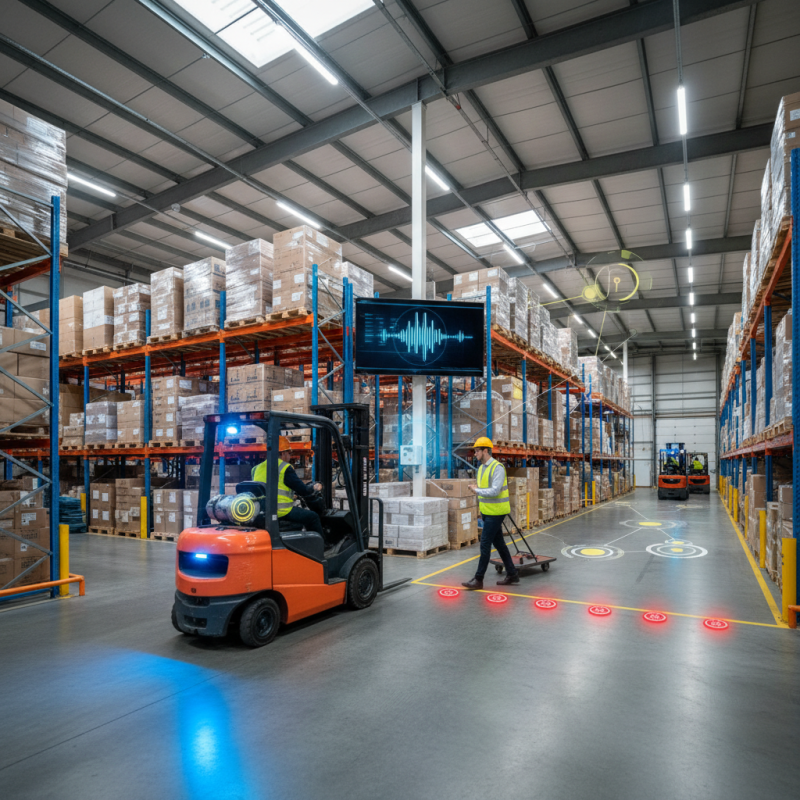
Top 10 Forklift Collision Detection Systems to Enhance Safety?

Understanding Forklift Collision Detection Systems

Understanding Forklift Collision Detection Systems involves recognizing their key features and benefits. These systems can significantly reduce accidents in warehouses and factories. They leverage various technologies like sensors and cameras, ensuring real-time monitoring of the environment. When a potential collision is detected, the system alerts the operator immediately, often through visual or auditory signals.

Implementing these systems requires careful consideration. The effectiveness can vary based on the layout of the workspace and the type of operations. Some systems may struggle in busy environments where numerous forklifts operate simultaneously. Therefore, assessing the specific needs of a facility is crucial for optimal performance. Training operators to respond swiftly to alerts can enhance safety outcomes significantly.

While collision detection systems can improve safety, they are not foolproof. Human error remains a factor. Operators must remain vigilant and not overly rely on technology. Continuous evaluation of the system's performance can provide insights for improvements. Facilities should keep an open line of communication to discuss challenges and experiences related to safety measures.

Top 10 Forklift Collision Detection Systems to Enhance Safety

Importance of Safety in Forklift Operations

Safety is paramount in forklift operations. Every day, thousands of workers face potential hazards while operating these machines. With the right precautions, many accidents can be prevented. From collisions to tip-overs, the risks are real. A single mistake can cause serious injury or even death. Therefore, understanding and implementing effective safety measures is critical.

Collision detection systems play a vital role in enhancing safety. These systems use various technologies to alert operators of nearby obstacles or other workers. They help create a safer work environment. Operators can focus on their tasks without constantly looking over their shoulders. However, not all systems are equally effective. Some may fail to detect small obstacles, while others may produce false alarms. It’s essential to evaluate each system thoroughly before implementation.

Moreover, ongoing training is crucial. Operators need to be familiar with safety protocols and technology. Regular assessments will help identify gaps in knowledge or system performance. It's not just about having the right equipment; it's about ensuring everyone knows how to use it effectively. The goal is to foster a culture of safety, where workers feel empowered to speak up about potential hazards.

Key Features of Effective Collision Detection Systems

In busy warehouses and manufacturing plants, safety is paramount. Effective collision detection systems can significantly reduce accidents. According to industry reports, nearly 20% of workplace injuries in logistics involve forklifts. That's a staggering figure. The best systems often integrate various technologies for real-time monitoring.

One key feature is proximity sensors. These sensors detect nearby objects and alert operators instantly. A study showed that facilities using proximity detection saw a 30% drop in collision rates. Additionally, a robust camera system can provide a 360-degree view. Operators gain a better understanding of their surroundings, minimizing blind spots.

Another vital aspect is the ability to track and analyze incidents. Quality systems collect data on collision events. This information allows for proactive measures. Facilities can examine patterns and implement training accordingly. However, despite advancements, some technologies still have limitations. For instance, poor weather conditions can affect sensor accuracy. Organizations must be aware of these challenges for effective implementation.

Top Technologies Used in Forklift Collision Detection

Collision detection systems for forklifts are essential in enhancing workplace safety. These systems leverage various technologies to prevent accidents in busy environments. According to a report from the Occupational Safety and Health Administration (OSHA), around 70% of forklift accidents occur due to poor visibility and operator error. Thus, effective collision detection systems can significantly mitigate these risks.

One popular technology is proximity sensing. This involves sensors that alert operators when they are close to obstacles or other workers. Studies show that these sensors can reduce accidents by up to 40%. Another method is video analysis. Cameras can be mounted on forklifts to provide real-time monitoring. This creates a visual record that can be analyzed later for safety training. However, reliance on cameras can be problematic, as they may not capture all angles.

Moreover, some systems integrate radar and LIDAR technologies. They allow for more precise tracking of surroundings. However, these systems can be costly and require frequent maintenance. There is a fine line between investing in advanced technology and ensuring that employees receive proper training. Neglecting one could counteract the benefits of the other. Investing in forklift collision detection needs a thoughtful approach to truly enhance safety measures.

Comparative Analysis of the Leading Systems in the Market

Forklift collision detection systems are essential for workplace safety. With the increasing number of warehouses and distribution centers, these systems can significantly reduce accidents. A key factor is how effectively these systems integrate with existing operations. Some systems utilize advanced sensors and camera technology, which offer real-time monitoring. Others rely on proximity alarms to alert operators of nearby pedestrians.

It's important to evaluate the reliability of each system. Some may have limitations in detecting objects in low-light conditions. Others might struggle with multi-directional movements. This can lead to blind spots, potentially endangering staff. User feedback is critical in assessing these systems. Many operators report mixed experiences. While some systems promise high accuracy, actual performance can vary widely.

Consideration of maintenance is also necessary. Systems that require consistent calibration can become cumbersome. Regular checks and updates are essential for sustained effectiveness. However, many facilities overlook this aspect. Incorporating proper training ensures all employees understand how to operate the technology. This prevents misunderstandings and enhances overall safety. Balancing cost, efficiency, and reliability is crucial when selecting a collision detection system.

Top 10 Forklift Collision Detection Systems to Enhance Safety

System Type Detection Technology Sensor Range Response Time Features Estimated Cost
Ultra-Sonic System Ultrasonic Sensors 6 meters 50 ms Obstacle Alerts, Speed Control $1,500
Laser-Based System Laser Scanners 10 meters 30 ms 360° Monitoring, Integration with AI $3,000
Camera-Based System HD Cameras Up to 15 meters 60 ms Real-Time Video Feed, Object Recognition $2,500
Radar System Radar Sensors 20 meters 40 ms Harsh Environment Capability, Long-Range Detection $4,000
Magnetic System Magnetic Sensors 5 meters 80 ms Minimal Maintenance, Cost-Effective $1,200
Infrared System Infrared Sensors 8 meters 70 ms Night Vision, Low Light Performance $1,800
Combination System Multiple Sensor Types 15 meters 25 ms Best of All Worlds, Comprehensive Coverage $5,500
Vibration Sensing System Vibration Sensors 3 meters 100 ms Low-Cost, Simple Implementation $900
Smart Wearable System Wearable Technology N/A Variable Personal Alerts, Location Tracking $2,200
Wireless Communication System Wireless Sensors 10 meters 60 ms Real-Time Alerts, Centralized Monitoring $3,600
Select Electrical Logo
Since 1988

Select Electrical Ltd. © Copyright 1988-2025