
What Is a Friction Kelly Bar and How to Choose One in 2026?

A drilling rig may look steady until the Kelly bar slips, binds, or fails to transfer torque cleanly. That is when a small equipment mismatch becomes lost production. A Friction Kelly bar uses friction between its telescoping sections to transmit torque and extend drilling depth. Its performance depends on the rig, the ground, and the job—not just its advertised reach.

The Federal Highway Administration’s technical manual, Drilled Shafts: Construction Procedures and Design Methods, explains why construction methods and equipment must suit site conditions. It offers practical guidance, not a universal market ranking or a one-size-fits-all bar specification. Drilled-shaft authority Michael W. O’Neill is associated with this field of guidance. A source-faithful takeaway—not a verbatim quotation—is: “Match the tooling to the ground and the machine, not to a catalog headline.” That distinction matters. A bar that handles one rig’s torque may be unsuitable for another.

Choosing well means checking the rig manufacturer’s limits, required drilling depth, torque demand, bar configuration, and expected soil or rock. Inspect the joint engagement, too. A clean-looking catalog photo cannot show wear inside a connection. In 2026, buyers should compare current manufacturer specifications with project requirements and qualified technical advice. Small details count. This guide explains how friction bars work, where they fit, and what to verify before ordering. Some job conditions remain uncertain until drilling begins; planning cannot remove that uncertainty, but careful selection can reduce avoidable mismatch.
What Is a Friction Kelly Bar and How to Choose One in 2026?

Friction Kelly Bar Fundamentals: Telescopic Sections and Torque Transfer

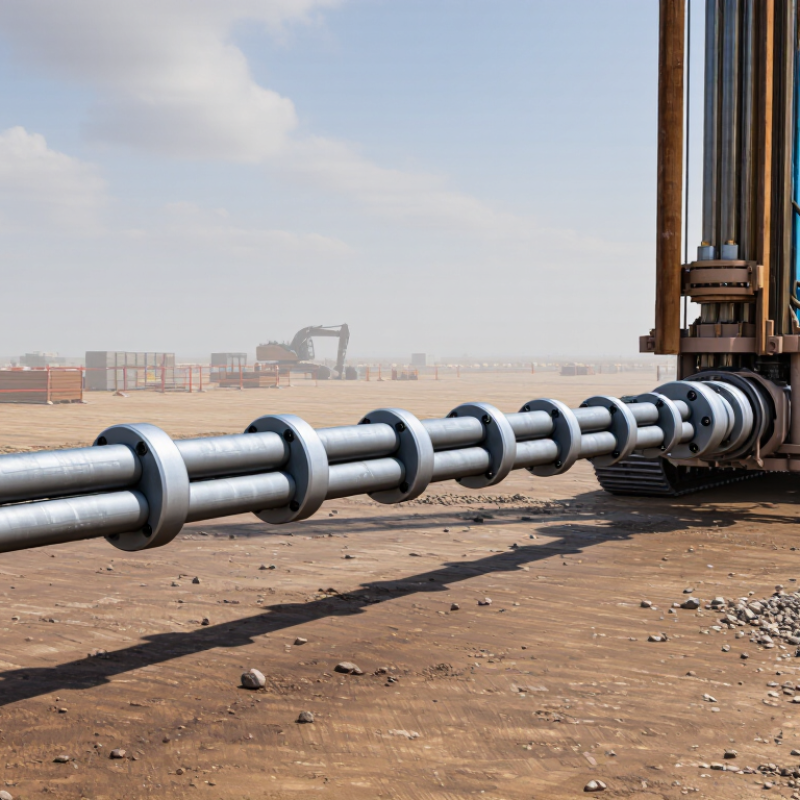
A Friction Kelly bar transfers rotary torque through contact between its telescopic sections. As the outer section turns, friction at the overlapping faces drives the inner sections and drilling tool. The bar extends under its own weight and retracts as the rig lifts. Unlike an interlocking bar, it relies on friction rather than positive mechanical locks, sooverlap and contact condition matter. Worn faces, dirt, or poor lubrication can affect performance. Small details count.

FHWA’s 2018 Drilled Shafts: Construction Procedures and Design Methods describes shafts ranging from about 0.46 metres to more than 6 metres in diameter. That range shows why bar selection must match the rig and job, not shaft diameter alone. Check the rig’s rated torque, required drilling depth, bar length, section overlap, and tool connection. A bar that reaches the target depth may still be unsuitable if its torque rating is below the rig’s output. Verify ratings against the equipment manual; field wear can change real-world performance.

Tips: Inspect each section for bent edges, cracked welds, uneven wear, and packed soil before drilling. Confirm the maker’s torque and overlap limits. Record unusual vibration or slipping. It may be tempting to push through a difficult layer, but pausing to check the bar can prevent avoidable damage.

Common Configurations: 3–5 Sections, Stroke, and Maximum Drilling Depth

A friction Kelly bar usually has three to five telescoping sections. As the rig rotates the outer tube, friction at the section interfaces transfers torque inward. More sections can provide greater extension, but they also add joints and potential wear points. Section count alone does not tell you the drilling depth. Check each section’s effective stroke, overlap, and the rig’s available mast travel.

For a simple estimate, a four-section bar with 3 metres of usable extension per pull suggests about 12 metres of theoretical extension. Actual reach will be lower when engagement, tool length, and site setup are considered. Treat that figure as a calculation, not a rating. The FHWA-NHI-18-024 drilled-shaft manual identifies ground conditions, groundwater, and construction method as important project inputs; it does not set one universal Kelly-bar depth. Compare its guidance with the bar’s technical drawing and the rig’s operating limits. A small detail can change the choice: a deep hole in loose ground may need a different setup from a shallower hole in stable soil. I would not choose by maximum depth alone. Check stroke per pull, torque capacity, section overlap, and the expected casing or tool arrangement.

Friction Kelly Bar Configurations: Sections and Telescoping Interfaces

Three- to five-section configurations are common. The number of telescoping interfaces is one fewer than the number of sections.

Section count alone does not determine stroke or maximum drilling depth. These depend on the bar’s design and dimensions, as well as the drilling rig and site setup. Compare the specified working stroke and maximum depth for the exact bar-and-rig combination before selecting a configuration.

Friction vs. Interlocking Bars: Compare Rated Torque in kN·m

A friction Kelly bar uses telescoping, overlapping tubes; torque passes through contact pressure and friction between sections. An interlocking bar transfers torque through fitted drive keys, so it can often handle higher torque in a comparable size. But “often” is not a rating. There is no single industry-wide kN·m value for either design. Compare the supplier’s rated output torque at the Kelly drive, not just the drilling rig’s maximum torque. Check that the figure applies to the exact bar diameter, section count, and extension length.

Ask for the torque-rating method and the permitted duty cycle.

A bar rated at 250 kN·m, for example, faces about 785 kW of rotational power at 30 rpm; that is an illustration, not a product rating.

FHWA’s Drilled Shafts manual (2018) stresses matching construction methods to site conditions, while EN 16228-2 addresses drilling-equipment safety. Neither gives a universal torque table for friction versus interlocking bars. On a clay site, peak torque may be modest; dense gravel or a jammed tool can create sharp loads. I would not choose from a headline number alone. Ask for operating and peak limits, and confirm the rig’s torque settings. The overlooked detail? Wear at the drive faces can change how reliably a bar transmits torque.

2026 Selection: Match Bar Torque, Length, and Diameter to Rig Specifications

A friction Kelly bar should be matched to the rig’s torque curve, not just its maximum advertised torque. Check the rotary head’s continuous and peak ratings, then confirm the bar’s permitted torque at each extension. A mismatch can overload joints or reduce usable capacity. Check the rig manual, too.

Length is a working-depth decision. Add the required drilling depth, tool length, and clearance beneath the mast; then compare that total with the rig’s stroke and bar extension. FHWA’s 2018 drilled-shaft manual covers shafts from about 0.46 to 3.66 metres in diameter, illustrating how widely job geometry can vary. Shaft diameter, not Kelly-bar diameter. Keep the distinction clear.

Bar diameter must fit the rig’s rotary head and guide system, while leaving room for the required drilling tools. Verify the bar’s weight, connection dimensions, and operating limits against the rig specifications. On site, a bar that fits on paper may still bind when extended. Measure carefully. Allow for wear and ground conditions, and ask the rig supplier to confirm the torque rating for the exact bar configuration. A tidy specification sheet can miss a messy detail: actual torque demand changes with the tool and soil. I would recheck it before ordering.

Safety and Compatibility Checks: Use EN 16228 and Manufacturer Ratings

A friction Kelly bar must match the rig’s stated torque, crowd force, stroke, and connection geometry. Check the relevant parts of EN 16228 for drilling and foundation equipment safety requirements. The standard is not a substitute for the rig or bar manufacturer’s operating limits. Fit is not proof.

Read the rating plate and technical sheet together. Confirm the bar’s maximum torque and pullback capacity, then compare them with the rig’s limits. Check the locking faces, drive adapter, and section dimensions for wear or mismatch. A small amount of play can become a serious problem under load. HSE’s 2023/24 annual statistics recorded 51 worker fatalities in Great Britain’s construction sector; this is sector-wide data, not a Kelly-bar risk figure. It does underline why compatibility checks should be documented, not assumed.

Ask for traceable inspection records and written confirmation when ratings are unclear. Before drilling, inspect the bar for cracks, bent sections, damaged locks, and oil or grout buildup. Keep the work area clear during assembly, and use the specified handling method. Check it again. I would not rely on a bar that “usually fits”; site wear, repairs, or a different rig can change the match. EN 16228 checks and manufacturer ratings belong in the same decision, alongside the actual condition of the equipment.

What Is a Friction Kelly Bar and How to Choose One in 2026? — Safety and Compatibility Checks: Use EN 16228 and Manufacturer Ratings

A friction Kelly bar is a telescopic drilling tool whose sections transmit rotary torque through frictional contact rather than positive mechanical locking between stages. Select it for the drilling method and ground conditions, then verify that the complete bar-and-rig configuration is within the equipment manufacturer’s limits.

Selection or Safety Dimension What to Check Evidence or Acceptance Check Warning / Decision
Bar type and operating principle Confirm that the proposed bar is a friction-type telescopic Kelly bar and that the drilling method is designed for friction transmission. Check the bar’s technical documentation for its section arrangement, operating instructions, permitted drilling methods, and stated application limits. Do not assume that a friction bar is interchangeable with an interlocking bar; their torque-transfer behavior and operating limits differ.
Drilling rig compatibility Match the bar to the rig’s Kelly drive, drive keys or guides, connection geometry, and operating configuration. Compare interface dimensions and connection details against the rig and bar documentation. Obtain written confirmation from the relevant equipment manufacturers when compatibility is unclear. A matching nominal diameter alone does not establish compatibility.
Torque rating Check the maximum permitted torque for the bar and for the rig in the actual configuration being used. Use the manufacturer’s ratings for the specific bar, section arrangement, and operating conditions. Apply the lower applicable limit of the connected equipment. There is no universal torque rating for friction Kelly bars. Do not infer a rating from appearance or from another bar of similar size.
Pull-down and extraction forces Verify the permitted crowd, pull-down, and extraction loads, including any limits for individual sections or connections. Check the bar documentation and the rig’s rated capacities. Confirm the limits for the intended drilling sequence and handling method. Do not exceed the lowest applicable manufacturer limit or use the bar as a lifting device unless specifically permitted.
Length, reach, and section arrangement Check the required drilling depth, usable telescoping length, section count, transport length, and clearance around the rig. Confirm the selected configuration against the project depth and the rig’s operating envelope. Follow the manufacturer’s instructions for telescoping and handling. Maximum reach depends on the bar configuration and equipment; it is not determined by overall length alone.
Drilling tool and connection Confirm compatibility with the auger, drilling bucket, core barrel, or other tool, including the tool connection and required torque capacity. Check connection drawings, dimensions, retention features, and the tool and bar manufacturers’ ratings. Do not use improvised adapters or modified connections without approved engineering information.
Ground conditions and duty Consider the project’s ground profile, drilling method, required depth, expected obstructions, and operating duty. Compare the project requirements with the bar manufacturer’s stated applications and limitations; involve the responsible drilling engineer where conditions are uncertain. Ground suitability cannot be determined by the label “friction” alone. Unexpected refusal or abnormal resistance requires reassessment.
EN 16228 safety framework Check the applicable parts of the EN 16228 series for the drilling and foundation equipment in use, together with national adoption and project requirements. Review the rig documentation, risk assessment, instructions, safeguards, and conformity information. EN 16228-1 covers common requirements; EN 16228-2 addresses mobile drilling machinery for civil and geotechnical engineering, quarrying, and mining. Do not treat reference to EN 16228 as proof that an individual Kelly bar is certified or suitable for every rig. Verify the scope and documentation for the complete equipment setup.
Manufacturer ratings and documentation Obtain the exact bar identification, rating data, operating instructions, inspection guidance, and any stated restrictions. Use current documentation for the particular bar and rig. Record the selected configuration and confirm that all ratings and interfaces are compatible. If ratings are missing, inconsistent, or not traceable to the specific equipment, pause selection and obtain clarification before use.
Pre-use inspection Inspect sections, welds, keys or guides, connections, wear surfaces, and any visible deformation or cracking. Follow the manufacturer’s inspection criteria and the site inspection process. Remove damaged or suspect equipment from service pending competent assessment. Do not operate a bar with a suspected crack, loose connection, significant deformation, or wear beyond its stated limit.
Operation and site controls Ensure operators are trained, exclusion zones are established, and the bar is handled and operated in accordance with the rig and bar instructions. Use the site risk assessment, operating procedures, and manufacturer instructions. Keep personnel clear of rotating equipment and suspended or moving components. Never bypass guards or safety devices, and stop work if abnormal movement, noise, or operating resistance occurs.

Selection rule: Choose a friction Kelly bar only after confirming the drilling application, rig interface, tool connection, and configuration-specific manufacturer ratings. Use the applicable EN 16228 requirements as part of the equipment safety review; they do not replace the manufacturer’s instructions, project risk assessment, or competent engineering judgment.

Select Electrical Logo
Since 1988

Select Electrical Ltd. © Copyright 1988-2025