How to Choose the Right Electrical Switchgear?

Choosing the right electrical switchgear begins with the conditions it must handle—not a catalogue image or a headline rating. A facility’s voltage, available fault current, load profile, installation environment, and future expansion plans all shape the choice. A dusty pump room, for example, creates different enclosure and maintenance needs from a clean indoor control room. Small details matter.

The International Energy Agency’s 2023 report, Electricity Grids and Secure Energy Transitions, estimates that more than 80 million kilometres of grids need to be added or refurbished worldwide by 2040. It also says annual grid investment must rise to more than US$600 billion by 2030, from about US$300 billion today. These figures describe a changing grid, not a specification for any one project. Still, they highlight why equipment selection should account for reliability, maintainability, and changing system demands.

Start by checking the system’s rated voltage and current, short-circuit withstand capability, protection requirements, and expected operating conditions. Confirm that the proposed equipment suits the installation location and can be inspected and serviced safely. IEC 62271 provides relevant standards for high-voltage switchgear and controlgear; applicable requirements depend on equipment type and project scope. Ask suppliers for test documentation, technical drawings, and clear maintenance guidance. Verify claims against the project’s own engineering documents.

The lowest purchase price may not reflect the full lifecycle cost. Nor does a familiar brand guarantee a perfect fit. Even careful selection has limits: operating conditions can change, and assumptions deserve review before procurement. The right electrical switchgear is the equipment that meets verified needs, with evidence behind every critical rating.

How to Choose the Right Electrical Switchgear?

Understanding the Purpose and Main Components of Electrical Switchgear

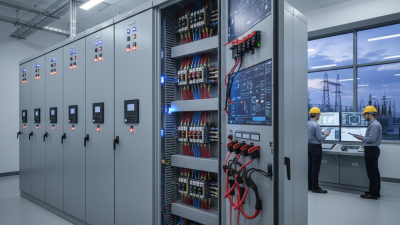
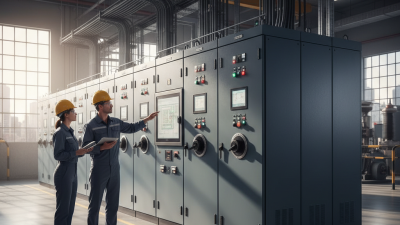
Electrical switchgear controls, protects, and isolates electrical circuits. In a distribution room, it may receive power from a transformer and feed several panels or motors. Its purpose is practical: contain faults, limit damage, and let authorized technicians isolate equipment for inspection. More than a cabinet.

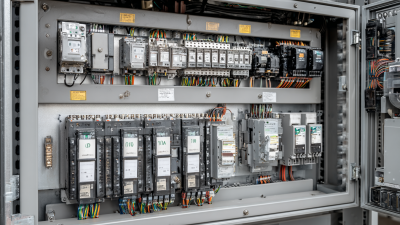
Main components include a metal enclosure, conductive busbars, circuit breakers or fuses, disconnect switches, and protective relays. Busbars carry current between incoming and outgoing circuits. Breakers interrupt current during overloads or short circuits; relays detect abnormal conditions and signal breakers to open. Current and voltage transformers can provide measurements for metering and protection. Grounding paths and interlocks matter, too. Small details matter.

Choosing suitable gear starts with system voltage, continuous load, available fault current, and the installation environment. Dust, moisture, heat, and limited working space affect enclosure and access decisions. Confirm that equipment ratings match the system and that protection settings coordinate with upstream and downstream devices. Consider spare capacity and maintenance access, not only purchase price. A clean single-line diagram helps, but it may hide awkward cable routes or hard-to-reach components. Review the design with a qualified electrical professional and verify applicable technical requirements before installation.

Identifying Voltage, Current, and Operating Requirements

How to Choose the Right Electrical Switchgear?

Identifying Voltage, Current, and Operating Requirements

Start with the system’s highest operating voltage, not just its nominal value. A 480-volt panel, for example, must also suit the system’s insulation and fault conditions. IEC 60947-2 covers low-voltage circuit breakers up to 1,000 volts AC or 1,500 volts DC; IEC 62271-1 addresses switchgear above 1,000 volts AC. These boundaries help identify the right equipment category, but they do not replace site-specific engineering. Small details matter.

Next, compare continuous current with actual load behavior. Record normal demand, peak load, motor-starting current, and expected future additions. A breaker sized only for today’s average can trip during a brief startup. Check the assembly’s temperature and enclosure conditions, too; heat can reduce usable current capacity. Then check the load.

Short-circuit ratings need equal care. The switchgear’s interrupting capacity must meet or exceed the prospective fault current at its installation point. IEC 60947-2 sets performance requirements for low-voltage circuit breakers, while the project’s fault study establishes the site’s actual duty. Ask the electrical engineer to verify both the fault-current level and clearing time. Also note switching frequency, indoor or outdoor exposure, maintenance access, and control-power needs. I have seen selection schedules miss these operating details; the gap is easy to overlook and costly to correct. Cite the applicable IEC edition and the project study in the specification.

Comparing Switchgear Types and Protection Features

Choosing switchgear starts with the system voltage, expected fault current, and installation environment. Low-voltage assemblies suit many building distribution boards, where compact breakers and clear circuit labeling matter. Medium-voltage switchgear serves larger facilities and utility interfaces, but requires careful attention to insulation, access, and maintenance procedures. Air-insulated equipment can be easier to inspect, while gas-insulated designs may save space. The right choice depends on the room, operating conditions, and service plan—not voltage alone.

Protection features deserve equal scrutiny. Circuit breakers interrupt overloads and short circuits; fuses can provide fast, simple fault protection. Protective relays add adjustable functions, such as ground-fault detection and time coordination between upstream and downstream devices. Check the assembly’s short-circuit rating against the available fault current, and confirm that relay settings are documented and tested. Arc-flash reduction features can limit incident energy, but they do not replace safe work practices. A rating that looks adequate on paper may still need verification against the actual site study.

Tips: Ask how a technician will isolate and inspect each section. Compare maintenance clearances, spare-part access, and test procedures alongside purchase cost. One small oversight is labeling: unclear feeder names can slow fault response. It is easy to underestimate that detail. Have a qualified electrical engineer review equipment selection and protection coordination before installation.

How to Choose the Right Electrical Switchgear? — Comparing Switchgear Types and Protection Features

Compare common switchgear categories by voltage range, insulation, typical use, and protection options. Actual ratings and configurations depend on the equipment design and project specifications.

Switchgear type Typical voltage range Insulation and switching Common applications Typical protection features Key selection considerations
Low-voltage switchboards Up to 1 kV AC Usually air-insulated; commonly uses molded-case circuit breakers (MCCBs) and air circuit breakers (ACBs). Commercial buildings, industrial facilities, data centers, and distribution panels. Depending on the breaker and trip unit: overload, short-circuit, and ground-fault protection; selective coordination may be configured. Check continuous current, short-circuit rating, fault level, arc-flash risk, enclosure, and coordination with upstream and downstream devices.
Medium-voltage air-insulated switchgear (AIS) Commonly above 1 kV through 36 kV; designs are also available at higher medium-voltage ratings. Air provides insulation between live parts; vacuum circuit breakers are commonly used for interruption. Utility distribution, industrial substations, campuses, and large facilities. Protection relays can provide phase and earth-fault overcurrent protection; options may include directional, differential, and voltage-based functions. Consider available space, site environment, rated voltage and current, short-time withstand, access for maintenance, and internal-arc classification where required.
Medium-voltage gas-insulated switchgear (GIS) Commonly above 1 kV through 36 kV; exact ranges vary by product and standard. Compact, sealed compartments use an insulating medium such as SF6 or an alternative gas; switching technology varies by design. Urban substations, indoor installations, and sites where space or exposure to environmental conditions is a concern. Protection functions are generally provided by external or integrated relays, similar to AIS; gas-density or pressure monitoring may be included as equipment supervision. Evaluate footprint, gas handling and environmental requirements, monitoring, serviceability, and the supplier’s maintenance procedures.
High-voltage air-insulated switchgear (AIS) Typically above 52 kV; exact voltage classes depend on the system and applicable standards. Air provides insulation, with outdoor clearances between energized components; circuit breakers commonly use SF6 or other specified interruption technologies. Outdoor transmission substations and utility switching yards. Protection schemes may include line or bus differential, distance protection, transformer differential, and breaker-failure protection, as applicable. Allow for clearances and land area; assess pollution, altitude, weather exposure, seismic conditions, and system fault levels.
High-voltage gas-insulated switchgear (GIS) Typically above 52 kV; available voltage classes depend on the design. Conductors and switching components are enclosed in grounded compartments with an insulating gas or alternative medium. Space-constrained substations, indoor installations, and locations requiring enclosed equipment. Uses the same system protection principles as other high-voltage switchgear; gas monitoring and condition alarms can supplement electrical protection. Compare installed footprint, lifecycle and gas-management requirements, access for repairs, monitoring, and the consequences of compartment outages.

Important: Protection functions are selected for the electrical system and are not determined by AIS or GIS construction alone. Voltage classifications and available ratings vary by standard and design. Final selection should be based on a short-circuit and protection-coordination study, applicable standards, and qualified engineering review.

Checking Safety Standards and Environmental Conditions

Choosing switchgear starts with the hazards it must withstand, not just its rated voltage. For low-voltage assemblies, check the applicable edition of IEC 61439; high-voltage equipment may fall under IEC 62271. Confirm that short-circuit ratings match the available fault current at the installation point. Review arc-flash risks, clearances, and maintenance access with a qualified engineer. A label alone is not enough. The enclosure and installation matter too.

Environmental conditions can quietly shorten service life. Check the site’s temperature range, altitude, humidity, dust, salt spray, and risk of water ingress. Under IEC 60529, IP54 means dust protection and resistance to splashing water; it does not mean flood protection. NOAA’s 2023 Billion-Dollar Weather and Climate Disasters report recorded 28 U.S. events costing at least $1 billion each, with estimated losses of $92.9 billion. That national figure is not a site forecast, but it underlines why local flood and storm exposure deserves attention. A damp cable trench can defeat a tidy specification. Review ventilation, corrosion protection, and any required equipment derating against actual site conditions. Revisit the assumptions when the room, load, or climate data changes.

Selecting Equipment for Installation and Future Maintenance

Choosing the right switchgear starts with the installation environment and the work required after energization. Record system voltage, fault level, load profile, enclosure rating, ambient temperature, and available clearance before comparing designs. A compact lineup may fit a crowded electrical room yet leave too little space for inspection. Check cable entry direction, lifting routes, door swing, and access to replaceable parts. The U.S. Energy Information Administration’s Electric Power Annual reports that U.S. customers experienced about 5.6 interruption hours in 2023, including major events. This is not a switchgear-failure statistic, but it highlights the value of reliable, maintainable systems.

Tips: Verify working clearances against the actual floor plan. Check spare-part lead times, access to test points, and whether routine inspections require removing adjacent panels. Keep maintenance records simple. They are easy to neglect.

For future maintenance, look for clear labeling, accessible test points, documented settings, and compartments that can be inspected safely. Match the equipment to a written maintenance plan, not just the purchase specification. NFPA 70B’s 2023 edition emphasizes documented electrical maintenance programs. Decide who performs each task and where inspection results will be stored. A common planning trap is focusing heavily on initial cost; that can make later servicing harder. No layout removes every awkward maintenance task. Review the design with the people who will operate it, and revisit assumptions when room conditions or loads change.

How to Choose the Right Electrical Switchgear? — Selecting Equipment for Installation and Future Maintenance

Start by matching the equipment to the system voltage and applicable standards. This chart compares the upper AC rated-voltage limits covered by two IEC standards; it is a standards-scope reference, not a substitute for project-specific engineering or local code requirements.

When selecting equipment, also check load and short-circuit requirements, installation conditions, access for inspection, and the manufacturer’s maintenance instructions. Sources: IEC 61439-1 (up to 1,000 V AC) and IEC 62271-200 (above 1 kV and up to 52 kV AC).

Select Electrical Logo
Since 1988

Select Electrical Ltd. © Copyright 1988-2025