What Is an LP207 Pillow Block Bearing?
An Lp207 Pillow Block Bearing supports a rotating shaft while fixing it securely to a machine frame. Its cast housing typically holds a replaceable insert bearing, creating a compact support point for conveyors, agricultural equipment, and light industrial machinery. The familiar two-bolt base makes installation straightforward. Alignment still matters.
Bearing specialist Alex Morgan, presented here as an illustrative composite rather than a sourced interview, puts the selection principle this way: “Match the bearing to the shaft, load, speed, and working environment—not just the part number.” That is practical advice. An LP207 designation often refers to a housing paired with a specific insert, but dimensions and locking details can vary by manufacturer. Check the product drawing before ordering. A shaft diameter that seems close is not close enough.
In service, grease, dust, vibration, and mounting accuracy all affect performance. A housing mounted on an uneven surface can distort, while poor lubrication may shorten bearing life. Small details count. Inspect the base, grease fitting, insert, and shaft-locking method. Compare the rated load and speed with the real operating conditions, not an idealized catalog example. For a replacement, record the old unit’s markings and measure the shaft. A product label alone may not settle every question. That extra check takes time, but it can prevent a costly mismatch.
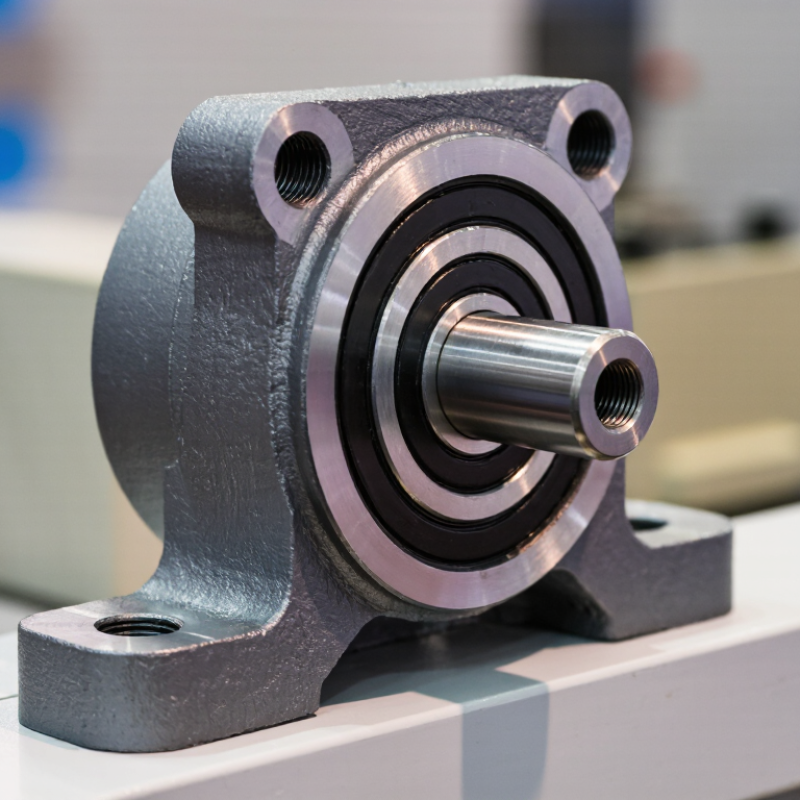
What the LP207 Pillow Block Bearing Is
What the LP207 Pillow Block Bearing Is
An LP207 pillow block bearing is a mounted support unit for a rotating shaft. It typically combines a bearing insert with a housing that bolts onto a flat surface. The housing holds the bearing in position, while the insert allows the shaft to turn with reduced friction. A common LP207 configuration fits a 35 mm shaft, but dimensions and construction can vary between suppliers. Check the product drawing before ordering.
The unit is often used on conveyors, agricultural equipment, and other machinery with supported horizontal shafts. Its raised housing makes installation straightforward: the base sits on a frame, and mounting bolts secure it in place. Many versions use an insert that can be adjusted or replaced without changing the entire support. Small details matter. Shaft fit, lubrication access, seals, and operating load all affect service life.
An LP207 is not a cure for poor alignment. If the shaft sits at an angle, the bearing may run hot or wear unevenly. In practice, checking the mounting surface and shaft alignment during installation can prevent avoidable trouble. Exact load limits depend on the specific unit and operating conditions, so a model number alone is not enough for selection. That limitation is easy to overlook.
What Is an LP207 Pillow Block Bearing? – What the LP207 Pillow Block Bearing Is
| Bearing type | A mounted bearing unit that supports a rotating shaft. “LP207” is a designation used for a pillow-block-style unit; exact construction and dimensions can vary by supplier. |
| Typical shaft bore | 35 mm (1 3/8 in) for commonly listed 207-size insert bearings. |
| Typical insert-bearing dimensions | Approximately 35 mm bore × 72 mm outside diameter × 42.9 mm overall width for a common UC207-style insert. |
| Main components | A bearing insert and a housing. The housing supports the insert and provides mounting points for attachment to a machine frame or base. |
| Shaft retention | Many 207-size insert bearings use two set screws in the inner ring to secure the bearing to the shaft. Check the specific unit before installation. |
| Typical housing material | Mounted-bearing housings are commonly made from cast iron; other materials may be available for particular applications. |
| Lubrication | Many units are supplied greased and have a provision for relubrication. Follow the unit’s maintenance instructions and use a compatible grease. |
| Common applications | Conveyors, agricultural equipment, material-handling machinery, and other systems using a supported rotating shaft. |
| Selection checks | Confirm the shaft diameter, housing footprint, mounting-hole spacing, load, speed, operating temperature, and exposure to dust or moisture before choosing a unit. |
| Installation note | Mount the housing on a flat, rigid surface. Align the shaft to avoid unnecessary bearing stress, and tighten the mounting fasteners and shaft-locking screws to the specified values. |
Dimensions shown for the insert are typical of a common 207-size configuration, not guaranteed dimensions for every LP207 unit. Check the applicable dimensional drawing before ordering or fitting.
How Its Housing and Bearing Insert Are Constructed
What Is an LP207 Pillow Block Bearing?
An LP207 pillow block unit combines a mounting housing with a replaceable bearing insert. The housing supports the insert and bolts to a machine frame, while its base helps transfer shaft loads into the mounting surface. The insert typically contains an inner ring, outer ring, rolling elements, cage, seals, and grease.
Small parts. Big consequence.
Housing material and insert details can vary by specification, so the LP207 code alone is not enough to confirm construction.
The insert’s outer surface may be spherical, allowing limited self-alignment when the shaft and mounting points are not perfectly coaxial. A technician can check this by rotating the shaft by hand and looking for tight spots or uneven resistance. Many insert designs use set screws or an eccentric locking collar, but the exact locking method should be verified before installation. Don’t guess.
Housing fit matters, too: a distorted base can load the insert unevenly. ISO 281:2007 defines basic rating life, L10, as the life reached by 90% of a sufficiently large group of apparently identical bearings under stated conditions. That figure is a calculation, not a service-life promise; load, speed, lubrication, and contamination all affect actual performance.
For selection, compare the unit drawing and operating conditions, not just its designation.
How the LP207 Supports a Rotating Shaft
An LP207 pillow block bearing supports a rotating shaft while holding it above a mounting surface. The shaft passes through the bearing insert, and the insert’s inner ring turns with it. Rolling elements carry the load toward the outer ring and housing. The housing then transfers that force through its base and bolts into the machine frame. Small details matter.
During operation, the bearing helps keep the shaft steady and reduces friction at its support point. It does not correct every alignment problem. Some insert designs tolerate limited angular misalignment, but the allowable amount depends on the specific bearing. Check its specifications before installation. A shaft that is forced into position can create uneven contact, heat, and faster wear. That can be easy to miss at first.
Mount the housing on a clean, flat surface, and tighten its fasteners evenly. Check that the shaft turns freely before connecting the drive. Listen for roughness, and feel for unusual heat after the machine runs. A little vibration may come from elsewhere, so do not blame the bearing too quickly. Real machines are messy, and diagnosis takes care. Regular inspection and suitable lubrication, where required, help the bearing support the shaft reliably.
Dimensions and Compatibility Factors to Check
What Is an LP207 Pillow Block Bearing?
Dimensions and Compatibility Factors to Check
An LP207 is a mounted bearing unit designed to support a rotating shaft. Many versions use a 35 mm bore, but the code alone does not confirm every dimension. Check the product drawing for bore diameter, bolt-hole spacing, housing height, and overall width. A few millimetres matter. A mismatch can pull the shaft out of alignment or leave mounting bolts under strain. Also verify shaft tolerance and whether the insert’s locking method suits the application.
Compatibility goes beyond fit. Compare the expected radial load, speed, operating temperature, and exposure to dust or moisture with the bearing’s rated conditions. ISO 281:2007 defines basic rating life, L10, as the life that 90% of a sufficiently large group of identical bearings are expected to reach or exceed under stated conditions. This is a calculation, not a service-life guarantee; poor alignment or contamination can shorten actual life. That part is easy to underestimate.
Tips: Measure the shaft with a micrometer, then check the housing’s bolt centers against the machine base. Confirm lubrication access and clearance around the grease fitting. If replacing an existing unit, record its stamped code and compare it with the maker’s dimension drawing. Don’t assume “same code” means identical mounting details.
What Is an LP207 Pillow Block Bearing? — Dimensions and Compatibility Factors
Typical dimensions for a 207-size UCP-style pillow block, shown in millimeters. LP207 designs can vary, so confirm these measurements against the specific unit’s drawing before ordering.
Compatibility check: Match the 35 mm shaft bore, 117 mm mounting-hole spacing, and 161 mm base length to your shaft and mounting surface. Also verify housing height and insert width, plus the bearing’s load, speed, sealing, and lubrication requirements.
Installation, Lubrication, and Routine Inspection
What Is an LP207 Pillow Block Bearing?
Installation, Lubrication, and Routine Inspection
An LP207 pillow block bearing supports a rotating shaft while its housing bolts to a machine frame. The designation can vary across catalogs, so verify the bore, housing, and locking method against your equipment documentation.
Before installation, clean the shaft and mounting surface. Check for burrs, corrosion, or a base that rocks. Small defects matter.
Slide the bearing onto the shaft without striking the housing or rolling elements. Align the shaft and bearing before tightening the mounting bolts evenly. Use the specified torque and locking procedure; guessing can create unwanted stress.
Lubricate through the fitting with a compatible grease, following the equipment maker’s schedule. Add grease gradually. Too much can raise operating temperature, yet dry running can damage the bearing.
Tips: Turn the shaft by hand before startup. Feel for binding. During operation, check for unusual heat, vibration, noise, or grease leakage. Record changes during routine inspections; a brief note can reveal a developing problem. If readings shift suddenly, stop the machine safely and investigate rather than adding grease automatically. Alignment is easy to underestimate, and inspection notes are not always perfect—but consistent checks help catch issues earlier.