China Top 10 Motor Control Center Manufacturers? This guide examines manufacturers that design and build reliable motor control center systems for factories, infrastructure projects, water treatment plants, and commercial facilities. The selection considers engineering capability, production quality, testing procedures, certification records, customization, delivery performance, and after-sales support. A polished website alone is not enough.
A dependable supplier should explain enclosure construction, busbar ratings, short-circuit withstand capacity, protection devices, heat management, and control integration. Factory inspection also matters. Look for organized wiring, clear labeling, torque records, and documented routine testing. These details often reveal more than attractive brochures. Standards such as IEC 61439 may support safer and more consistent assembly, but buyers should verify the exact certification scope for each project.
The manufacturers discussed here represent different strengths. Some focus on low-voltage distribution and industrial automation. Others provide integrated solutions, export support, or custom assemblies for demanding environments. Project evidence, technical drawings, client references, and response quality should guide the final decision. Availability can change. Rankings can become outdated.
No ranking is perfect. A company with strong engineering may not offer the lowest price, while a cheaper supplier may provide limited commissioning support. Buyers should compare quotations carefully, including spare parts, testing, installation guidance, warranty terms, and maintenance access. With practical verification and clear specifications, this overview can help procurement teams identify a suitable Chinese motor control center manufacturer with greater confidence.
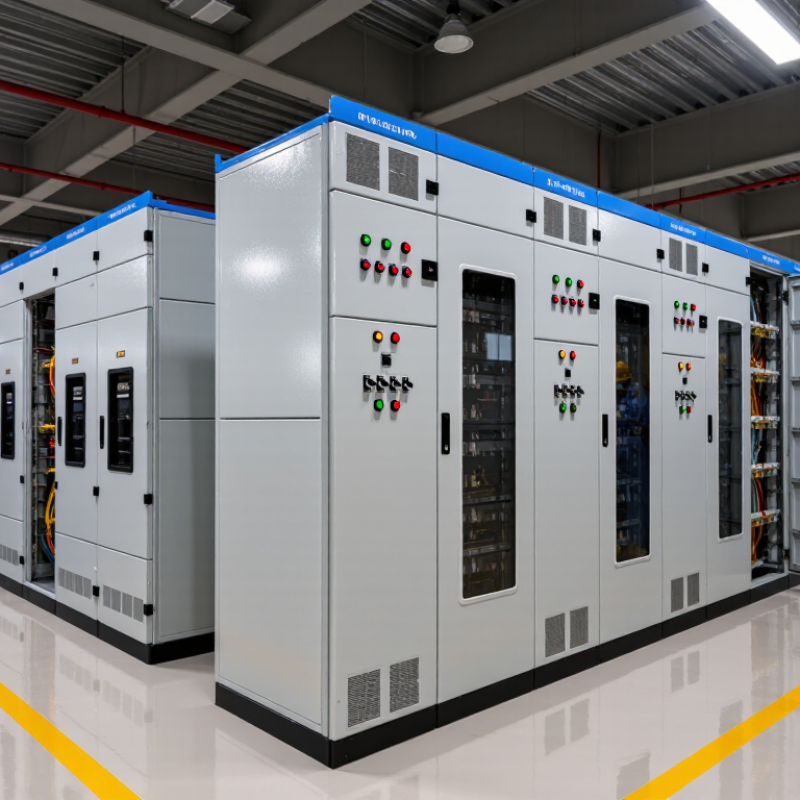
A motor control center (MCC) is a floor-mounted electrical assembly that manages several motors from one location. It groups circuit breakers, disconnect switches, motor starters, overload relays, and variable frequency drives. These devices sit inside metal sections with shared copper busbars. Power enters the main section and travels through protected feeder compartments. Each feeder then supplies a pump, fan, conveyor, or compressor.
The operating process is practical. A control signal starts the motor starter or adjusts the drive speed. The overload relay watches current and trips when heating becomes unsafe. Interlocks can stop equipment when a door opens or a process condition changes. Network modules also send running status and fault codes to a control room. During factory inspections, technicians should check wiring labels, terminal tightness, insulation clearance, and heat marks. Small details matter.
When comparing China’s top ten motor control center manufacturers, buyers should examine design calculations, routine test records, enclosure quality, and after-sales response. A reliable supplier should explain short-circuit ratings, ingress protection, temperature limits, and maintenance access clearly. One common mistake is choosing a compact cabinet without leaving space for cable bending or future feeders. It looks efficient at first. It may become difficult later. Even well-tested equipment needs site verification, because dust, humidity, vibration, and installation errors can change actual performance.
Evaluating China’s top motor control center manufacturers requires more than comparing prices. Engineers should examine IEC 61439 design verification, IEC 60947 component compliance, and documented short-circuit testing. Busbar temperature-rise records matter. So do enclosure protection, wiring quality, and labeling accuracy.
Factory experience is visible during an audit. Check copper processing, torque control, insulation testing, and final assembly discipline. A serious supplier should provide traceable material certificates, calibrated test equipment, and clear factory acceptance test records. The IEA’s Electricity 2024 report forecasts global electricity demand growth of about 3.2% annually from 2024 to 2026. That pressure makes stable motor control equipment increasingly important in industrial facilities.
Quality systems also deserve measurable review. The ISO Survey 2023 recorded more than 1.2 million ISO 9001 certificates worldwide, but certification alone proves little. Buyers should compare defect rates, corrective-action speed, delivery consistency, and after-sales response. Ask for anonymized project evidence, not polished brochures. A clean document can hide weak workmanship. This is where evaluation becomes uncomfortable. Some suppliers meet formal requirements but lack strong field experience. Others offer excellent engineering but incomplete records. Scoring should therefore combine laboratory evidence, production observation, customer references, and independent inspection. No score is perfect. Rechecking assumptions is necessary.
This weighted procurement framework evaluates Motor Control Center manufacturers through safety compliance, electrical performance, customization capability, manufacturing quality, testing documentation, and delivery support. The percentages represent evaluation priorities rather than company market share or brand-specific performance.
China’s top 10 motor control center manufacturers are gaining attention in industrial automation, infrastructure, and process plants. Their products commonly support low-voltage distribution, motor starting, protection, and centralized monitoring. A credible comparison should examine factory experience, engineering depth, certifications, and service records, not advertising language alone.
Experienced buyers inspect copper busbars, enclosure thickness, wiring labels, and cabinet ventilation. They also review short-circuit ratings, heat-rise tests, insulation checks, and routine inspection reports. Manufacturers with strong engineering teams can adapt layouts for pumps, compressors, conveyors, and variable-frequency drives. Clear drawings matter. So does testing.
Site audits often reveal important details. A clean assembly area suggests discipline, but it does not prove long-term reliability. Buyers should request project references, component traceability, delivery data, and after-sales response times. Some suppliers offer excellent customization yet provide weak documentation. Others communicate well but need deeper experience with complex plant conditions. That difference deserves careful reflection before selecting China’s top 10 motor control center manufacturers. Availability of spare parts, remote troubleshooting, and technician training can influence operating costs for many years.
China’s motor control center manufacturers serve factories, water plants, buildings, and energy projects. Their key products include fixed and withdrawable MCCs, soft starters, variable frequency drives, and intelligent motor protection units. These systems organize motor feeders inside steel enclosures. They also support safer maintenance and clearer fault isolation.
Modern designs use PLC communication, overload protection, energy monitoring, and remote diagnostics. Ethernet-based networks can connect pumps, fans, compressors, and conveyor motors to a central control room. In dusty workshops, enclosure ratings and thermal management require careful review. In water treatment, corrosion resistance and dependable switching matter more than attractive panels. Practical engineering experience shows that wiring access can affect maintenance time greatly. A technically strong design may still frustrate technicians if labels are unclear. That weakness deserves honest attention.
Tips: Check rated current, short-circuit withstand, enclosure protection, and installation conditions. Ask for tested drawings, inspection records, and service procedures. Compare real operating temperatures, not only catalog values. Leave space for future feeders. Small oversights become expensive during expansion. Procurement teams should verify local standards and documentation before approval. Field feedback should influence the final specification, because laboratory performance does not always match a crowded plant room.
Selecting the right Chinese motor control center manufacturer requires more than comparing prices. Your project needs a supplier that understands load requirements, installation conditions, and future maintenance. Review their experience with similar voltage levels, enclosure types, busbar systems, and control arrangements. Ask for detailed drawings before signing. Small design gaps can cause expensive delays later.
Inspect technical evidence carefully. Request factory audit records, quality procedures, test reports, and references from comparable industrial projects. Confirm that the manufacturer can perform routine tests, insulation checks, wiring verification, and functional testing before shipment. A reliable supplier should explain material grades, protection ratings, heat dissipation, and spare-part availability clearly. If answers remain vague, keep asking. That is often a useful warning.
Tips: Check the production floor, not only the showroom. Compare the approved component list with the final quotation. Confirm delivery terms, documentation language, remote support, and on-site commissioning options. Ask how design changes are controlled after approval. One practical lesson is easy to miss: the cheapest panel may create higher costs through poor labeling or difficult maintenance. Also, do not trust a polished sample alone. Review actual inspection photos and test records. Even experienced buyers can overlook cable-entry details, especially when drawings change quickly. Allow time for technical clarification. It is rarely wasted.
A non-brand comparison framework for evaluating Chinese MCC manufacturers against recognized technical, safety, quality, and project-delivery requirements.
| No. | Evaluation Dimension | Typical Technical Requirement | Information to Request from the Manufacturer | Priority |
|---|---|---|---|---|
| 1 | Applicable Product Standard | IEC 61439-1 and IEC 61439-2 for low-voltage switchgear and controlgear assemblies; UL 845 may be required for North American motor control centers. | A valid certificate, third-party test report, standard edition, tested configuration, and clear confirmation that the proposed MCC matches the tested design. | Critical |
| 2 | Rated Operational Voltage | The assembly should be designed for the project voltage and frequency. IEC 61439 assemblies can cover low-voltage systems up to 1,000 V AC, subject to the certified design. | Single-line diagram, rated insulation voltage, rated operational voltage, frequency, phase arrangement, and dielectric-test information. | Critical |
| 3 | Short-Circuit Withstand and SCCR | The assembly short-circuit rating must be equal to or higher than the prospective fault current at the installation point. The required value is project-specific. | Short-circuit withstand test report, short-circuit current rating, protective-device coordination data, and fault-level calculation assumptions. | Critical |
| 4 | Busbar and Feeder Capacity | Main busbars, vertical busbars, feeders, and outgoing motor circuits must be sized for continuous current, temperature rise, fault duty, and future load requirements. | Busbar material and cross-section, current ratings, temperature-rise verification, derating method, neutral-bus arrangement, and spare-capacity schedule. | Critical |
| 5 | Internal Separation and Safety | Form 2, Form 3, or Form 4 construction may be selected according to personnel safety, maintenance access, process continuity, and project specifications. | Internal-separation classification, compartment drawings, shrouding details, door-interlocking method, cable-access arrangement, and maintenance procedure. | Critical |
| 6 | Motor Starter and Protection Options | The MCC should support the required combination of direct-on-line starters, soft starters, variable-frequency drives, circuit breakers, overload relays, and isolation devices. | Starter schematics, protection settings, motor data sheets, drive-bypass arrangement, control-voltage details, and compatibility information for selected components. | Critical |
| 7 | Enclosure Protection and Environment | Select the enclosure rating according to dust, water, humidity, corrosion, indoor or outdoor installation, and ventilation requirements. IP ratings are defined by IEC 60529. | IP test report, enclosure material, coating system, corrosion-protection method, gland-plate details, heater or ventilation design, and ambient-temperature limits. | Critical |
| 8 | Routine Testing and Quality Control | Routine verification should cover wiring, protective-circuit continuity, insulation, dielectric withstand, functional operation, labeling, and mechanical assembly. | Inspection and test plan, factory acceptance test procedure, calibrated-instrument records, inspection checkpoints, nonconformance process, and final test certificates. | Critical |
| 9 | Documentation and Engineering Support | The supplier should provide coordinated drawings and manuals suitable for approval, installation, commissioning, operation, and maintenance. | General arrangement drawings, wiring diagrams, terminal schedules, bill of materials, protection settings, operation manuals, spare-parts list, and editable document formats. | High |
| 10 | Project Delivery and After-Sales Capability | The manufacturer should demonstrate controlled engineering, procurement, production, packaging, inspection, shipment, commissioning, and warranty processes. | Detailed production schedule, approved-vendor list, packaging specification, export references by market, warranty terms, spare-parts policy, remote support, and service response procedure. | High |