
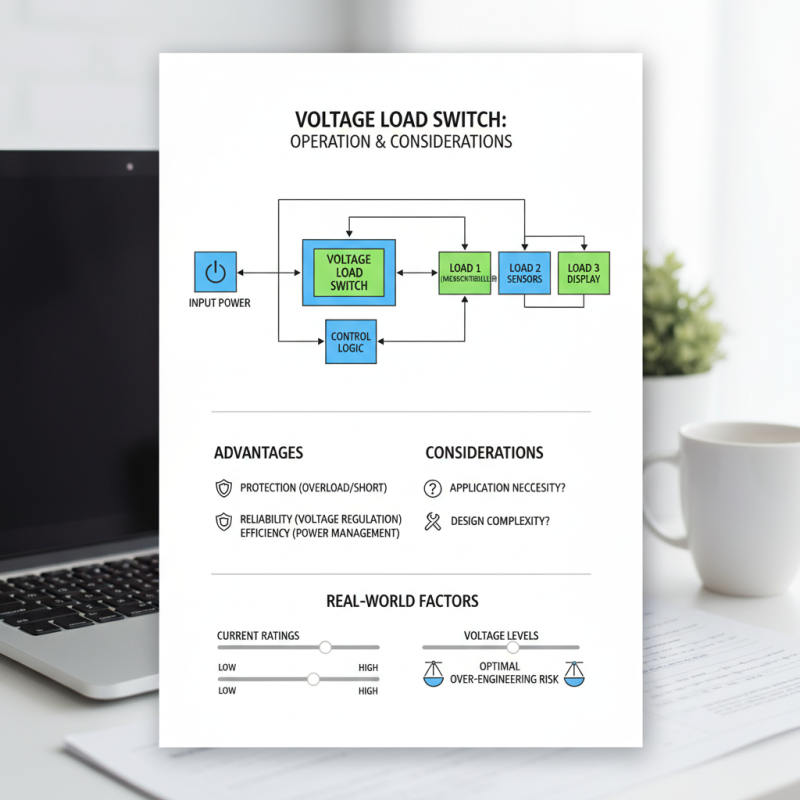
A Voltage Load Switch is an essential component in modern electronic circuits. It controls power to specific loads, ensuring devices operate safely and efficiently. Understanding how this switch functions can help engineers and designers make informed decisions.
The Voltage Load Switch offers several advantages. It protects sensitive components from overloads and shorts. By managing voltage levels, it prevents damage and enhances reliability. However, not all applications may require a load switch. Some systems might function adequately without one, raising questions about the necessity in specific setups.
In real-world applications, Voltage Load Switches can vary significantly in design and complexity. Choosing the right switch involves considering factors like current ratings and voltage levels. Engineers must reflect on these choices to ensure optimal performance. While the benefits are clear, it also raises the issue of potential inefficiencies or over-engineering in applications where a simpler solution might suffice.
A voltage load switch is a crucial component in electronic circuits. Its primary purpose is to control the supply of voltage to various loads. By doing so, it helps manage power distribution and efficiency in systems ranging from simple home electronics to complex industrial applications. According to a report by MarketsandMarkets, the load switch market is anticipated to grow at a compound annual growth rate (CAGR) of 12% from 2021 to 2026. This growth highlights the increasing reliance on these devices.
Voltage load switches operate by either opening or closing a circuit. When closed, they allow current to flow; when open, they stop the current. This simple yet effective mechanism helps in minimizing energy waste. The efficiency of voltage load switches can vary significantly, with some achieving efficiencies exceeding 85%. However, issues such as heat generation and response time can affect performance. A report from IC Insights notes that poor load management may lead to reduced device lifespans and increased operational costs.
In systems employing voltage load switches, the design must ensure reliability under operating conditions. Data from Research and Markets indicates that failure rates can be as high as 5% in less optimized designs. This statistic prompts engineers to reflect on their designs continually. Components should be selected not just for initial performance but for longevity and robustness under varying loads.
A voltage load switch is essential in managing power distribution in electronic circuits. Its key components include MOSFETs, control logic, and protection features. The MOSFET acts as a switch, controlling the flow of current. Control logic can ensure the switch operates at the right moments. Protection features safeguard the circuit against overcurrent and overheating.
According to industry reports, over 70% of electrical failures in modern devices stem from inadequate load management. This highlights the importance of reliable voltage load switches. These components help in extending device lifespans and improving efficiency. Implementing advanced features like thermal shutdown increases reliability significantly.
Tips: Always consider the power ratings when designing with voltage load switches. Ensure your components can handle unexpected surges. Regular testing can prevent issues before they occur.
A voltage load switch is an essential component in electronic circuits. It helps control the flow of electrical power to various devices. The primary function of this switch is to turn devices on or off safely. It can handle high voltage and current while ensuring efficiency and performance.
The working principle of a voltage load switch is quite straightforward. When activated, it allows current to flow through the circuit. This flowing current energizes the connected device. When the switch is turned off, it interrupts the current. This action prevents damage due to overheating or overload.
Voltage load switches often incorporate safety features. Some include over-current protection. However, reliability may vary among designs. Users should evaluate performance under real operating conditions. This is crucial for ensuring safety and avoiding potential failures. Understanding the inner workings of these switches helps improve circuit design and device longevity.
| Parameter | Value |
|---|---|
| Operating Voltage Range | 3V to 36V |
| Maximum Load Current | 10A |
| Switching Time | < 20μs |
| Control Method | Active High/Low |
| Operating Temperature | -40°C to +125°C |
| Package Type | SMD |
| Applications | Battery Management, Power Distribution |
Voltage load switches are crucial in the world of electronics. Their primary role is to manage power distribution effectively. By controlling the on and off states of electrical connections, they enhance performance and energy efficiency. Their compact size allows them to be integrated into various devices easily.
In consumer electronics, voltage load switches are utilized extensively. They find applications in smartphones, laptops, and wearables. These switches help preserve battery life by ensuring devices only consume power when needed. In the automotive industry, they play a role in managing power to different systems, enhancing energy management. However, the selection process for the right switch can be challenging. Engineers must consider factors like voltage ratings and load types, which can lead to potential overestimation of capabilities.
Moreover, implementing voltage load switches in IoT devices is gaining traction. Many applications require energy-efficient solutions to prolong battery life. However, the complexity of circuit design can pose challenges. Designers must strike a balance between functionality and energy efficiency. The evolving landscape of technology constantly pushes for improvements, indicating that there is always room for refinement in system design.
Voltage load switches play a crucial role in circuit design. They provide a controlled method to manage power distribution. The increasing demand for compact and efficient designs highlights the importance of these switches. A report from MarketsandMarkets states that the global voltage load switch market is projected to reach $1.5 billion by 2025, reflecting a CAGR of 8.2% from 2020 to 2025. This growth indicates the rising reliance on advanced load management solutions.
The benefits of using voltage load switches are significant. They enhance system reliability by minimizing voltage spikes during power-up cycles. These devices can also reduce power consumption. By disconnecting loads when not in use, they help preserve energy in battery-operated systems. A study by the Department of Energy shows that optimized load switching can improve energy efficiency by 15-30%. It’s clear that the impact is substantial, yet some engineers overlook these advantages, often focusing on other solutions instead.
It is essential to consider circuit complexity. While voltage load switches simplify design, they may introduce new challenges. For example, engineers must ensure proper integration to maintain reliability. Overlooking these factors can lead to performance issues. Finding the balance between efficiency and complexity requires ongoing evaluation.