What Is a Charging Station and How Does It Work?

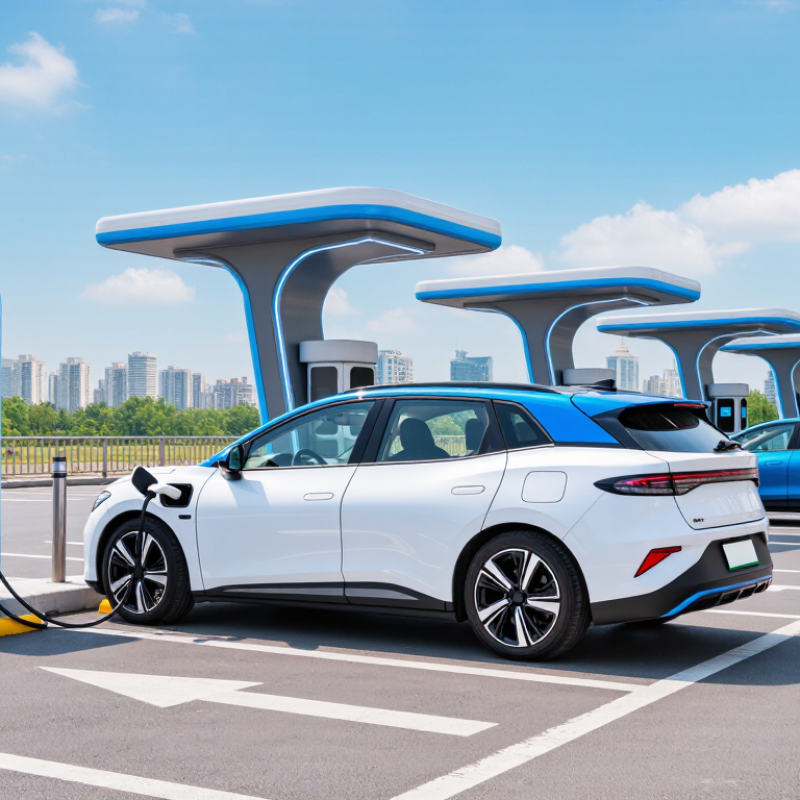
A Charging Station is more than a parking space with a cable. It is a controlled link between an electricity supply and an electric vehicle’s battery. Inside, power electronics regulate voltage and current. Communication systems also confirm that the vehicle is connected safely. Some stations use alternating current from the grid. Others convert electricity into direct current before it reaches the battery.

Fatih Birol, Executive Director of the International Energy Agency, stated, “The rise of electric cars is unstoppable.” His observation explains why charging infrastructure matters. A home charger may deliver energy slowly overnight. A public fast charger can add substantial range during a short break. The actual speed depends on the vehicle, battery temperature, charger rating, and available grid capacity. Numbers can mislead.

The process begins when the driver plugs in. The station and vehicle exchange information before charging starts. Sensors check connection quality, temperature, and electrical limits. A payment system may authorize the session. The charger then supplies power while continuously adjusting its output. When the battery reaches its limit, charging slows or stops.

The experience is not always perfect. A busy station may have a queue. A damaged connector can interrupt a session. Software errors still happen. These practical weaknesses deserve attention, not marketing language. Reliable Charging Station design requires clear instructions, visible status signals, regular maintenance, and accessible support. Understanding these details helps drivers choose the right station and use it with greater confidence.

What Is a Charging Station and How Does It Work?

Define Charging Stations: EVSE, Plugs, and SAE Charging Levels

What Is a Charging Station and How Does It Work?

A charging station is more accurately called electric vehicle supply equipment, or EVSE. It delivers electricity safely and communicates with the vehicle before charging begins. A typical unit checks the connection, confirms that the cable is locked, and controls current flow. It does not always convert electricity itself. During AC charging, the vehicle’s onboard charger changes alternating current into battery-ready direct current.

The plug depends on the vehicle and charging network. SAE J1772 is widely used for AC charging in North America, while CCS combines an AC connector with additional DC pins. Other regions use different standards, and adapters may not support every function. Check the vehicle manual before connecting. A loose plug can stop a session.

SAE charging levels describe power, not simply charging speed. Level 1 uses a standard household outlet and usually adds only a few miles per hour. Level 2 uses higher-voltage AC equipment and can add much more range during a workday. DC fast charging sends direct current to the battery, reducing conversion time inside the vehicle. It is often called Level 3, although technical documents may classify DC levels differently. The terminology is not perfectly tidy. Temperature, battery percentage, cable limits, and vehicle software also affect actual speed. A display showing high power does not guarantee constant charging performance.

Classify Charger Power: 1.4 kW Level 1, 19.2 kW Level 2, and 350 kW DC

A charging station delivers electricity to an electric vehicle through a controlled connection. It checks the vehicle, manages current, and stops charging when required. The charging speed depends on power, measured in kilowatts, and the vehicle’s onboard limits.

Level 1 charging provides about 1.4 kW from a standard household outlet. It is convenient for overnight parking, but adding range can take many hours.

Level 2 charging reaches up to 19.2 kW with suitable equipment and wiring. It can restore useful range during a workday or overnight.

DC fast charging can reach 350 kW, sending direct current to the battery more efficiently. However, the vehicle may accept less power. Battery temperature, charge level, cable limits, and site capacity all affect real speed. The displayed maximum is not a promise.

Tips: Check the vehicle’s maximum charging rate before installing equipment. A higher-rated station may not produce faster charging if the car cannot use it. Keep connectors dry and fully inserted. Watch the session screen during the first few uses. I once assumed a fast charger would maintain peak power throughout; that was a poor assumption. Charging usually slows near a high battery level, protecting battery health and managing heat. A short pause can sometimes improve reliability.

Trace the Charging Process from the Grid to the EV Battery

What Is a Charging Station and How Does It Work?

Trace the Charging Process from the Grid to the EV Battery

Electricity begins its journey on the grid as alternating current. It travels through local distribution equipment before reaching the charging station. Inside, protective devices monitor voltage, current, grounding, and temperature. A control system also checks whether the vehicle is connected correctly. Only then does energy flow through the charging cable.

For many home and workplace chargers, the station sends AC to the vehicle. The car’s onboard charger converts that AC into DC power. The battery can store DC energy through its charging circuits. During direct-current charging, the station performs the conversion instead. This usually supports higher power and shorter charging times. However, charging speed depends on the vehicle, battery temperature, and available electrical capacity.

The vehicle and station communicate continuously. The battery management system reports its condition and requests a safe current level. As the battery fills, charging often slows to reduce heat and stress. You may notice the power drop sharply near the final percentage. That behavior is normal, although it can feel inefficient. In practice, a cold battery may charge more slowly than expected. Cable connections, ventilation, and accurate metering also affect performance. One overlooked detail is heat: even a sound system loses efficiency when components become too warm. The process is carefully controlled, but it is not perfectly linear.

What Is a Charging Station and How Does It Work? - Trace the Charging Process from the Grid to the EV Battery

Process Stage Where It Happens What Happens Typical Electrical Characteristics Key Components Primary Safety or Control Function
1. Electricity Generation Power-generation facilities Electricity is produced from sources such as natural gas, nuclear power, hydroelectricity, wind, or solar energy. The generated electricity is supplied to the power grid. Alternating current (AC); generator output voltage varies by facility and is increased for efficient transmission. Generators, transformers, protection equipment, and grid-control systems Maintains system frequency, voltage stability, and a balance between electricity supply and demand.
2. High-Voltage Transmission Transmission network Transformers increase the voltage so electricity can travel long distances with lower current and reduced resistive losses. Common transmission levels range from roughly 69 kV to above 500 kV, depending on the grid. Step-up transformers, overhead lines, underground cables, circuit breakers, and substations Protects the network from faults and isolates damaged sections when necessary.
3. Local Distribution Distribution substations and local power lines Substations reduce transmission voltage to levels suitable for commercial, public, residential, or fleet charging installations. Distribution voltage commonly ranges from several kilovolts to tens of kilovolts before final service transformation. Substation transformers, feeders, switchgear, meters, and distribution lines Controls the available electrical capacity and prevents overloads on local circuits.
4. Site Service Entrance Charging-site electrical room or service panel Electricity enters the charging site through a utility connection. A service panel distributes power to individual charging circuits. Low-voltage AC service; many installations use single-phase or three-phase power, depending on site capacity. Service disconnect, switchboard, circuit breakers, energy meter, surge protection, and distribution panels Provides overcurrent protection, emergency disconnection, grounding, and energy measurement.
5. Charging-Station Connection Charging station, also called electric vehicle supply equipment (EVSE) The station connects the vehicle to the electrical supply and manages the charging session. For AC charging, the station primarily controls and safely delivers AC; it does not usually convert the power to DC. AC charging commonly operates at approximately 3.7–22 kW, while DC charging can range from about 25 kW to more than 350 kW. Charging cable, connector, contactors, communication controller, display, authentication system, and residual-current protection Checks connection status, confirms vehicle readiness, controls energization, and stops power when a fault is detected.
6. Vehicle Identification and Handshake Between the charging station and the vehicle The vehicle and station exchange information about connector status, charging limits, battery condition, and whether charging is permitted. Charging current and voltage are not applied until the required safety conditions are satisfied. Proximity detection, control-pilot circuit, communication controller, and vehicle charge-control system Prevents the cable from being energized incorrectly and confirms that the connector is properly inserted.
7. Power Conversion Inside the vehicle or inside the charging station During AC charging, the vehicle's onboard charger converts grid AC into controlled DC. During DC fast charging, the station performs the AC-to-DC conversion and sends DC directly to the battery system. Battery-pack voltage commonly falls within roughly 250–ยี่? 900 V DC, depending on vehicle design and operating conditions. Onboard charger for AC charging, or rectifier and DC power modules for DC charging Regulates voltage and current while limiting temperature, power, and electrical stress.
8. Battery Management and Cell Charging Vehicle battery pack DC power is distributed through the battery pack. The battery management system monitors individual cell groups and controls charging according to temperature, voltage, state of charge, and cell balance. Lithium-ion packs generally use a controlled constant-current/constant-voltage charging profile. Battery cells, modules, busbars, contactors, sensors, cooling system, and battery management system Prevents overvoltage, excessive current, overheating, deep imbalance, and charging outside safe limits.
9. Charging Profile and Power Reduction Vehicle and charging-station control systems Charging is usually fastest at a lower or moderate state of charge. As the battery approaches its upper voltage limit, the system reduces current to protect the cells and complete balancing. Power typically decreases near high state of charge; the final portion can take disproportionately longer than the initial portion. Battery management software, thermal sensors, current sensors, and charging-control software Reduces heat generation and battery degradation while maintaining safe cell voltage limits.
10. Energy Storage in the Battery Electrochemical cells in the battery pack Electrical energy is stored through reversible electrochemical reactions inside the battery cells. The pack stores energy as direct current for later use by the vehicle. Usable battery capacity is measured in kilowatt-hours (kWh); charging energy is higher than stored energy because of conversion and thermal losses. Positive electrodes, negative electrodes, electrolyte, separator, module housing, and thermal-management system Maintains cell temperature and electrical limits to support performance, safety, and service life.
11. Charging Completion Charging station and vehicle control systems The vehicle or station reduces current to zero when the requested charge level, battery limit, schedule, or safety condition is reached. The connector can then be released according to the system's procedures. Charging current falls to 0 A before the power contacts are disconnected. Contactors, locking mechanism, charging controller, user interface, and session meter De-energizes the connector safely and records the delivered energy and session duration.
12. Energy Losses and Efficiency Grid connection, charging station, cable, onboard charger, and battery pack Some input energy becomes heat because of resistance, power-conversion losses, battery chemistry, cooling requirements, and standby consumption. Overall wall-to-battery efficiency is often approximately 80–95%, varying with charging power, temperature, battery condition, and equipment design. Conductors, converters, transformers, cooling fans or pumps, contactors, and control electronics Thermal management and controlled power delivery limit losses and help prevent overheating.

Note: Electrical ratings and efficiency values are representative ranges rather than universal specifications. Actual performance depends on the vehicle, battery chemistry, charging equipment, site capacity, ambient temperature, state of charge, and local electrical standards.

Compare AC and DC Charging Through Onboard Chargers and Power Conversion

What Is a Charging Station and How Does It Work?

A charging station transfers electrical energy to an electric vehicle through a controlled connection. The key difference is where electricity changes from alternating current (AC) to direct current (DC). With AC charging, the station sends AC power to the vehicle. The onboard charger then converts it into DC electricity for the battery. This system usually charges more slowly, but it can be practical for overnight parking.

DC charging moves the power conversion equipment outside the vehicle. The station converts AC electricity into DC before sending it directly to the battery. This reduces the onboard charger’s role and can deliver energy much faster. However, charging speed depends on battery temperature, state of charge, cable capacity, and vehicle limits. A cool battery may accept power slowly at first. I once assumed a higher-rated station always meant faster charging, but that is not reliable. The vehicle decides how much power it can safely receive.

Tips: Check whether your vehicle supports AC, DC, or both charging methods. Read the station’s power rating, but do not treat it as a guaranteed speed. For daily use, AC charging may be gentler and easier to schedule. For long trips, DC charging can save time, especially between lower and moderate battery levels. Keep the connector clean and dry. Small details matter.

Measure Station Performance with kW, kWh, Efficiency, and Uptime Data

What Is a Charging Station and How Does It Work?

A charging station transfers electricity from the grid to an electric vehicle. Its performance needs more than a maximum power label. The IEA’s Global EV Outlook 2024 reported nearly four million public charging points worldwide by the end of 2023. That growth makes measurement increasingly important.

Kilowatts, or kW, show charging speed at a specific moment. A 150 kW charger may deliver less power when the battery is cold or nearly full. Kilowatt-hours, or kWh, measure energy delivered during a session. For example, a 60 kWh session at an average 75 kW takes about 48 minutes, before charging losses and waiting time. The U.S. Department of Energy notes that real charging efficiency varies with hardware, temperature, and vehicle conditions. A useful site-level calculation is delivered kWh divided by electricity consumed. The result may reveal losses that a power rating hides.

Uptime is equally practical. A charger showing 150 kW but failing during evening demand is not performing well. The European Union’s Alternative Fuels Infrastructure Regulation uses a 97% availability target for publicly accessible charging infrastructure. Yet uptime definitions can differ between operators. That is a weakness. A better dashboard records successful starts, completed sessions, average power, energy delivered, efficiency, and downtime by cause. Field data is rarely clean. Weather, payment faults, grid limits, and vehicle software can distort results. Measure them anyway.

What Is a Charging Station and How Does It Work?

Charging station performance measured by average power, energy delivered, charging efficiency, and uptime.

Average power shows how quickly vehicles are charged in kilowatts (kW). Energy delivered measures the electricity supplied to vehicles in kilowatt-hours (kWh). Efficiency compares energy delivered with energy drawn from the grid, while uptime represents the percentage of scheduled time that the station is available for charging.

Select Electrical Logo
Since 1988

Select Electrical Ltd. © Copyright 1988-2025