What Is the Best China LCD Screen Supplier?
Choosing the best China LCD Screen supplier requires more than comparing online prices. A reliable partner must prove consistent quality, stable production, and responsive communication. The right choice depends on your product, order volume, viewing environment, and required lifespan.
Display industry analyst Ross Young has stated, “Availability and cost often decide the winning display technology.” This observation remains practical for buyers. A supplier may offer excellent specifications, yet struggle with panel availability or delivery schedules. Another factory may provide lower pricing, but show uneven brightness across samples. Small differences become visible on a retail shelf, medical device, or industrial control panel.
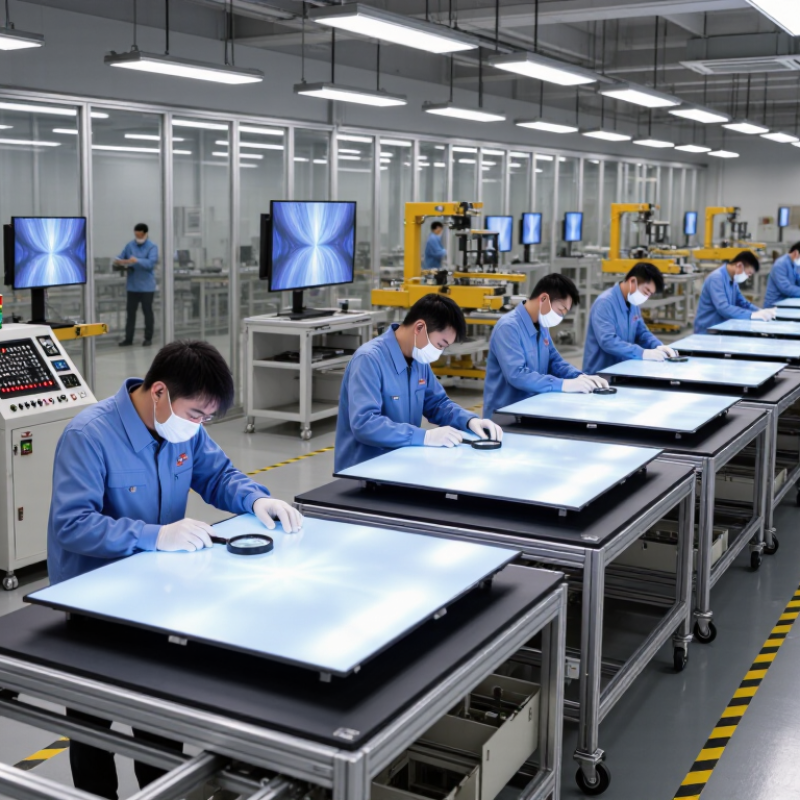
Look for suppliers with documented factory experience and clear quality procedures. Ask about panel brands, touch-layer bonding, brightness testing, dead-pixel standards, and aging tests. Request samples from different production batches. One sample proves very little. Check whether the supplier can support custom sizes, interface options, protective glass, and firmware coordination. Certifications and traceable inspection records also strengthen confidence.
There is no perfect supplier. That matters.
A careful evaluation should include production photographs, audit evidence, warranty terms, packaging details, and realistic lead times. Some manufacturers communicate well before payment, then respond slowly after shipment. That warning sign deserves attention. Buyers should also compare total cost, not only unit price. Freight, tooling, rejects, replacement parts, and technical support can change the final result.
This guide examines practical ways to identify the best China LCD Screen supplier. It considers factory capability, product consistency, customization, communication, and long-term service. The final decision may still involve uncertainty, but disciplined checks can reduce avoidable risk.
China’s LCD Advantage: Over 70% of Global LCD Capacity in 2023
China’s LCD advantage is measurable, not merely promotional. Omdia reported that China held over 70% of global LCD panel capacity in 2023. This position reflects years of investment in large-generation fabs, automated inspection, and regional component networks. China now supplies panels for monitors, televisions, vehicles, medical equipment, and industrial control systems.
Scale can reduce lead times and improve production flexibility. A capable supplier should offer stable glass sourcing, controlled color calibration, and documented aging tests. Look for ISO 9001 and ISO 14001 certification, traceable batch records, and clear defect definitions. These details matter when a screen arrives with uneven brightness, dead pixels, or a loose connector.
The numbers still need careful interpretation. Capacity is not the same as quality, yield, or delivery reliability. Omdia and DSCC reports show China’s strong LCD manufacturing base, but market demand changes quickly. A practical buyer should request recent yield data, sample approval records, and test results from the same production line. Ask for response time, temperature testing, and warranty terms in writing. Small suppliers may quote aggressively. That can hide weaker quality control. I have seen promising samples fail during long-duration testing; one perfect unit proves very little. The best China LCD supplier is therefore not simply the largest factory. It is the partner that combines capacity with evidence, communication, and repeatable performance.
How to Define the Best Supplier: Yield, ISO 9001, Warranty, and Defect Rates
Choosing the best China LCD screen supplier requires more than comparing unit prices. In practical sourcing work, yield is often the clearest early signal. Ask for monthly first-pass yield, not a single factory-selected figure. Confirm the denominator, inspection stage, panel size, and production volume. A 99.8% yield from 500 units means less than a 98.9% yield from 100,000 units. The numbers need context.
ISO 9001 should support the data, not decorate a sales presentation. Request the current certificate, certification scope, audit body, and production-site address. Then review process maps, calibration records, operator training, and corrective-action reports. Strong suppliers can trace a screen from incoming glass to final inspection. They should explain how recurring line defects are contained. Paperwork alone is not proof. Factory behavior matters more.
Warranty terms reveal operational confidence. Check coverage period, dead-pixel rules, brightness tolerance, freight responsibility, and response times. Define defects with photographs and measurable limits. Track outgoing defects and field failures separately, preferably as parts per million. A supplier reporting zero defects may be hiding weak sampling. Not enough. I would request an independent pre-shipment inspection and a pilot order before scaling. Even reliable factories sometimes miss edge cracks or uneven backlight during rushed production. The best supplier accepts those findings, investigates the root cause, and documents the fix.
What Is the Best China LCD Screen Supplier?
How to define the best supplier: yield, ISO 9001, warranty, and defect rates.
How to read this chart: A practical screening reference is a yield rate of at least 95%, ISO 9001 certification, a minimum 12-month warranty, and a defect rate of no more than 3%. These thresholds are procurement benchmarks rather than company-specific results. Lower defect rates and higher yield rates indicate stronger process control.
Comparing BOE, TCL CSOT, and Tianma by Panel Size and Production Scale
Choosing the best China LCD supplier depends on panel size, not reputation alone. Omdia’s Large Area Display Market Tracker reported that Chinese manufacturers held more than 70% of global LCD capacity in 2024. Scale is substantial, but uneven.
Supplier A offers the broadest large-panel footprint, including 55-, 65-, and 75-inch television panels. Its generation-10.5 fabs support efficient glass cutting for large screens.
Supplier B also operates high-generation lines and competes strongly in 43- to 75-inch panels. TrendForce reports that large-area LCD demand remains concentrated in televisions, monitors, and commercial displays. That makes production volume important. However, utilization rates can change quickly.
Supplier C is more focused on small and medium sizes, including automotive, tablet, and industrial panels. Its generation-six capacity is less impressive by total area. It can still be attractive when customization, narrow borders, or stable automotive qualification matters. DSCC and Omdia data show that panel area and unit shipments measure different strengths. A supplier may ship fewer units but produce more square meters.
My factory experience suggests checking monthly output, usable yield, glass size, and backup capacity. Do not trust capacity figures alone. Public reports often describe installed capacity, not available capacity. That distinction matters during seasonal television demand. A spreadsheet can mislead. Procurement teams should compare 32-, 43-, 55-, and 65-inch quotations separately, then verify sample consistency, delivery records, and quality claims.
Technical Evaluation: Resolution, Brightness, Contrast, and Response Time
What Is the Best China LCD Screen Supplier?
Technical Evaluation: Resolution, Brightness, Contrast, and Response Time
Choosing the best China LCD screen supplier requires more than comparing prices. A reliable evaluation begins with resolution, measured across the active display area. Full HD may suit a control panel, while 4K is better for detailed medical images or professional design. Brightness should match the environment. A screen rated at 500 nits may work indoors, but direct sunlight often demands more. Contrast also affects practical clarity, especially in dark scenes. High contrast can reveal shadow details, yet measurement methods may vary between suppliers.
Response time deserves careful testing. A fast figure can reduce ghosting during video playback, but gray-to-gray results may not reflect every transition. Ask for test conditions, temperature ranges, and sample reports. Then inspect several production samples, not only one approved unit. Small differences matter.
Tips: Request calibrated measurements, viewing-angle data, and a written tolerance range. Test the screen under actual lighting. Check black levels beside bright images. Do not trust a single number.
In supplier discussions, technical communication is a useful quality signal. Engineers should explain panel limits clearly, including brightness decay, backlight uniformity, and possible color shifts. I have found specification sheets helpful, but never complete. One overlooked issue is response-time inconsistency between batches. That weakness deserves attention before a large order. A stable supplier should support repeated testing, traceable reports, and realistic performance claims.
Supplier Due Diligence: MOQ, Lead Time, Certifications, and Total Cost
What Is the Best China LCD Screen Supplier?
The best supplier is not always the one offering the lowest unit price. Due diligence begins with the MOQ. A factory may quote 500 screens, but production planning can require 2,000 units. Ask whether mixed sizes, resolutions, or connectors are allowed. Confirm lead time in writing, including tooling, sample approval, production, and shipping. A practical schedule should include buffer days. Delays happen.
Certifications must match your market and product type. Request current ISO 9001 records, RoHS or REACH test reports, and relevant safety documents. Check the issuing laboratory, report number, testing scope, and expiration date. Do not rely on a logo in a sales presentation. A screen can pass compliance testing yet fail during long-term brightness or temperature checks. Sample testing remains essential. I have seen purchasing decisions focus too heavily on price, then absorb costly rework later.
Tips: Calculate total cost, not only the screen price. Include tooling, samples, inspection, packaging, freight, taxes, warranty handling, and rejected units. Ask for a defect-rate policy with clear replacement terms. Confirm pixel standards and acceptance criteria before payment. A supplier should provide traceable batch records and respond within an agreed time. These details feel excessive at first, but missing them creates uncertainty. Supplier selection is rarely perfect; even a careful checklist needs review after the first shipment.
What Is the Best China LCD Screen Supplier? — Supplier Due Diligence: MOQ, Lead Time, Certifications, and Total Cost
Anonymous supplier comparison based on typical China LCD sourcing benchmarks for standard industrial and commercial display projects
| Supplier Profile | Typical Product Scope | MOQ | Sample Lead Time | Mass-Production Lead Time | Quality & Compliance Documentation | Customization Capability | Indicative Unit Cost
for 10.1-inch IPS LCD | Estimated Total Landed Cost* | Due-Diligence Risk Level |
| Profile A — Stock-Panel Distributor | Standard TFT and IPS panels with common resolutions and interfaces | 10–50 units | 3–7 business days | 15–25 business days | RoHS and CE declarations commonly available; request current test reports and traceability records | Limited; standard connector, cable, and brightness options | US$32–48 | US$39–61 | Medium
Verify panel origin, warranty terms, and available stock |
| Profile B — OEM Display Integrator | LCD modules, touchscreens, cover glass, optical bonding, and custom cables | 100–300 units | 7–14 business days | 25–40 business days | ISO 9001 certificate is typically available; product-level RoHS, REACH, CE, and EMC evidence should be checked | Strong; mechanical drawings, FPC design, touch parameters, and firmware coordination | US$48–72 | US$58–89 | Low–Medium
Suitable when engineering support and documentation are important |
| Profile C — High-Brightness Industrial Specialist | Sunlight-readable, wide-temperature, ruggedized, and long-life LCD modules | 50–200 units | 10–18 business days | 30–50 business days | ISO 9001 commonly available; ask for brightness, temperature, lifetime, EMC, RoHS, and reliability test records | Strong; LED backlight, thermal design, viewing angle, and enclosure integration | US$70–115 | US$84–139 | Low
Higher price is justified for demanding outdoor or industrial applications |
| Profile D — High-Volume OEM Manufacturer | Standard and customized LCD modules for consumer, automotive-adjacent, and smart-device projects | 1,000–5,000 units | 14–25 business days | 45–75 business days | ISO 9001 and factory audit packages may be available; confirm product-specific CE, EMC, RoHS, REACH, and reliability reports | Very strong; tooling, optical bonding, custom FPC, touch integration, and automated inspection | US$27–42 | US$32–54 | Medium
Best cost efficiency, but tooling, forecast accuracy, and capacity must be controlled |
| Profile E — Small-Batch Engineering Supplier | Prototype and low-volume LCD assemblies for testing and product validation | 5–30 units | 5–12 business days | 20–35 business days | Basic compliance declarations may be supplied; independent verification is recommended before commercial launch | Medium; minor mechanical and cable changes, limited tooling support | US$55–90 | US$67–111 | Medium–High
Useful for prototypes, but production continuity should be validated |
Cost and evaluation notes: The figures above are indicative industry ranges rather than quotations from named companies. Estimated landed cost includes a typical allowance for packaging, export handling, international freight, insurance, import duties, and payment-related costs; actual amounts vary by destination, Incoterms, order volume, panel specification, and inspection requirements. Before purchase, request a pro forma invoice, sample approval record, current certificates, factory audit evidence, warranty policy, defect-rate data, and a written lead-time commitment.