
Why Are Aluminum Spacers Used?

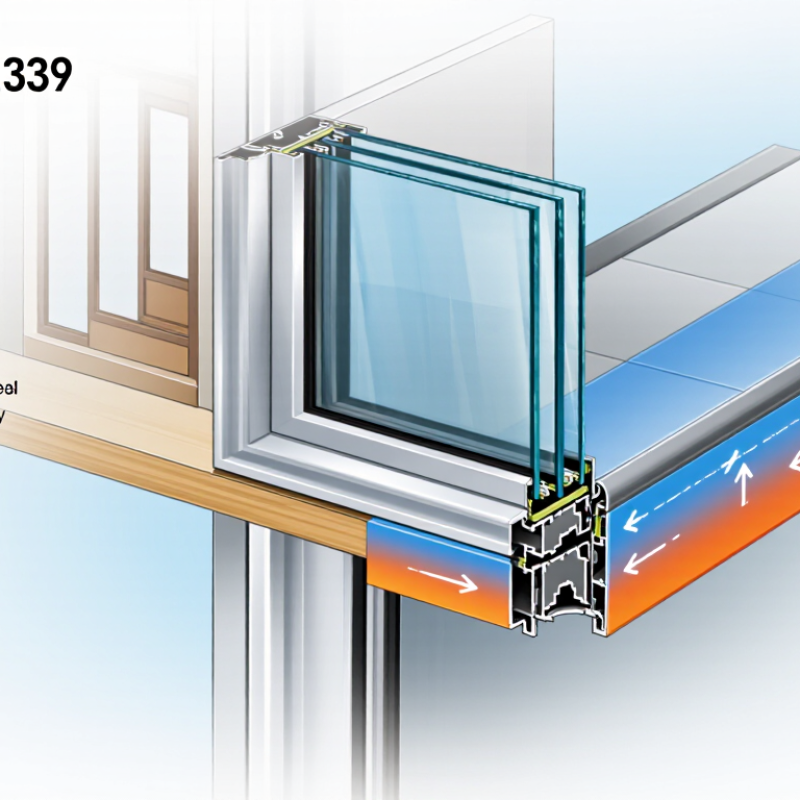
An Aluminum Spacer may look like a narrow strip between glass panes, but its position gives it an outsized role. It keeps panes aligned, helps maintain the insulating-glass unit’s edge seal, and affects heat transfer around the window perimeter. The U.S. Department of Energy reports that windows can account for 25–30% of residential heating and cooling energy use. That figure covers windows as a whole, not spacers alone. Still, it explains why edge details deserve careful attention.

Aluminum is strong, lightweight, corrosion-resistant, and easy to form. Those qualities make it practical for spacer production and installation. But aluminum also conducts heat readily. In cold weather, that can make the glass edge colder and increase condensation risk. A spacer choice is therefore a trade-off, not a simple upgrade. Fenestration researcher John Carmody, co-author of Window Systems for High-Performance Buildings, has examined how window components contribute to building performance. I cannot verify a verbatim statement from him specifically about aluminum spacers, so I will not invent one. The guiding idea here is straightforward: “A small edge detail can influence the comfort of an entire room.” The following sections examine where aluminum spacers work well, what limitations matter, and how to compare them with alternatives. Some projects may value strength and familiar fabrication more than maximum edge insulation. That deserves a second look.
Why Are Aluminum Spacers Used?

What Aluminum Spacers Are and How They Work

An aluminum spacer is a short sleeve or shaped block placed between two parts to hold them a set distance apart. Many have a hole through the center for a bolt or shaft. The spacer’s length sets the gap; its outer shape and fit help keep the parts aligned. Simple, but not trivial.

When a bolt is tightened, the spacer sits in the clamped stack and resists being crushed. For example, between a metal bracket and a panel, it can prevent the panel from bending inward as the fastener is snugged down. A spacer can also keep a rotating part from rubbing against a nearby surface. It does not automatically stop vibration or correct poor alignment.

Aluminum is useful when low weight matters, and its natural oxide surface offers some corrosion resistance. But it is generally softer than steel. Excessive tightening can deform a thin-walled spacer, while an incorrect length may leave a joint loose or distort the assembly. Measure the gap and check the load before choosing one. The details matter. In a real assembly, a tiny mismatch can show up as a wobble, uneven contact, or a bolt that will not stay secure.

Key Material Properties of Aluminum Spacers

Why Are Aluminum Spacers Used?

Key Material Properties of Aluminum Spacers

Aluminum spacers combine low weight with useful strength, making them practical in assemblies where every gram matters. A spacer can hold a steady gap between panels, brackets, or machine parts without adding much mass. Weight matters. Aluminum is also easy to cut and machine, so holes and edges can be shaped for a specific fit. In real assemblies, that can reduce fiddly adjustments during installation.

Many aluminum alloys form a thin oxide layer when exposed to air. This helps resist corrosion in ordinary environments, though it does not make every alloy suitable for every setting. Moisture, salt, surface finish, and contact with other metals can all affect performance. Aluminum also conducts heat and electricity well. That may help or complicate a design, depending on whether heat transfer or electrical isolation is needed.

Material choice still deserves a careful check. Aluminum is less stiff than steel, and it expands more as temperatures rise. A spacer that fits neatly at room temperature may shift slightly in a hot assembly; small details can matter. Alloy and temper influence strength, while thickness and support affect deflection. Not every gap needs aluminum. For a reliable fit, compare the expected load, temperature range, and surrounding materials before specifying the spacer.

How Spacers Maintain Alignment and Separation

Why Are Aluminum Spacers Used?

Aluminum spacers keep parts separated while helping them stay aligned during assembly and use. Their thickness creates a defined gap between components, such as a bracket and a mounting surface. That gap can prevent rubbing, allow airflow, or leave room for a washer or fastener. A spacer also helps distribute clamping force across the joint instead of letting parts press directly against each other.

Alignment depends on more than the spacer alone. Its inner diameter should fit the fastener, and its outer face should sit flat against the adjoining parts. If the spacer is too short, tightening may pull components out of position. If it is too long, the joint may remain loose. A small mismatch can matter, especially where several mounting points must line up. It is easy to overlook.

Tips: Measure the gap and fastener before choosing a spacer. Check that the contact faces are clean and flat. Tighten evenly, then inspect whether the parts remain aligned.

Aluminum is lightweight and can be machined to precise dimensions, making it useful where weight and fit both matter. Still, it is not automatically right for every joint. The surrounding materials, load, temperature, and exposure to moisture can affect performance. A spacer may maintain separation, but it cannot correct a bent bracket or poorly positioned hole. Check the whole assembly, not just the gap.

Common Uses Across Industries

Aluminum spacers keep parts at a set distance without adding much weight. In a vehicle, they can position brackets, panels, or rotating components. A spacer that is too short may let parts rub; one that is too long can shift the assembly. Small part. Real consequences. Fit should be checked against the actual fasteners and loads, not just the drawing.

In electronics, spacers help mount circuit boards above a chassis and leave room for connectors, airflow, or cable routing. Aluminum conducts heat and electricity, so designers must consider nearby live components and use suitable insulation where needed. In industrial machinery, spacers align guards, sensors, and bearing housings. Their consistent dimensions can make maintenance easier when a worn component needs replacement.

Construction and fabrication use aluminum spacers to set gaps between panels, frames, and mounting surfaces. Their low weight can be useful in structures that are moved or installed overhead, while alloy and finish affect strength and corrosion resistance. Conditions matter. A spacer outdoors near moisture may need a protective finish, while a precision assembly may need tighter dimensional checks. In practice, the drawing is not the whole story: burrs, uneven surfaces, or over-tightened bolts can change how the parts sit.

Factors That Guide Spacer Selection

Why Are Aluminum Spacers Used?

Factors That Guide Spacer Selection

Choosing an aluminum spacer starts with the job it must do. Measure the gap, clamping load, and available contact area; a thin spacer can deform under concentrated pressure. Check the drawing tolerance too. A few tenths of a millimeter can matter when aligning a bracket or keeping a panel flush. The Aluminum Association’s Aluminum Standards and Data reports a density of about 2.70 g/cm³ for aluminum alloys, making weight a useful reason to consider aluminum. But low mass alone does not make a spacer suitable. Alloy, temper, shape, and thickness affect strength and stiffness.

Temperature and surroundings matter just as much. The same reference gives 6061 aluminum a thermal expansion coefficient of roughly 23.6 µm/m·°C. Across a 100 mm spacer, a 50°C change means about 0.12 mm of expansion. Small, but not always negligible. Consider whether the assembly can accommodate that movement, and whether moisture or contact with other metals could encourage corrosion. Coatings may help, though they can change fit. Check the actual alloy data and operating conditions. That detail is easy to miss. A spacer that fits perfectly on a cool workbench may behave differently inside a warm, vibrating assembly.

Select Electrical Logo
Since 1988

Select Electrical Ltd. © Copyright 1988-2025