
What is a Wifi Smart Switch and How Does it Work?

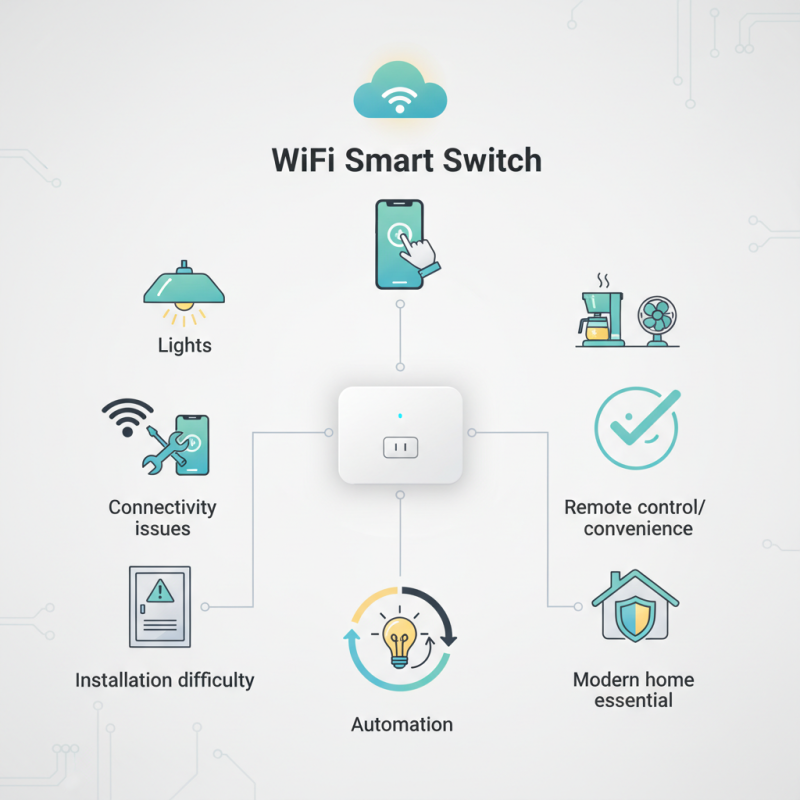
In today's tech-savvy world, the Wifi Smart Switch is becoming essential for modern homes. John Doe, a renowned expert in smart home technology, states, "Wifi Smart Switches transform how we control our living spaces." These devices allow users to manage their lights and appliances remotely via smartphones.

Imagine waking up in the morning to a well-lit room, all thanks to a simple command on your phone. A Wifi Smart Switch can automate your home. However, the technology isn't flawless; users sometimes face connectivity issues. Despite this, the convenience it offers is undeniable.

Moreover, installation requires basic electrical knowledge, which some may lack. This aspect can lead to improper setups. Nevertheless, as our dependence on smart devices grows, understanding the Wifi Smart Switch becomes crucial. It's a game-changer that deserves our attention.
What is a Wifi Smart Switch and How Does it Work?

What is a Wifi Smart Switch and its Role in Smart Home Systems?

A WiFi smart switch is a device that allows you to control your home lighting and appliances remotely. It connects to your home WiFi network and can be operated through a smartphone app. Imagine turning off your living room lights from your bed. It’s that simple! You can set schedules and automation, making daily routines easier.

In smart home systems, a WiFi smart switch plays a vital role. It acts as a hub for controlling various electronics. You can integrate it with other devices like smart speakers or sensors. This creates a seamless environment for managing your home. However, the setup can sometimes be tricky. Compatibility issues may arise, leaving you frustrated.

Moreover, while the convenience is appealing, security remains a concern. An unsecured device might allow unwanted access to your home network. It's important to stay informed and update your devices regularly. As technology evolves, some features may become outdated quickly, prompting constant reflection on the best fit for your needs. Choosing a WiFi smart switch requires thoughtful consideration of these aspects.

Key Components and Technology Behind Wifi Smart Switches

Wifi smart switches are gaining popularity for their convenience and control. These devices allow users to connect and manage their home lighting and appliances through smartphones or smart assistants. The technology behind Wifi smart switches primarily includes a Wifi module, a relay, and a microcontroller.

The Wifi module connects to the home's wireless network. According to a recent market report, the global smart lighting market is expected to grow by 23% annually through 2025. This growth is driven by increasing demand for energy-efficient solutions. The relay enables the switch to control electrical loads, while the microcontroller processes signals from the Wifi network. These components work together seamlessly to provide remote access and automation.

Despite the benefits, challenges remain. Not all users find the installation process straightforward. Some switches may struggle with connectivity issues in larger homes. Additionally, the reliance on Wifi means that power outages can disrupt control. These are critical points to consider for consumers evaluating smart switches.

How Wifi Smart Switches Improve Energy Efficiency and Control

Wifi smart switches offer a convenient way to control lighting and appliances. They connect to your home’s WiFi, allowing remote operation through apps or voice commands. This technology is growing in popularity due to its positive impact on energy efficiency.

These switches help reduce electricity usage by enabling scheduling. For example, you can set lights to turn off automatically after you leave. This simple feature prevents unnecessary energy waste. Imagine walking out, forgetting to turn off the lights. With a smart switch, you can do it from your phone.

**Tip**: Consider using dimmers with your smart switches. Dimming lights can save energy and extend bulb life.

Another way they improve control is through monitoring. Some smart switches track energy consumption. This data helps you make informed decisions. You might find that some devices draw too much power. Awareness can drive you to unplug or replace them.

**Tip**: Regularly review your energy usage data in the app. Small changes can lead to significant savings.

The convenience is undeniable. However, not all devices may connect seamlessly. Occasionally, compatibility issues arise, leading to frustration. In the end, it remains essential to choose wisely.

What is a Wifi Smart Switch and How Does it Work? - How Wifi Smart Switches Improve Energy Efficiency and Control

Feature Description Energy Efficiency Impact
Remote Control Ability to control lights and devices via smartphone apps. Enables users to turn off devices remotely, reducing phantom energy use.
Scheduling Set specific times for devices to turn on/off automatically. Optimizes usage times, reducing energy consumption during peak usage hours.
Voice Control Integration with voice-activated assistants for hands-free operation. Increases convenience, encouraging users to manage energy use effectively.
Monitoring Real-time monitoring of energy usage statistics through apps. Helps identify high consumption devices, allowing for informed decisions.
Group Control Control multiple devices simultaneously or by zones. Streamlines control, reducing unnecessary energy use across multiple devices.

Understanding the Installation Process of Wifi Smart Switches

Installing a Wifi smart switch can seem daunting at first. However, it's important to understand that the process is often straightforward. A survey by Statista revealed that over 50% of smart home owners feel confident in DIY installations. Many users opt for this to save on installation costs.

The first step involves turning off power at the circuit breaker to ensure safety. Next, remove the existing switch. This often requires a screwdriver, and it’s essential to follow proper electrical procedures. Connecting the wires correctly can be tricky. Many users face challenges here. Some may forget to note which wire connects where. According to a report by MarketsandMarkets, improper installation can lead to increased issues in smart home functionality and connectivity.

After connecting the wires to the smart switch, restoring power is next. Test the switch to ensure it works correctly. Unfortunately, many DIYers find that they may need to troubleshoot connectivity problems. A 2023 consumer study indicated that around 35% of smart switch users experience initial connectivity issues. It highlights the need for thorough instructions and patience during the installation process.

Exploring Compatibility and Integrations with Other Smart Devices

A WiFi smart switch acts as a bridge between your traditional electrical system and modern technology. It connects to your home WiFi network, allowing control through a smartphone app. This switch makes it easy to manage lights and appliances from anywhere. Whether you are home or away, you can turn devices on or off remotely.

Compatibility is crucial for seamless integration with other smart devices. Many smart switches work well with voice assistants for hands-free control. You can create routines that link multiple devices. For example, turning off all lights when leaving home. However, not all smart switches support every device. This can lead to frustration during setup. It’s essential to ensure compatibility with your existing smart home ecosystem.

When integrating a smart switch, keep in mind the potential issues. Some setups might require additional hubs to facilitate communication. Other devices could interfere with performance, leading to lag or connectivity issues. Tracking down which device causes a problem can be challenging. Therefore, testing each device’s integration is important to avoid unexpected surprises.

Select Electrical Logo
Since 1988

Select Electrical Ltd. © Copyright 1988-2025