What Are the Best Motor and Control Solutions for 2026?

In 2026, choosing motor and control solutions is less about buying the newest drive and more about matching equipment to real operating conditions. A pump running against a throttled valve, for example, may waste energy that a properly sized motor and variable-speed drive could save. The details matter: load profile, duty cycle, ambient temperature, maintenance access, and the quality of the existing power supply.

The International Energy Agency’s widely cited analysis of electric motor-driven systems estimates they use about 46% of global electricity. That figure comes from an earlier study, not a fresh 2026 measurement, so it is best treated as context rather than a precise current forecast. Still, it shows why efficiency choices deserve careful review. IEC 61800-9-2 also provides a recognized framework for assessing the energy efficiency of power drive systems, helping buyers compare more than motor nameplates alone.

The strongest options for 2026 may combine high-efficiency motors, variable-frequency drives, and controls that adjust output to demand. Sensors and connected monitoring can help identify overheating, vibration, or unexpected energy use before a failure interrupts production. But newer is not always better. Integration costs, compatibility, and staff training can weaken an otherwise attractive payback. A useful selection starts with measured data from the site, then checks performance against the intended application. There is no universal winner. Even a sound recommendation can miss something when operating data is incomplete.
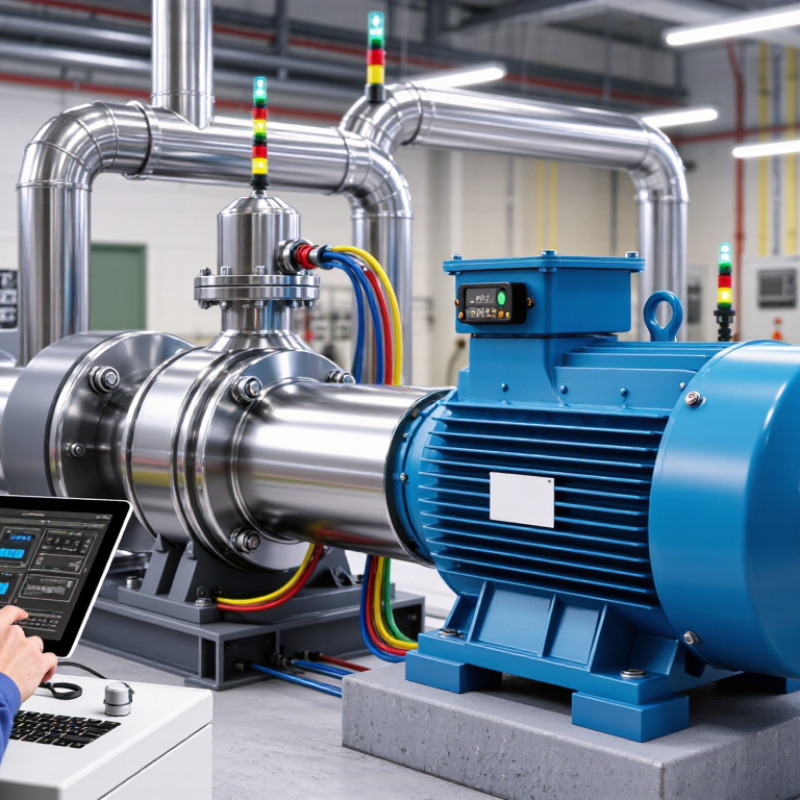
What Are the Best Motor and Control Solutions for 2026?

Understanding Motor and Control Systems

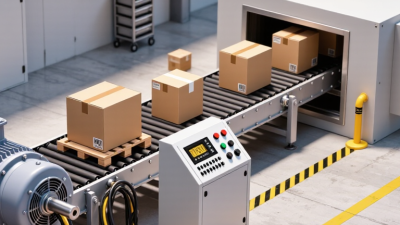
A motor system is more than a motor. It combines the motor, controller, driven load, sensors, and wiring. The controller shapes how power reaches the load. On a packaging line, for example, a speed drive can match conveyor speed to product flow. Small mismatches matter.

The International Energy Agency’s Energy Efficiency 2023 report estimates that motor-driven systems use roughly 40% of global electricity. A U.S. Department of Energy market assessment reported that motors used about 68% of manufacturing electricity in the United States. That assessment dates to 2002, so its figure is useful context, not a current measurement. The scopes differ. For 2026 planning, engineers should measure actual operating hours, load variation, and energy use before choosing controls.

Variable-speed drives can help where demand changes, such as fans or pumps. They are not automatically the best choice for constant-load equipment. Control settings matter: acceleration ramps, sensor placement, and minimum speed limits can change performance. The weak point is often commissioning. A drive may be correctly sized yet poorly tuned. Check vibration, temperature, and energy use under real operating conditions, then adjust. Real systems can be messy.

Comparing Motor Types for Different Applications

Choosing a motor starts with the load, not the catalogue. The International Energy Agency’s 2011 report, Energy-Efficiency Policy Opportunities for Electric Motor-Driven Systems, estimates that motor systems use about 45% of global electricity. That makes operating conditions matter. Induction motors suit steady-duty pumps, conveyors, and compressors: they are durable and straightforward to maintain, though speed control may require a drive. Permanent-magnet synchronous motors offer high efficiency and compact size for tight spaces or changing loads, but magnet cost and sourcing deserve attention. Brushless DC motors work well in smaller, precise equipment, while servo systems fit machines needing fast, accurate positioning.

Control choice can change the result as much as motor choice. The U.S. Department of Energy’s Improving Motor and Drive System Performance sourcebook describes energy savings of 20–50% in suitable variable-load applications using adjustable-speed control. That range is not a promise; savings depend on the load profile and system setup. A fan running against a throttled damper may benefit from speed control, while a constant-speed process may not. Switched-reluctance motors can tolerate demanding environments, but noise and torque ripple can complicate installation. A practical caveat remains. Engineers sometimes choose a premium motor before measuring operating hours, start frequency, or load variation. Those measurements are less glamorous, yet often determine whether the upgrade pays back.

Evaluating Control Technologies and Key Features

Evaluating Control Technologies and Key Features

Choosing motor controls for 2026 starts with the load, not the feature list. The IEA’s Energy Efficiency 2023 report estimates that motor-driven systems use about 53% of global electricity. The U.S. Department of Energy’s motor-systems sourcebook reports a roughly 68% share of U.S. manufacturing electricity. These figures show why control choices matter. They do not guarantee savings at an individual plant.

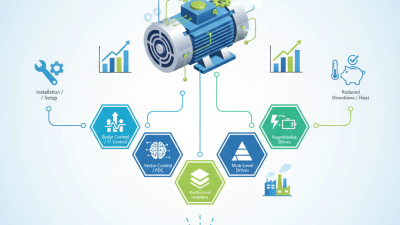
For pumps and fans, variable-frequency drives can match motor speed to demand and reduce throttling. For packaging axes or pick-and-place tasks, servo systems provide precise positioning and fast response. Direct-drive motors remove gearboxes, but only when torque, inertia, and mounting conditions suit the application. Check low-speed performance, overload ratings, encoder support, and energy use across the real duty cycle. Not just nameplate efficiency. Request measured load curves, harmonic data, and thermal limits. An oversized drive can undermine the expected gains.

Control platforms should offer clear diagnostics, compatible industrial communications, and secure update processes. Keep safety functions distinct from ordinary motion control. A pilot on one production line can expose nuisance trips, noisy sensors, or difficult commissioning. Imperfect, but useful. Compare energy use and downtime before and after, under similar production conditions. Maintenance and operator settings affect results, so a polished dashboard alone is not proof of a good system.

Best Motor and Control Solutions for 2026

A typical capability comparison of common motor control technologies. A value of 1 means the feature is generally available; 0 means it is not typical. Actual capabilities depend on the motor, drive, and configuration.

Selecting a Motor and Control Solution for 2026

Selecting a Motor and Control Solution for 2026

Choosing a motor and control solution starts with the machine’s real operating profile, not its peak rating. Record required speed, starting torque, load changes, and daily run time. A conveyor carrying uneven boxes may need strong low-speed torque, while a ventilation fan often benefits more from smooth speed adjustment. Easy to overlook.

Check the supply voltage, available space, ambient temperature, and exposure to dust or moisture. These details affect enclosure choice, cooling, wiring, and maintenance access. Match the controller’s operating range to the motor, and confirm that feedback devices and communication interfaces work with the wider system. More features are not always better.

Ask for efficiency data across the expected speed range, not just one ideal operating point. Then test the combination under realistic load, including starts, stops, and changing demand. Watch for excess heat, vibration, electrical noise, or sluggish response. A commissioning log helps compare results, though readings can be imperfect when loads fluctuate. Leave room for future adjustments, but avoid paying for capacity the application will never use. The right choice is the one that performs reliably in its actual working conditions.

What Are the Best Motor and Control Solutions for 2026? — Selecting a Motor and Control Solution for 2026

Application or Priority Suitable Motor Solution Typical Control Approach Key Advantages Trade-Offs to Consider Selection Checks
General-purpose pumps, fans, and conveyors Three-phase AC induction motor Direct-on-line starting where speed control is unnecessary; variable-frequency drive (VFD) when adjustable speed or soft starting is needed Rugged construction, broad availability, and no permanent magnets in the rotor Speed control generally requires a drive; motor and drive must be matched to the load and operating conditions Rated power, supply voltage and frequency, starting method, duty cycle, enclosure, and required efficiency class
Variable-speed pumps, fans, and compressors AC induction motor or permanent-magnet synchronous motor (PMSM) VFD with an appropriate motor-control mode and speed feedback if required Speed adjustment can match output to demand; reducing speed can save energy in suitable variable-torque applications Actual savings depend on the system curve, operating hours, drive losses, and control settings Minimum and maximum speed, torque requirements, load profile, harmonic and electrical considerations, and motor-drive compatibility
Compact appliances, blowers, and small variable-speed equipment Brushless DC (BLDC) motor or PMSM Electronic inverter using rotor-position sensing or sensorless commutation Electronic commutation avoids brush wear; speed can be controlled electronically over a useful operating range Requires power electronics and suitable control software; performance depends on motor, inverter, and thermal design Continuous and peak torque, speed range, acoustic limits, cooling, sensor strategy, and EMC requirements
Robotics, CNC axes, and packaging machinery requiring precise motion Servo motor, commonly a PMSM or brushless motor with feedback Closed-loop servo drive using encoder or resolver feedback; coordinated motion may use a real-time fieldbus Accurate speed and position control with responsive torque regulation Requires drive tuning, feedback integration, and mechanical sizing; system cost and complexity are higher than simple open-loop drives Peak and continuous torque, inertia matching, acceleration, positioning accuracy, feedback resolution, and safety functions
Low-cost positioning or indexing with moderate performance needs Hybrid stepper motor Pulse-and-direction stepper drive; closed-loop feedback can be added where missed steps are unacceptable Simple command interface and useful holding torque at standstill Open-loop systems cannot confirm that commanded motion occurred; available torque generally decreases as speed rises Load inertia, required speed and acceleration, resonance risk, holding requirements, and whether position verification is needed
High-speed or harsh-duty applications where rotor magnet concerns matter Switched reluctance motor Dedicated electronic converter with rotor-position-based phase switching Rotor has no permanent magnets or rotor windings; construction can suit some demanding operating conditions Requires a specialized converter and control; torque ripple and acoustic noise need attention in the system design Noise limits, torque smoothness, speed range, thermal limits, converter availability, and control-system expertise
Small fans, pumps, and equipment needing integrated electronic speed control Electronically commutated (EC) motor, typically a permanent-magnet motor with integrated electronics Integrated commutation and speed control, often with an analog, PWM, or digital command interface Combines motor and electronic control in one assembly; can simplify variable-speed equipment design Integrated electronics may affect replacement strategy, serviceability, and operation in high-temperature environments Input supply, control interface, speed range, operating temperature, ingress protection, and service access
Outdoor, washdown, or dusty industrial environments Motor type selected for the load, paired with a suitably protected motor and drive installation Drive and control equipment installed with appropriate enclosure, cooling, and environmental protection Environmental protection can improve reliability when selected for the actual exposure conditions A stated protection rating does not by itself establish suitability for every chemical, washdown method, or hazardous location Required IP rating, ambient temperature, corrosion exposure, cooling method, cable entries, and applicable hazardous-area rules
Energy-conscious equipment upgrades Motor and drive combination chosen from measured load and operating profile VFD or integrated motor control where variable operation is appropriate; fixed-speed control where it meets the duty efficiently System-level sizing can avoid oversizing and align energy use with actual demand A higher-efficiency motor alone does not guarantee the lowest system energy use; throttling, transmission, and control losses matter Annual operating hours, load variation, baseline power, efficiency data, payback assumptions, and local efficiency regulations

Selection note: Final sizing should use the machine’s torque–speed requirements, duty cycle, supply conditions, thermal limits, and installation environment. Verify applicable motor-efficiency regulations and safety requirements for the installation location.

Matching Solutions to Industry Requirements and Operating Conditions

What Are the Best Motor and Control Solutions for 2026?

Matching a motor to its operating conditions starts with the process, not the nameplate. Record load, speed range, starts per hour, ambient temperature, dust, washdown exposure, and supply limits. Small details matter. A conveyor with steady loading may suit a fixed-speed motor, while a pump facing frequent flow changes may benefit from a variable-speed drive. But adding a drive is not automatically efficient; poor control settings can create losses or unwanted vibration.

The IEA’s 2011 Energy-Efficient Motor Systems report estimated that motor systems use about 46% of global electricity. The U.S. Department of Energy’s 2014 motor-systems sourcebook estimated that motor-driven equipment accounts for 54% of electricity use in U.S. manufacturing. These figures use different boundaries, so they are useful context, not direct comparisons. For selection, compare efficiency at the actual duty point, not just rated output. Check whether the motor can handle peak torque, repeated starts, and heat buildup. A neat spreadsheet can still miss a hot enclosure or a rarely noticed overload. Field measurements help expose that gap. Review drive compatibility, cable lengths, protection settings, and maintenance access before purchase. In some plants, the simplest workable control strategy may outperform a more complex setup. Verify it under real operating conditions.

Select Electrical Logo
Since 1988

Select Electrical Ltd. © Copyright 1988-2025