What Are the Top 10 VFD Electrical Suppliers in China?
Choosing among China’s top VFD electrical suppliers takes more than comparing catalogue prices. Buyers need to assess product quality, application knowledge, delivery reliability, and after-sales support. Variable frequency drives control motor speed and torque, helping equipment match changing operating demands. The details matter: a drive installed beside a dusty pump faces different conditions from one operating in a clean factory control room.
The International Energy Agency’s 2011 report, Energy-Efficiency Policy Opportunities for Electric Motor-Driven Systems, estimates that motor-driven systems use 43–46% of global electricity. That figure explains why drive selection deserves careful attention, though it does not guarantee savings for every project. Amory Lovins, an energy-efficiency advocate and co-founder of Rocky Mountain Institute, is widely quoted as saying, “The cheapest, cleanest, and safest energy is the energy we don’t use.” For VFD buyers, that principle supports asking for clear performance data, not accepting broad efficiency claims at face value.
This guide compares ten China-based suppliers through practical considerations: product range, customization, certifications, communication, and service capability. It also highlights questions worth asking before requesting a quotation, such as whether a supplier can provide wiring guidance and support for commissioning. A supplier’s website may look polished. Real support can still vary. Treat the ranking as a starting point, then verify specifications, references, and regional service arrangements for your own application.
What Is a Variable Frequency Drive and How Does It Work?
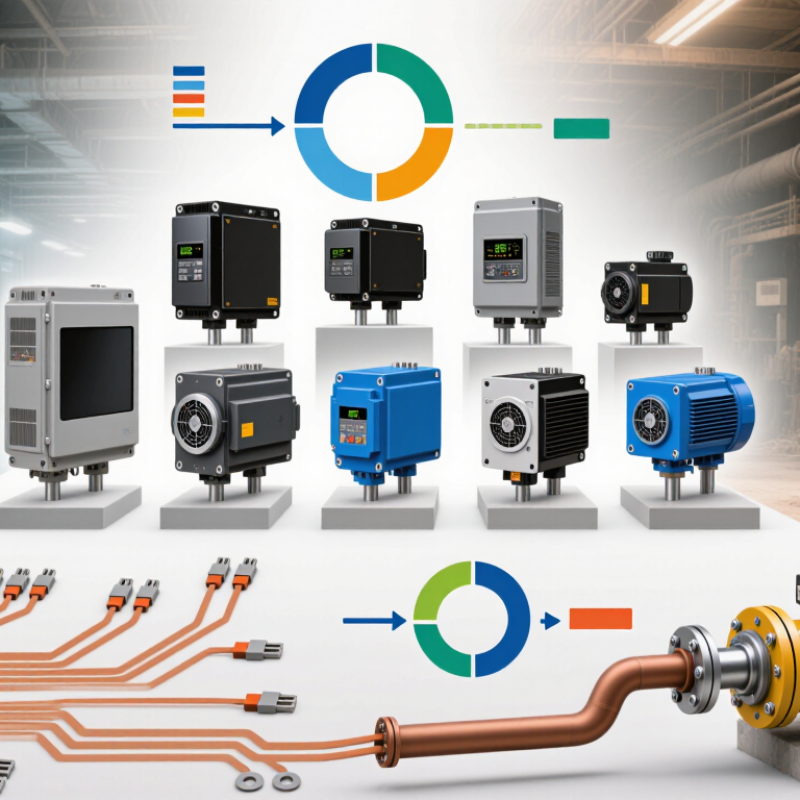
A variable frequency drive (VFD) controls an AC motor’s speed by changing the frequency and voltage of its electrical supply. Inside the drive, a rectifier converts incoming AC power to DC. A DC bus smooths that power, then an inverter switches it back into variable-frequency AC. The motor can then run more slowly or quickly as the process requires. In a pumping station, for example, lower demand can mean slower pump speed rather than throttling flow with a valve.
The energy stakes are substantial. The International Energy Agency’s 4E Electric Motor Systems Platform estimates that motor-driven systems use about 45% of global electricity. That figure covers many applications, not just systems using VFDs. A drive can reduce energy use when it matches motor speed to changing demand, especially in fans and pumps. It may offer little benefit when a motor already runs at constant full load.
That matters.
Choosing a VFD supplier in China involves more than comparing rated power and price. Check the drive’s overload capacity, control options, cooling design, and compatibility with the motor and site conditions. The U.S. Department of Energy’s Improving Motor and Drive System Performance sourcebook recommends considering the motor and driven equipment as one system. In practice, wiring length, heat, and commissioning quality can affect performance. A drive is not an automatic efficiency win; assessing the actual load is easy to underestimate.
How to Evaluate VFD Electrical Suppliers in China
How to Evaluate VFD Electrical Suppliers in China
A strong supplier should do more than quote a VFD by motor power. Share the motor nameplate, load profile, supply voltage, and operating environment, then check whether the proposed drive fits the application. The IEA’s 2011 report, Energy-Efficiency Policy Opportunities for Electric Motor-Driven Systems, estimates that motor-driven systems use about 46% of global electricity and identifies substantial efficiency-saving potential. That makes application sizing and control strategy worth discussing—not just the purchase price. Ask for test records, clear model specifications, and evidence that the supplier can explain harmonic, cooling, and enclosure requirements.
Check production quality in practical terms. Request sample inspection records, component traceability, and routine test procedures; confirm how warranty claims and replacement parts are handled. For a factory using dusty production lines, for example, ask how the enclosure and cooling design suit that environment. A polished catalogue is not proof of reliable field support. I would also compare lead times against actual order history, because a promised schedule can look convincing on paper.
Tips: Send the same technical checklist to each supplier. Ask for a written response on overload capacity, EMC measures, installation guidance, and spare-part availability. If a specification remains vague, pause and clarify it. Supplier evaluation is imperfect; a factory visit helps, but it cannot replace consistent inspection and follow-up.
Profiles of 10 Leading VFD Electrical Suppliers in China
China’s VFD electrical suppliers vary in product depth, engineering support, and delivery capability. These ten profiles highlight supplier types buyers may encounter, rather than claiming a verified ranking. A broad-range supplier offers drives for pumps, fans, and conveyors, with clear selection tables. A low-voltage specialist can help match motor ratings to control needs. A high-power supplier may support larger industrial loads and provide commissioning guidance. An OEM-focused supplier adapts control cabinets to specific machine layouts. Check drawings carefully. An export-oriented supplier typically prepares manuals and packing details for overseas orders.
An automation integrator can connect drives with sensors, controllers, and factory networks. A retrofit specialist evaluates existing motors and wiring before recommending replacements. That assessment can be imperfect. A supplier serving dusty or humid sites should explain enclosure ratings and cooling arrangements. A service-focused supplier may offer remote troubleshooting, but response times need confirmation. Finally, a training-oriented supplier helps technicians interpret fault codes and adjust ramp settings. Compare these capabilities with sample test reports, warranty terms, spare-parts availability, and the supplier’s answers to practical installation questions. A polished catalog is useful, but it cannot replace evidence of consistent support.
VFD Output Frequency and Four-Pole Motor Speed
This chart shows the theoretical synchronous speed of a four-pole motor at selected VFD output frequencies. Speed is calculated using the standard formula: synchronous speed (rpm) = 120 × frequency (Hz) ÷ number of poles. An induction motor’s actual speed is slightly lower under load because of slip.
How the Suppliers Compare in Products and Capabilities
Comparing ten Chinese VFD suppliers is more useful by engineering scope than catalog breadth. Check voltage classes, power range, overload ratings, control modes, harmonic mitigation, enclosure protection, and communications. Ask whether each supplier supports pumps, fans, compressors, or precision conveyors with tested parameter sets. Small differences matter. A 0.4 kW drive and a 400 kW cabinet demand different thermal design, commissioning, and service skills. Review manuals, fault logs, test records, and spare-parts lead times—not just product pages.
The International Energy Agency’s 2011 report, Energy-Efficiency Policy Opportunities for Electric Motor-Driven Systems, estimates these systems use about 46% of global electricity, with potential energy savings of 20–30%. That is system-wide potential, not a guaranteed saving from one VFD.
Compare suppliers on application engineering, commissioning support, and documented performance as well as product range. One weakness in many comparisons: polished specifications can overshadow service quality. It is worth checking response times with a realistic technical question. A spreadsheet alone cannot prove field reliability.
Industries Served by China’s VFD Suppliers
China’s VFD suppliers serve factories, commercial buildings, water utilities, mines, and process plants. Their drives adjust motor speed to match changing workloads, rather than running equipment at full speed continuously. The practical details vary: a textile line needs steady tension, while a water pump must respond to changing demand. Small differences matter.
The International Energy Agency’s 2011 report, Energy-Efficiency Policy Opportunities for Electric Motor-Driven Systems, estimates that motor-driven systems use about 45% of global electricity. This helps explain why VFDs attract attention across energy-intensive industries.
In manufacturing, they commonly control fans, conveyors, compressors, and pumps. In buildings, they support heating, ventilation, and cooling systems.
Water and wastewater facilities use them to regulate flow and pressure. Mining and chemical operations also rely on variable-speed control for demanding equipment.
A suitable drive depends on more than motor power. Dust, heat, moisture, electrical noise, and frequent starts can affect reliability on site. A catalogue specification may look convincing, yet installation quality and maintenance access still matter. That is easy to overlook. Buyers should check the load profile, enclosure rating, control requirements, and local service capacity before comparing suppliers.