Top 10 Industrial Electric Motors for Global Buyers

Choosing industrial electric motors for international projects is rarely a simple price comparison. The right motor must match the machine, power supply, operating environment, and maintenance capability. A motor that performs well in a clean factory may struggle in a dusty workshop or humid coastal plant.

This guide examines ten widely used motor types for global buyers, including induction, synchronous, brushless DC, servo, and explosion-protected designs. Each option offers different advantages in torque, speed control, efficiency, starting performance, and service life. Practical selection should begin with the load profile. Check continuous power, starting torque, duty cycle, ambient temperature, and available voltage before reviewing supplier quotations.

Details matter.

Reliable buyers should also verify efficiency classes, enclosure ratings, insulation systems, bearings, warranty terms, and technical documentation. Compatibility with variable frequency drives deserves special attention, especially in pumps, conveyors, compressors, and fans. Regional certification requirements can also affect delivery schedules and installation approval. Supplier experience is valuable, but independent test reports and clear nameplate data provide stronger evidence.

There is no universal best motor. That conclusion is easy to state, yet often ignored. In real projects, buyers may prioritize low purchase cost and underestimate energy consumption or spare-part access. This article therefore compares performance with lifecycle value, installation risk, and after-sales support. Some recommendations may change when site conditions change. That is the point. A careful decision connects engineering calculations with field experience, verified specifications, and realistic maintenance planning.
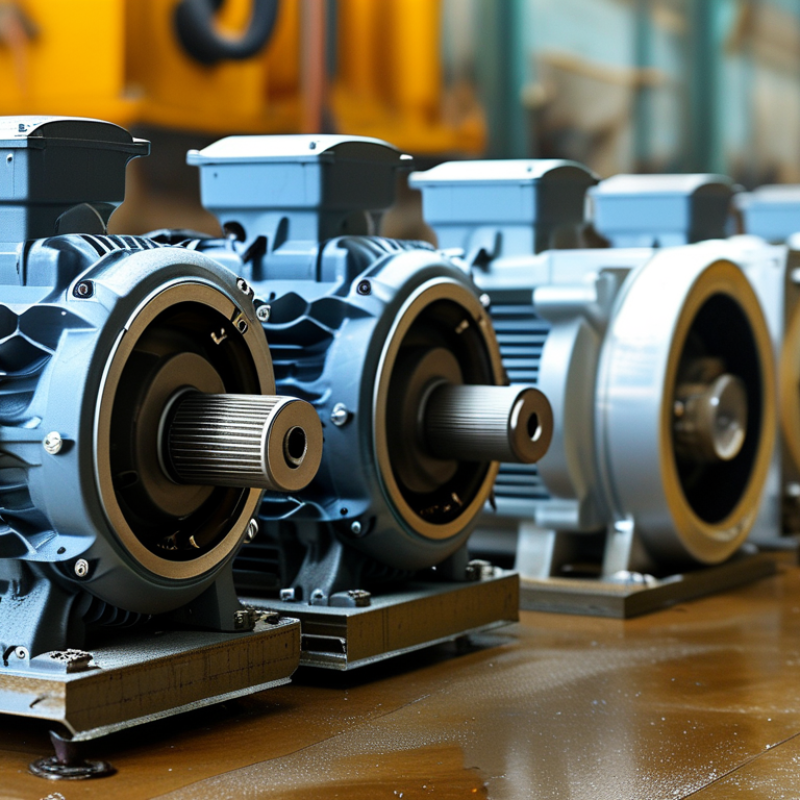
Top 10 Industrial Electric Motors for Global Buyers

Industrial Electric Motors: Core Concepts and Selection Criteria

Top 10 Industrial Electric Motors for Global Buyers

Industrial Electric Motors: Core Concepts and Selection Criteria

Industrial motors convert electrical energy into controlled mechanical motion. Common choices include induction, synchronous, permanent-magnet, servo, stepper, DC, and geared motors. Each design suits different loads, speeds, and control systems. An induction motor may handle pumps and conveyors well, while a servo motor supports precise positioning. Motor size alone does not determine performance. Load behavior matters more.

Selection should begin with voltage, frequency, rated power, torque, speed, and duty cycle. Check starting torque, overload conditions, braking needs, and expected operating hours. The environment also matters. Dust, moisture, heat, vibration, and corrosive chemicals can shorten service life. Enclosure protection and insulation ratings should match the installation area. A motor operating at partial load may waste energy or run inefficiently. In practice, selection is less tidy than a comparison table suggests. Measurements from the actual machine are often incomplete, and assumptions can become expensive mistakes.

Tips: Record the load profile for a full working cycle. Confirm shaft dimensions and mounting details before ordering. Compare efficiency across realistic loads, not only at rated output. Leave room for service access and cooling airflow. Ask for test data, documentation, and verified operating limits. Small details matter. A final review by a qualified engineer can reveal mismatched controls, excessive starts, or unrealistic torque expectations.

Top Motor Types Used in Global Industrial Applications

Industrial electric motors support nearly every major production sector, from conveyors and pumps to compressors and machine tools. The most widely used type is the three-phase induction motor. It offers sturdy construction, simple maintenance, and reliable performance in dusty factory environments. Squirrel-cage designs are common for fans, pumps, and material-handling systems.

Synchronous motors suit applications requiring steady speed and improved power factor. They often drive large compressors, mills, and continuous-process equipment. DC motors still appear where strong starting torque and adjustable speed are essential, although maintenance can be higher. Servo motors provide precise motion for robotics, packaging lines, and CNC equipment. Stepper motors offer controlled positioning at lower speeds, but they may lose accuracy under sudden loads. That limitation is easy to underestimate.

Tips: Match the motor to load torque, duty cycle, voltage, frequency, and ambient temperature. Check starting current before selecting a control panel. In humid or dusty areas, verify the enclosure rating and cooling method. Ask for efficiency data at realistic operating loads, not only at peak performance. A motor that looks efficient on paper may perform poorly when oversized. Installation quality matters too. Misalignment, weak foundations, and incorrect lubrication can shorten service life quickly. Buyers should also confirm spare-part access, technical documentation, and local maintenance skills before placing an international order.

Top 10 Industrial Electric Motors for Global Buyers - Top Motor Types Used in Global Industrial Applications
No. Motor Type Typical Rated Power Typical Voltage and Supply Typical Speed Range Typical Efficiency Common Industrial Applications Key Advantages
1 Squirrel-Cage Induction Motor 0.12 kW to more than 10 MW Three-phase AC, commonly 200–690 V; 50 or 60 Hz Approximately 750–3,600 rpm at 50/60 Hz, depending on pole count About 70–97.5%, depending on size, speed, and efficiency class Pumps, fans, compressors, conveyors, machine tools, mixers, and general factory equipment Rugged construction, low maintenance, broad availability, and compatibility with variable-frequency drives
2 Wound-Rotor Induction Motor Typically 100 kW to 10 MW Three-phase AC stator supply, commonly 3.3–13.8 kV for large installations Usually 500–3,600 rpm, with controlled starting torque About 85–96% Mining hoists, crushers, mills, conveyors, elevators, and high-inertia starting duties High starting torque and reduced starting current; external rotor resistance can provide controlled acceleration
3 Permanent-Magnet Synchronous Motor Approximately 0.1 kW to several MW Three-phase AC supplied through an inverter; commonly 200–690 V in industrial systems Typically 500–6,000 rpm; higher speeds are possible with specialized designs About 85–98% High-efficiency pumps, compressors, conveyor systems, elevators, machine tools, and electric traction High power density, strong efficiency at partial load, precise speed control, and low rotor losses
4 Synchronous Reluctance Motor Commonly 1.1–315 kW Three-phase AC with an inverter; commonly 200–690 V Usually 750–3,600 rpm at 50/60 Hz equivalent operating points About 90–97% Industrial pumps, fans, compressors, conveyors, and energy-saving variable-speed drive systems No rotor magnets or rotor windings, low rotor losses, and good efficiency across a wide load range
5 Wound-Field Synchronous Motor Typically 1 MW to more than 100 MW Medium- or high-voltage three-phase AC, commonly 3.3–15 kV or higher Usually 300–3,600 rpm, selected by pole count and system frequency About 95–99% Large compressors, pumps, fans, rolling mills, paper machines, cement mills, and power-generation auxiliaries High efficiency, constant speed, and adjustable power factor that can support electrical system voltage control
6 Switched-Reluctance Motor Approximately 0.1–500 kW Multi-phase DC-link inverter supply; commonly 24–800 V DC bus systems About 500–20,000 rpm, depending on design and application About 75–95% Mining equipment, pumps, compressors, textile machinery, high-speed drives, and harsh-environment systems Simple and robust rotor, high-temperature capability, wide speed range, and tolerance of certain winding faults
7 Brushed DC Motor Approximately 0.1 kW to 10 MW Typically 12–800 V DC; larger systems may use controlled rectifier supplies About 100–4,000 rpm, with wide speed adjustment capability About 75–95% Cranes, hoists, rolling mills, material-handling systems, test stands, and legacy variable-speed machinery High starting torque, straightforward speed control, and strong low-speed performance
8 Brushless DC Motor From a few watts to approximately 200 kW Electronic commutation from a DC bus; commonly 24–800 V DC Approximately 500–30,000 rpm, depending on pole count and design About 80–95% Automation equipment, cooling systems, robotics, pumps, small compressors, conveyors, and battery-powered industrial devices No brush wear, compact size, high power density, and efficient variable-speed operation
9 AC Servo Motor Approximately 50 W to 100 kW Single- or three-phase AC through a servo drive; commonly 200–480 V AC systems Typically 1,000–6,000 rpm, with short-term overspeed capability on some systems About 85–97% Robotic arms, CNC machines, packaging lines, printing equipment, semiconductor tools, and precision positioning systems Closed-loop position control, rapid acceleration, high torque density, and excellent repeatability
10 Stepper Motor Approximately 1 W to 5 kW Low-voltage DC drive, commonly 12–80 V DC; controlled by a dedicated stepper driver Typically 60–1,200 rpm, with torque decreasing as speed increases About 50–85%, depending on speed, load, and control method Indexing tables, laboratory automation, valve actuators, feeders, positioning stages, and compact machine systems Accurate incremental motion, high holding torque, simple control, and effective operation without a feedback sensor in suitable applications

Data note: Values are representative industrial ranges rather than fixed limits. Actual performance depends on frame size, pole count, cooling method, duty cycle, drive system, supply voltage, ambient conditions, and applicable efficiency standards.

Key Performance Factors for Comparing Industrial Motors

Top 10 Industrial Electric Motors for Global Buyers

Key Performance Factors for Comparing Industrial Motors

Selecting an industrial motor requires more than checking rated power. Buyers should compare efficiency, torque, speed stability, and operating temperature. A motor running near its rated load usually delivers better efficiency than one working far below capacity. During factory inspections, I check vibration, bearing noise, and temperature rise after continuous operation. Small changes often reveal alignment or cooling problems.

Duty cycle matters. A motor used for conveyors needs different performance from one driving pumps or compressors. Starting torque, acceleration time, and frequent reversing can affect both energy use and service life. Enclosure protection also deserves close attention, especially in dusty workshops or washdown areas. An unsuitable enclosure may allow moisture inside. That mistake is expensive.

Voltage and frequency compatibility should match the local power supply and control system. Buyers should review insulation class, overload capacity, braking needs, and maintenance access. A variable-speed application may require stronger insulation and careful thermal evaluation. Efficiency figures are useful, but test conditions can differ from real production. No comparison is perfect. I have seen impressive catalog numbers fail under heat, poor ventilation, or irregular loading. For reliable decisions, compare verified test data, warranty terms, spare-part availability, and service skills together. Reliability depends on the whole installation, not the motor alone.

Standards, Efficiency Ratings, and Regional Compliance

Top 10 Industrial Electric Motors for Global Buyers

Standards, Efficiency Ratings, and Regional Compliance

Selecting an industrial motor starts with standards, not catalog appearance. IEC 60034 defines key performance and testing requirements for many international markets. NEMA MG 1 remains important where North American specifications apply. Efficiency classes, including IE3 and IE4, should be verified through recognized test methods. Do not trust efficiency claims alone.

A motor’s nameplate must match the local supply. A 400 V, 50 Hz motor may not perform correctly on a 460 V, 60 Hz system. Check rated current, speed, duty cycle, insulation class, and power factor. IP protection also matters. Dusty workshops and washdown areas need different enclosure choices. Small details matter.

Regional compliance can involve CE, UKCA, UL, CSA, or other accepted certifications. Requirements may change by motor size, application, and installation location. Hazardous areas require additional protection and documented assessment. Variable-speed drive use can alter heating, bearing stress, and efficiency. The motor and drive should be evaluated as one system.

Real procurement work often reveals incomplete documents. A supplier may provide test results but omit ambient temperature or altitude limits. That gap deserves questions. A lower purchase price can become expensive after rewiring, certification delays, or poor service access. I still find efficiency comparisons imperfect because operating loads rarely remain constant. Estimate actual load hours before choosing a premium efficiency class.

Top 10 Industrial Electric Motors for Global Buyers - Standards, Efficiency Ratings, and Regional Compliance

This benchmark compares IE3 and IE4 efficiency levels for ten representative four-pole, 50 Hz, three-phase squirrel-cage induction motor power classes. The reference values are aligned with IEC 60034-30-1 efficiency-class conventions; actual performance depends on motor design, load, speed, frequency, and operating conditions.

For international sourcing, buyers should verify the applicable regional requirements, including EU Ecodesign Regulation 2019/1781, U.S. DOE energy-efficiency rules under 10 CFR Part 431, NEMA MG 1 classifications, and local standards such as China GB 18613. IE4 generally delivers lower operating losses than IE3, but certification, voltage, frequency, enclosure, and installation requirements must be checked for the destination market.

How Global Buyers Choose, Install, and Maintain Electric Motors

Global buyers often choose industrial electric motors by matching duty, environment, and service support rather than price alone. A conveyor may need high starting torque, while a pump usually favors steady efficiency. Check voltage, frequency, speed, enclosure rating, insulation class, and duty cycle before comparing offers. Small details matter. A motor that fits the catalog may still fail in a dusty, humid, or high-temperature plant.

Installation quality strongly affects motor life. Confirm the foundation is level and rigid, then align the shafts with suitable measuring tools. Poor alignment can create vibration, heat, and premature bearing damage. Use correctly sized cables, secure cable glands, and verify grounding. If a variable-frequency drive is planned, confirm motor compatibility and cable requirements before purchase. Do not rely only on factory settings. Site conditions can change the result.

Maintenance teams should record vibration, winding temperature, current, and unusual noise during normal operation. Inspect cooling paths regularly, especially where dust collects around fan covers. Lubricate bearings according to the manufacturer’s schedule, not by guesswork. Over-greasing is a real mistake. Keep inspection records with dates and readings, because memory is unreliable. A sensible spare-parts plan should include bearings, seals, and connection materials. Yet holding every possible part is wasteful, so failure history should guide the decision. Recheck the plan after the first operating season.

Select Electrical Logo
Since 1988

Select Electrical Ltd. © Copyright 1988-2025