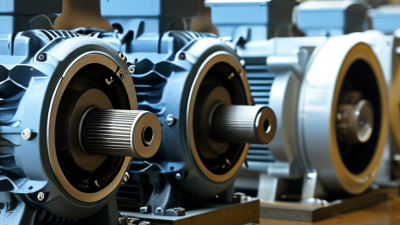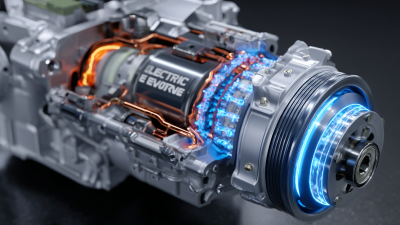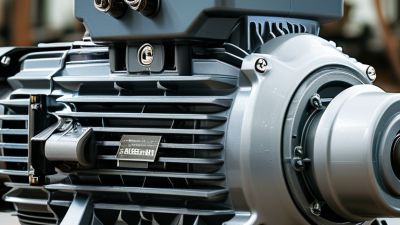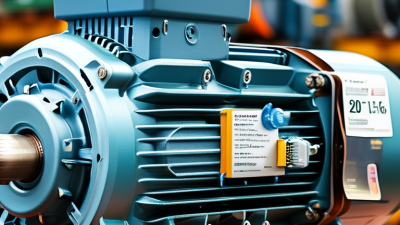
Choosing industrial electric motors is a practical engineering decision, not a simple catalog search. The correct motor must match the machine, workload, environment, and maintenance plan. A conveyor running eight hours daily needs different protection and efficiency than a pump used occasionally. Small details matter.
This guide explains how to compare motor types, power ratings, speed, torque, efficiency, enclosure design, and control methods. It also considers voltage, starting current, duty cycle, ambient temperature, dust, moisture, and available space. In real plant assessments, these factors often reveal problems that horsepower labels hide. A motor may appear powerful enough, yet struggle during startup or overheat under continuous load. That mistake can increase downtime and energy costs.
No selection method is perfect. Actual operating data may be incomplete, and supplier specifications can use different testing conditions. Engineers should verify calculations, review nameplate information, and consult qualified manufacturers when requirements are uncertain. It is also wise to examine the full lifecycle cost, including installation, bearings, cooling, inspections, and replacement access. The cheapest purchase is not always the safest investment.
A careful decision balances performance, reliability, efficiency, and future serviceability. This article provides a clear framework for that process, while acknowledging one uncomfortable truth: field conditions rarely behave exactly like design assumptions.
Choosing an industrial electric motor should begin with load demand, not the nameplate alone. Motor-driven systems consume about 46% of global electricity, according to widely cited energy analyses. That figure makes every sizing decision important. A motor running a conveyor, pump, or compressor can quietly draw power for thousands of hours each year.
Measure the real operating conditions. Record shaft speed, starting current, running current, load variation, and daily operating hours. A clamp meter can reveal whether a 15 kW motor regularly operates near its rated output or spends most of its time lightly loaded. For pumps, also check flow rate and pressure. For conveyors, note belt weight, slope, acceleration, and material changes. Small details matter.
Avoid choosing a larger motor “for safety” without evidence. Oversizing may increase purchase cost, reduce efficiency at partial load, and create unnecessary starting stress. Yet a motor with too little capacity may overheat during peak demand. This balance is not always clear from a single afternoon measurement. Seasonal production and future capacity can change the result. I have seen calculations fail because idle time was ignored. It is an easy mistake.
Compare efficiency across the full duty cycle, including standby and frequent starts. Select suitable protection, cooling, and control equipment for the environment. Dust, heat, moisture, and repeated acceleration can shorten service life. A reliable choice combines measured demand, realistic operating data, and a documented safety margin. Guesswork is cheaper at first. It can become expensive later.
Motor-driven systems consume about 46% of global electricity. Accurate load measurement helps select the correct motor power, efficiency class, speed, and control method while avoiding oversizing.
The 46% estimate refers to electricity used by motor-driven systems worldwide; the remaining 54% represents other electricity-consuming applications. Reference: International Energy Agency, “Energy-Efficiency Policy Opportunities for Electric Motor-Driven Systems.”
Choosing an industrial electric motor starts with its actual duty, not only its rated power. A 30 kW motor may drive a pump, conveyor, or compressor, yet each application demands different starting torque and operating patterns. IEC 60034-30-1 classifies motor efficiency from IE1 to IE4. IE1 is standard efficiency, while IE2, IE3, and IE4 provide progressively lower losses under defined test conditions.
In practice, IE3 or IE4 can reduce heat and electricity use during long operating hours. However, efficiency must match the load profile. A motor running near full load for 6,000 hours yearly may justify IE4. An intermittently used motor may not recover its higher purchase cost quickly. Check rated speed, torque, enclosure, insulation, ambient temperature, and starting frequency. Small details matter. A dusty workshop can challenge cooling.
Variable-speed operation needs closer review. The motor, drive, and driven machine should work as one system. Efficiency at reduced speed may differ from the nameplate value. Harmonic heating, bearing currents, and minimum cooling speed deserve attention. I have seen selections based only on IE class fail during frequent starts. That judgment was too simple. Ask for test data, confirm the applicable IEC scope, and compare lifecycle cost with measured duty records. Estimated savings can be useful, but they are not field measurements.
How to Choose Industrial Electric Motors?
Sizing starts with torque, speed, and the real duty cycle. A motor running a conveyor continuously needs different protection than one starting every two minutes. IEC 60034-1 defines duty classes, including continuous, short-time, and intermittent operation. Record acceleration time, load peaks, stops, and idle periods before selecting horsepower. A neat calculation can still be wrong. A 30 kW motor may survive steady production but overheat during repeated high-load starts. The U.S. Department of Energy reports that motor-driven systems can consume more than half of industrial electricity in many facilities, so inefficient sizing has a measurable operating cost.
Starting current deserves equal attention. Across common induction motor designs, locked-rotor current may reach five to eight times full-load current, depending on construction and voltage. Check the available transformer capacity, cable voltage drop, protection settings, and starter limits. NEMA MG 1 service factors can provide limited overload capability, but they are not permission to run continuously above rated load. Keep that distinction clear. For speed control, compare required torque at minimum and maximum speed, especially with fans, pumps, and conveyors. A variable-speed application may need separate cooling at low speed.
Use the motor’s rated torque curve, not only its nameplate horsepower. Verify the load inertia and calculate acceleration under the worst product condition. The International Energy Agency has reported that electric motor systems account for roughly 50% of global electricity use, making small selection errors expensive over time. Recheck assumptions with measured current after installation. Field data sometimes disagrees with the spreadsheet.
| Typical Load | Nominal Motor Rating | Rated Speed | Approx. Rated Torque | Recommended Torque Allowance | Duty-Cycle Consideration | Typical Starting Current | Common NEMA Design | Selection Notes |
|---|---|---|---|---|---|---|---|---|
| Small centrifugal fan or blower | 0.75 kW / 1 hp | 1,750 rpm | 4.1 N·m | 15–25% above calculated running torque | Continuous duty; verify thermal performance at reduced speed | Direct-on-line: typically 5–8 × full-load current | Design B | Suitable for variable-torque loads where starting resistance is low. |
| Conveyor with moderate starting load | 3.7 kW / 5 hp | 1,750 rpm | 20.2 N·m | 25–40% above calculated running torque | Continuous or frequent starts; allow for acceleration time and belt friction | Direct-on-line: typically 5–8 × full-load current; reduced-voltage starting lowers line current | Design B or Design C | Use a higher-breakaway-torque design when the conveyor starts fully loaded. |
| Positive-displacement pump | 7.5 kW / 10 hp | 1,750 rpm | 40.9 N·m | 30–50% above calculated running torque | Continuous duty; check pressure at startup and relief-valve settings | Direct-on-line: typically 5–8 × full-load current | Design B or Design C | Starting torque can be substantially higher than running torque if the pump is not unloaded. |
| High-inertia fan, centrifuge, or large rotating assembly | 15 kW / 20 hp | 1,750 rpm | 81.9 N·m | 40–60% above calculated running torque | Frequent acceleration; calculate ramp time, inertia, and permissible starts per hour | Direct-on-line: typically 5–8 × full-load current; a variable-frequency drive can limit acceleration current | Design B | Confirm that the motor can thermally withstand repeated acceleration and braking cycles. |
| Crusher, mixer, or heavily loaded machine | 30 kW / 40 hp | 1,750 rpm | 163.7 N·m | 50–75% above calculated running torque | Intermittent or cyclic duty; evaluate peak torque and locked-rotor conditions | Direct-on-line: typically 5–8 × full-load current; current-limiting starting may be required | Design C or Design D | Choose the NEMA design according to breakaway torque, slip, acceleration, and load shock. |
| Low-speed, high-torque drive | 22 kW / 30 hp | 875 rpm | 240.1 N·m | 25–50% above calculated running torque | Continuous duty; verify cooling when operating below base speed with a drive | Variable-frequency drive: commonly limited to approximately 1.0–1.5 × rated current, depending on settings | Design B with suitable drive control | Lower speed produces higher torque for the same power; check the motor's cooling method and speed range. |
| Variable-speed process drive | 11 kW / 15 hp | 600–1,800 rpm | 58.4 N·m at 1,800 rpm | 20–40% above the maximum continuous load torque | Mixed duty; separate constant-torque and variable-torque regions before sizing | VFD-controlled start; current is programmable but must remain within motor and drive limits | Design B or inverter-duty construction | Confirm insulation system, bearing protection, minimum speed, maximum speed, and drive compatibility. |
| Hoist or lifting mechanism | 18.5 kW / 25 hp | 1,750 rpm | 101.0 N·m | 50–100% above calculated running torque | Short-time or intermittent duty; calculate starts per hour, braking, and thermal recovery | Reduced-voltage starter or drive commonly used to control acceleration current | Design C or Design D | Motor sizing must include static load, acceleration torque, braking torque, and required holding protection. |
| Reference: Rated torque can be estimated with T = 9550 × P ÷ n, where T is torque in N·m, P is power in kW, and n is speed in rpm. Actual motor selection must also verify voltage, frequency, enclosure, insulation, ambient temperature, altitude, service factor, efficiency, power factor, load inertia, starting method, and applicable electrical codes. Starting-current values are typical engineering ranges and must be confirmed from the selected motor's technical data. | ||||||||
Motor selection becomes practical when protection and controls match the installation. IEC 60034-5 IP ratings describe enclosure protection. The first digit addresses solids. The second digit addresses water. An IP55 motor resists dust ingress and water jets, but it is not waterproof. A washdown area may require a higher rating, especially near hoses, chemicals, or standing water. Check the actual cleaning routine. A specification sheet rarely shows every site condition.
VFD operation adds another layer. Confirm the motor’s rated voltage, current, frequency, overload capacity, and allowable speed range. Ask for inverter-duty insulation data, recommended cable length, and permitted switching frequency. Long cables can increase reflected-wave stress. High carrier frequencies may also increase heating. Bearing-current protection may be necessary in larger systems. At low speed, the shaft fan moves less air, so external cooling or reduced torque may be needed.
Do not treat the IP code as the complete protection plan. Select fuses, circuit breakers, overload settings, and emergency isolation around the motor’s real load. During a previous selection, I focused too heavily on rated power and missed the low-speed cooling problem. The motor passed the paper review, yet it ran hotter than expected during testing. That mistake changed my checklist. I now compare the motor, VFD, enclosure, cable route, and duty cycle as one system. Leave room for uncertainty. Field measurements can challenge a clean calculation.
How to Choose Industrial Electric Motors?
Compare Lifecycle Cost: Evaluate Energy, Maintenance, and Total Ownership Costs
The purchase price rarely tells the full story. An industrial motor can run for thousands of hours each year. Its energy consumption may exceed its purchase cost within months. Begin with the actual load profile, not the motor’s nameplate rating alone. Record operating hours, starting frequency, load changes, and electricity rates. A motor running below its efficient range may waste power quietly.
Maintenance costs deserve equal attention. Check bearing access, lubrication intervals, insulation quality, and cooling requirements. A sealed bearing can reduce routine work, but replacement may become more complex. Keep realistic spare-part and labor estimates. Downtime is often the largest hidden expense. One failed motor can stop a conveyor, delay orders, and require emergency installation.
Use a lifecycle cost worksheet. Include purchase, installation, energy, inspections, repairs, replacement, and disposal. Compare motors over the same expected service period. Energy savings should be tested against measured operating conditions. Published efficiency figures may assume ideal loads. That matters. In field assessments, I have seen projected savings shrink after motors faced frequent speed changes and dusty environments. This is where careful measurement beats confident assumptions. A slightly higher initial cost may be reasonable when it reduces heat, service calls, and production interruptions. Still, not every premium design pays back. Review the numbers with maintenance and operations staff before approving the purchase.